


Executive Summary
This report analyses the military activity of Tehrik-e-Taliban Pakistan (TTP) during 2025, based on the annual infographic published by Umar Media, the organisation’s official media outlet. The source constitutes primary jihadist material, originating from internal channels of operational reporting, used by the TTP both for propaganda purposes and as a tool for internal communication and coordination.
The analysis highlights a clear operational escalation, quantitatively and qualitatively distinct from the dynamics observed in other transnational jihadist organisations. In 2025, the TTP not only demonstrates resilience but confirms its status as a territorial armed insurgency, rooted in specific areas of northwestern Pakistan and capable of sustaining a high and sustained operational pace. The volume of operations, their geographical distribution and the type of objectives indicate a coherent strategy of attrition of the Pakistani State, rather than a campaign of indiscriminate terrorism.
Key Judgements
In 2025, the TTP is engaged in a full-blown armed insurrection, not just an episodic terrorist campaign.
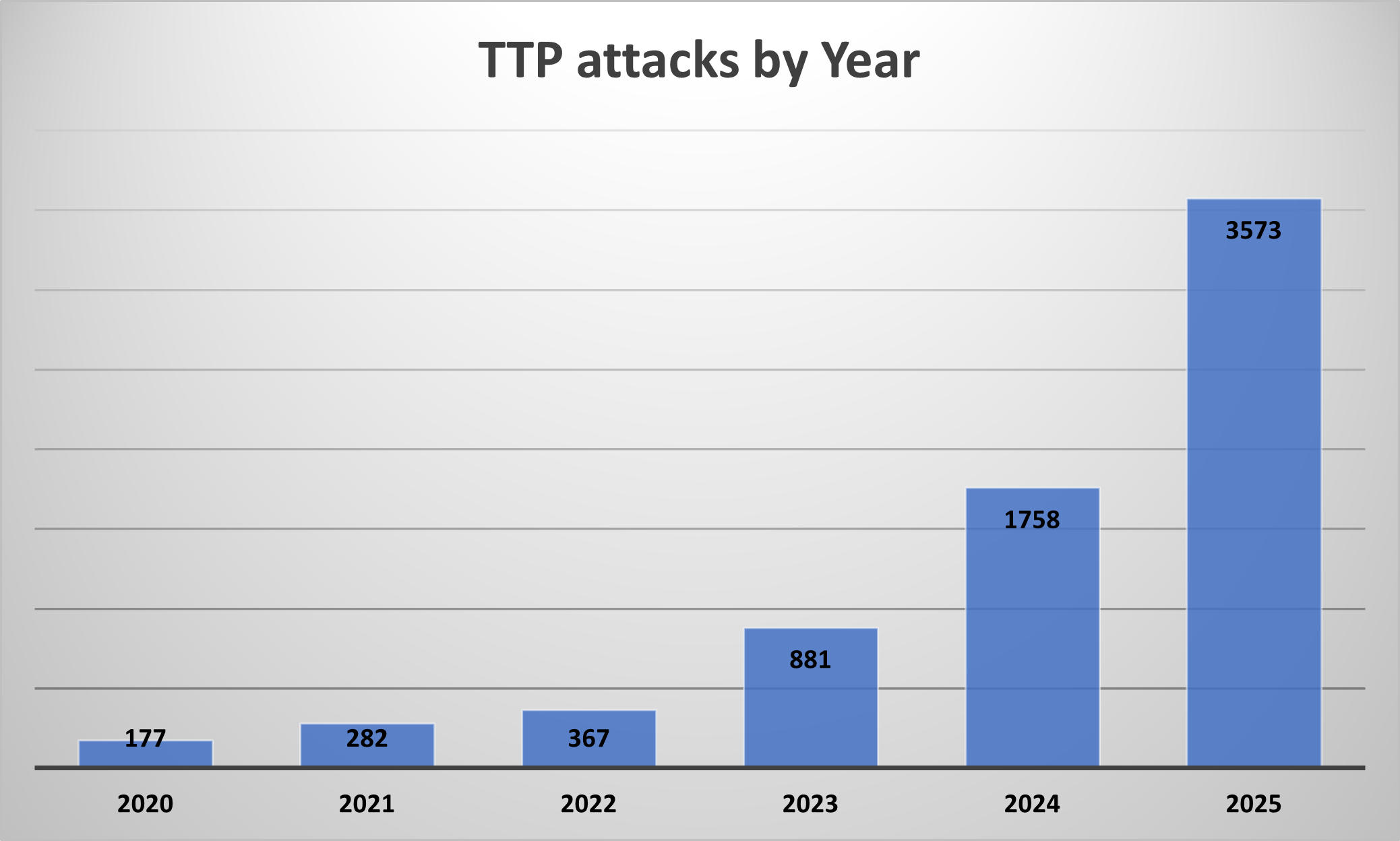
The high number of operations claimed (3573) indicates a sustained operational capability, incompatible with a residual clandestine structure.
The tribal areas and the Khyber Pakhtunkhwa constitute the operational centre of gravity of the organisation, confirming a strong territorial and social continuity.
The TTP favours low- and medium-intensity attrition tactics, with extensive use of snipers, guerrilla warfare, and sabotage of state surveillance and mobility capabilities.
The suicide dimension is marginal, signalling a pragmatic operational doctrine oriented towards the sustainability of the conflict in the long term.
Methodology
The analysis is based on a full, contextualised translation of the annual infographic published by Umar Media for 2025 (1446–1447 AH). The declared data were subjected to a descriptive quantitative analysis and a qualitative evaluation, aimed at identifying operational patterns, strategic priorities and territorial dynamics.
The report takes a critical approach to jihadist propaganda, distinguishing between:
operational activities actually claimed, generally reliable in their occurrence;
impact assessments, particularly about the number of victims, which are subject to overestimation.
The data are interpreted as trend indicators, not as point-by-point, definitive measurements.
Source Reliability and Limits
Reliability
The figures for the number of operations are considered largely reliable.
The numbers on deaths and injuries are likely inflated, in line with established TTP communication practices.
In summary, TTP emphasises effectiveness, but rarely invents activity.
Limits
Absence of systematic independent verification for each event.
Possible under-representation of failed or low-impact operations.
Framing is intentionally oriented to present the TTP as a legitimate actor of armed resistance.
Preliminary Analytical Implications
The picture emerging from 2025 suggests that the threat posed by the TTP should not be interpreted as an exclusively security or emergency problem, but as a structural challenge to the sovereignty and territorial control of the Pakistani state. Unlike more fragmented and transnational jihadist organisations, the TTP operates within a defined national context, exploiting historical fractures, weak governance, and unresolved center–periphery dynamics.
Bottom Line
In 2025, Tehrik-e-Taliban Pakistan is neither a declining player nor a residual phenomenon. It is a territorially entrenched armed insurgency, capable of sustaining a protracted conflict against the Pakistani state, as long as the structural conditions that fuel its operations remain unchanged.
Full translation of the TTP infographic
Source: Umar Media (official TTP organ)
Original title: “Annual Comprehensive Operational Report of Tehreek Taliban Pakistan for the Year 2025 (1446–1447 AH)”.
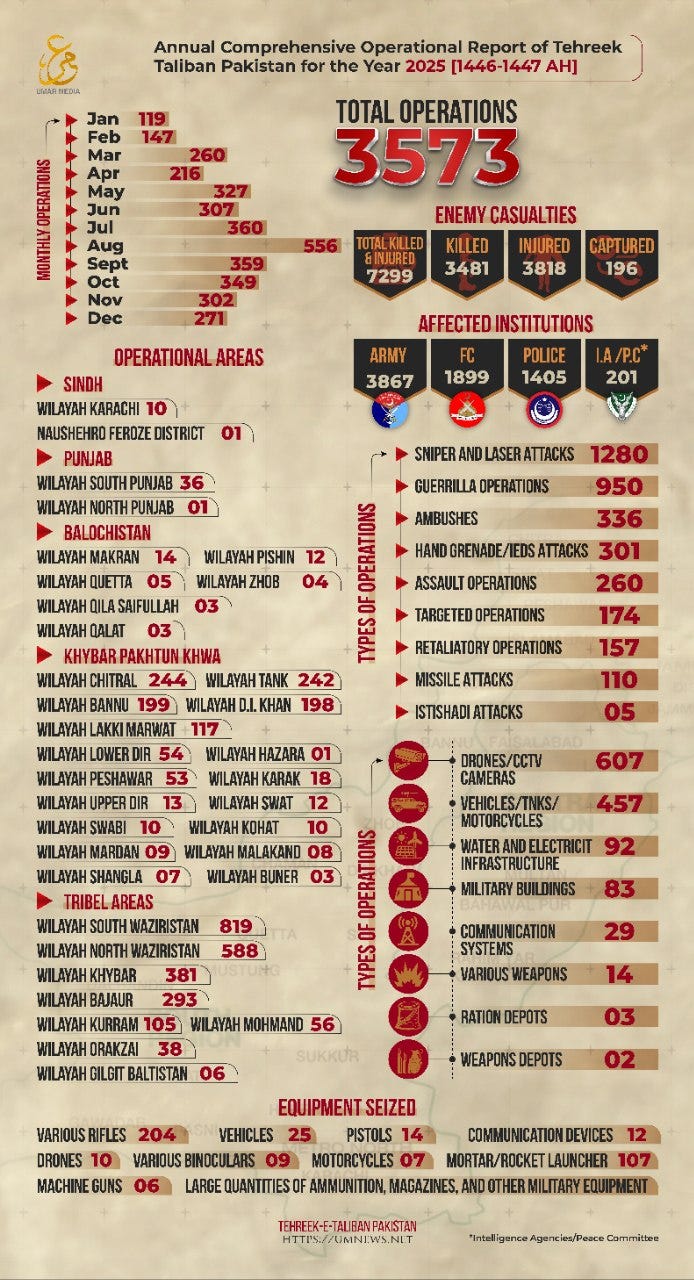
Overall activity
3573 attacks
7,299 dead and injured:
- 3481 killed
- 3818 injured
- 196 captured
Inflated figure, but plausible order of magnitude compared to actual operating intensity.
Monthly operations:
January: 119
February: 147
March: 260
April: 216
May: 327
June: 307
July: 360
August: 556 (annual peak)
September: 359
October: 349
November: 302
December: 271
Clear trend of seasonal escalation, with maximum summer intensity.
Operational areas:
Sindh:
Karachi: 10
Naushero Feroze: 1
Punjab:
South Punjab: 36
North Punjab: 1
Balochistan:
Makran: 14
Pishin: 12
Quetta: 5
Zhob: 4
Qila Saifullah: 3
Qalat: 3
Khyber Pakhtunkhwa
Chitral: 244
Tank: 242
Bannu: 199
DI Khan: 198
Lakki Marwat: 117
Lower Dir: 54
Peshawar: 53
Upper Dir: 13
Swat: 12
Swabi: 10
Karak: 18
Kohat: 10
Mardan: 9
Malakand: 8
Shangla: 7
Buner: 3
Hazara: 1
Tribal Areas (ex-FATA):
South Waziristan: 819
North Waziristan: 588
Khyber: 381
Bajaur: 293
Kurram: 105
Mohmand: 56
Orakzai: 38
Gilgit-Baltistan: 6
Tribal areas remain the absolute centre of gravity of the TTP insurgency.
Types of operations
Sniper & laser attacks: 1280
Guerrilla operations: 950
Ambushes: 336
Hand grenade / IED attacks: 301
Assault operations: 260
Targeted operations: 174
Retaliary operations: 157
Missile attacks: 110
Suicide (Istishhadi) attacks: 5
Affected Institutions (letteralmente: “istituzioni colpite/impattate”):
Army
FC (Frontier Corps)
Police
I.A. / P.C.
* The acronym IA/PC in this type of graphics TTP is normally understood as Intelligence Agencies/Peace Committee (information apparatus and local pro-government committees/structures employed for social control and mediation/tribal co-optation).
The distribution of “affected institutions” shows a clear anti-state priority: the Army (3867) and the Frontier Corps (1899) constitute the most frequently indicated targets, followed by the Police (1405) and, to a lesser extent, by local pro-government information apparatus and structures (IA/PC, 201). Although it is a propaganda metric that is not perfectly defined (and does not coincide with the total number of operations), its relative distribution reinforces the interpretation of the TTP as an insurrectional actor focused on the erosion of the coercive and territorial control capabilities of the State.
Types of Operations:
Drones / CCTV / cameras: 607
Vehicles / wagons / motorcycles: 457
Water and electricity infrastructure: 92
Military buildings: 83
Communication systems: 29
Various weapons: 14
Food storage: 3
Weapons depots: 2
Marked focus on surveillance capacity and state mobility.
Equipment seized:
Rifles: 204
Vehicles: 25
Pistols: 14
Drones: 10
Binoculars: 9
Motorcycles: 7
Machine guns: 6
Communication devices: 12
Mortar Launcher / Rockets: 107
Large quantities of ammunition and military materiel.
Strategic Analysis
Continuity and real Escalation
The Tehrik-e-Taliban Pakistan’s activity in 2025 cannot be interpreted solely as a demonstration of organisational resilience. The overall volume of operations claimed, amounting to 3,573 events, is incompatible with a simple clandestine capacity for survival and rather indicates the existence of a high-intensity, active armed insurgency. The temporal continuity of operations, distributed relatively evenly throughout the year with well-defined seasonal peaks, strengthens the hypothesis of a sustained capacity for planning, coordination, and operational regeneration. Therefore, we are not dealing with episodic or opportunistic terrorism, but rather with a form of prolonged irregular warfare, waged to maintain constant pressure on state forces and contest territorial control in the medium to long term.
Territorial Centralisation, Not Fragmentation
Spatially, the TTP’s operational model differs markedly from that of fragmented transnational jihadist organisations. Its activity in 2025 demonstrates strong territorial roots and marked geographic continuity, with a clearly identifiable operational core in Khyber Pakhtunkhwa and the former Tribal Areas (formerly FATA). The concentration of operations in these regions suggests the existence of consolidated local networks, deeply embedded in the social fabric and capable of exploiting tribal dynamics, governance gaps, and the structural limitations of state control. The TTP, therefore, does not appear as a widespread global network, but as a national insurgency with local depth, capable of operating coherently within a relatively limited but strategically crucial geographic space.
Operational Doctrine: Systemic Attrition
The distribution of the types of attacks claimed in 2025 reveals an operational doctrine clearly oriented toward systemic attrition of the state. The dominant emphasis on sniper attacks, guerrilla operations, and technological sabotage against drones, video surveillance systems, and control infrastructures points to a strategy aimed at progressively eroding the operational and surveillance capabilities of state forces. This approach prioritises conflict sustainability and the gradual reduction of state effectiveness, rather than the pursuit of spectacular effects or terrorist shocks. In this context, the extremely limited number of suicide attacks, limited to five episodes in the entire year, takes on significant analytical value: the TTP does not rely on martyrdom as a central tool for legitimacy or impact, but on repeated, calculated violence that serves to maintain insurgency pressure.
Targeting: the State, Not Society
Target analysis further confirms the organisation’s insurgency nature. The focus is clearly on state institutions and coercive apparatuses, particularly the army, the Frontier Corps, and the police, as well as the infrastructure that supports territorial control and the state’s capacity for intervention. The organisation’s breakdown of targeted institutions highlights a consistent priority in targeting the armed and security forces, reinforcing the portrayal of the TTP as an actor engaged in direct conflict with the state rather than a campaign of indiscriminate violence against civil society.
Analytical Implications
In 2025, the threat posed by the TTP must be interpreted as acute and territorially defined, not diffuse and chronic like that posed by other transnational jihadist organisations. Pakistan is facing a low- or medium-intensity internal conflict, rather than a mere public order or episodic security problem. In this context, approaches based exclusively on kinetic operations and the decapitation of the leadership appear structurally insufficient, as they fail to address the conditions that allow the insurgency to regenerate. In the absence of stable territorial control, strengthened governance in the tribal areas, and broader reform of the centre-periphery relationship, the Tehrik-e-Taliban Pakistan is destined to continue operating and adapting, despite the losses inflicted by its security forces.
Conclusion and Strategic Policy Implications
An analysis of Tehrik-e-Taliban Pakistan’s activity in 2025 clearly indicates that the organisation cannot be treated as a residual jihadist actor or an episodic threat solely attributable to terrorist dynamics. The TTP is a territorial armed insurgency, rooted in specific regions of northwestern Pakistan and capable of sustaining a protracted conflict through a pragmatic, adaptive operational model geared toward state attrition. Its strength lies not in its ability to produce spectacular shocks or mobilise mass ideological consensus, but rather in its combination of geographic continuity, local presence, and systematic exploitation of structural weaknesses in state governance.
From a strategic perspective, this implies that the TTP threat is destined to persist as long as the conflict remains confined to the predominantly military level. Kinetic operations and leadership decapitation campaigns, while producing short-term tactical results, have not proven to have a lasting impact on the organisation’s ability to regenerate and maintain de facto control of portions of territory. On the contrary, military pressure unaccompanied by institutional consolidation tends to strengthen insurgency dynamics, fueling cycles of violence that the TTP is structurally prepared to sustain.
At the policy level, the need for an integrated approach that recognises the internal and territorial nature of the conflict emerges. Strengthening state control in the tribal areas and Khyber Pakhtunkhwa cannot be limited to the presence of security forces but must include credible investments in local governance, civil administration, justice, and essential services, reducing the political and social space in which the insurgency thrives. In the absence of a rebalancing of the centre-periphery relationship and a genuine integration of the tribal peripheries into the Pakistani state, the TTP will continue to present itself as an armed alternative, even in contexts of strong military pressure.
Finally, from a regional security perspective, the persistence of the TTP represents a factor of structural instability that goes beyond the scope of traditional jihadist terrorism. The organisation’s ability to sustain a low- and medium-intensity insurgency means that the primary risk is not a rapid escalation toward a seizure of power, but rather a permanent normalisation of conflict. In this scenario, the realistic objective of counter-terrorism policies is not the rapid defeat of the organisation, but rather the progressive reduction of its strategic relevance through state strengthening, rather than simply eliminating its fighters.
🔒 Executive Intelligence Cycle
This assessment is part of a broader analytical cycle.
Founding subscribers receive the Executive Intelligence Briefing, which integrates all threat assessments, cognitive domain analysis, and a rolling 30–90 day forecast into a single monthly strategic synthesis.
© Daniele Garofalo Monitoring - All rights reserved.
Daniele Garofalo is an independent researcher and analyst specialising in jihadist terrorism, Islamist insurgencies, and armed non-state actors.
His work focuses on continuous intelligence monitoring, threat assessment, and analysis of propaganda and cognitive/information dynamics, with an emphasis on decision-oriented outputs, early warning, and strategic trend evaluation.
Daniele Garofalo Monitoring is registered with the Italian National ISSN Centre and the International Centre for the Registration of Serial Publications (CIEPS) in Paris.ISSN (International Standard Serial Number): 3103-3520ORCID Code: 0009-0006-5289-2874Support my research, analysis and monitoring with a donation here, PayPal.Me/DanieleGarofalo88