


Executive Intelligence Overview
This weekly intelligence brief documents and structures recent jihadist propaganda activities released between 18 and 24 August, highlighting recent threat developments and providing structured situational awareness across multiple organisations and theatres.
This brief highlights operational claims and targets, emphasising their significance for threat recognition and strategic focus, helping analysts and policymakers see their critical role in understanding ongoing threats and their strategic implications.
This product supports systematic monitoring, reassuring analysts and policymakers that threat trends are being tracked thoroughly and that their efforts are vital to maintaining a clear understanding of threats.
This publication does not include threat assessments, intent evaluation, or operational forecasting. Those components are addressed separately in dedicated analytical outputs.
🔹 Scope of Monitoring
This issue covers all identifiable official propaganda from a predefined list of jihadist groups, selected for operational relevance and threat level, during the reporting period, enhancing situational awareness.
The focus on documentation, classification, and structured presentation of primary-source material aims to instil confidence in analysts and policymakers about the reliability of the data used for threat assessment.
🔹 Sources & Collection Methodology
This analysis relies solely on primary-source propaganda, such as official magazines, videos, photos, statements, claims, and audio recordings, to clarify the scope of sources and strengthen the reliability of the data used for threat assessment.
Official magazines,
Videos,
Photo sets,
Statements and claims of responsibility,
Audio statements.
Material is collected and categorised by organisation, media outlet, and content type.
The study relies on OSINT, IMINT, SOCMINT, and Digital HUMINT collection streams.
No secondary reporting, media commentary, or interpretative overlay is applied.
🔹 Analytical Boundaries & Limitations
Fluctuations in volume, language, or format signal activity trends that analysts should interpret within the broader context of operational tempo, recent events, and known threat indicators, supporting their confidence in threat assessments and reducing misinterpretation risks.
They shouldn’t be considered in isolation as indicators of strategic shifts, operational escalation, or changes in intent and capability; instead, they should be integrated within broader intelligence products such as Strategic Threat Outlooks and Cognitive Assessments to support comprehensive threat evaluations.
Strategic shifts,
Operational escalation,
Intent or capability changes.
All higher-order analytical interpretation is conducted separately within:
Intelligence Briefs,
Strategic Threat Outlooks,
Cognitive and Information Domain Assessments.
🔹 Monitored Propaganda Output and Weekly Monitoring Notes
This issue includes all primary propaganda material released during the week by:
Al-Qaeda and affiliates
JNIM
Al-Shabaab
Pro-AQ media channels (Al-Bayan Newspaper - Weekly Issue)
AQIS
Islamic State
Al-Naba Newspaper (weekly Issue)
Official IS media channels.
Independent Jihadist Groups
Ittehad Mujahidin Pakistan
Tehrik-i-Taliban Pakistan
The conclusions are included in the Weekly Monitoring Notes.
Al-Qaeda (AQ)
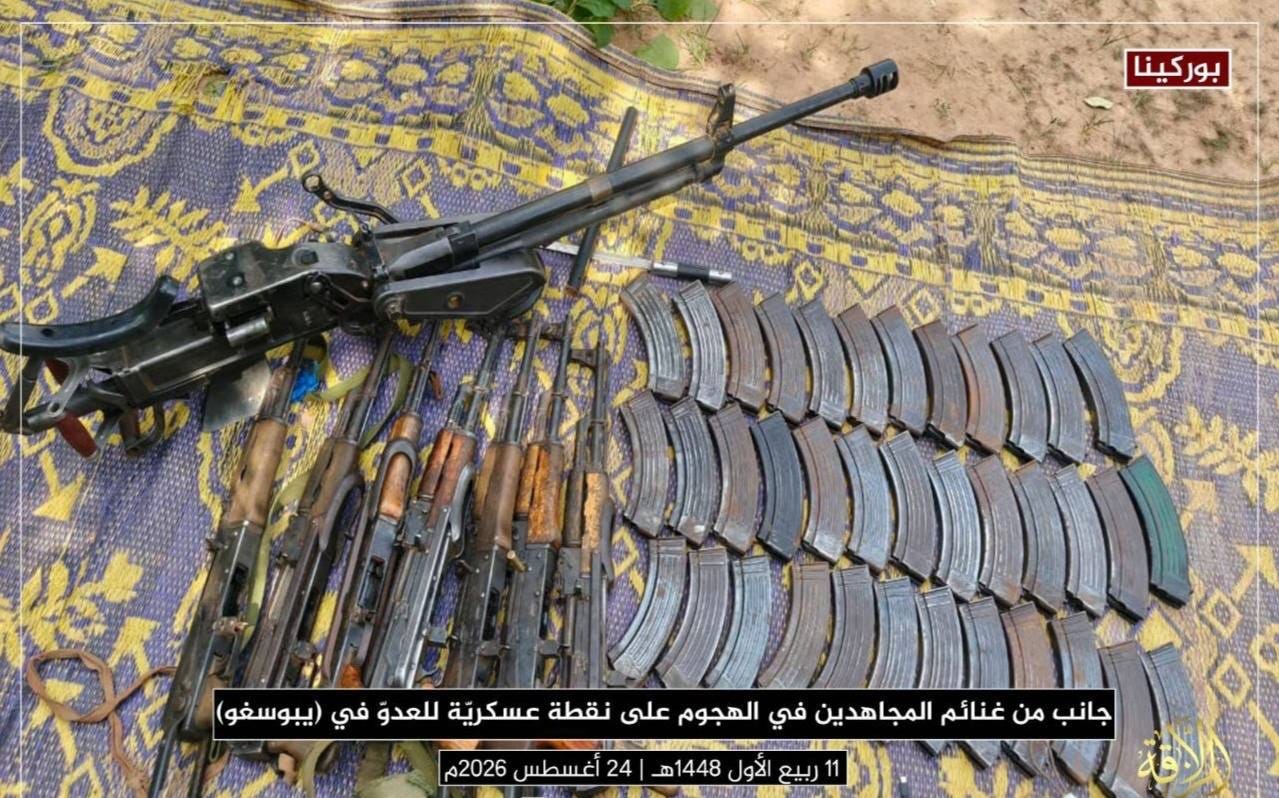
Az-Zallaqa Media, Jama’at Nasr al-Islam wal Muslimin (JNIM), issued 21 statements and 6 photos, claiming 30 attacks.
The targets of the attacks were: Malian Army, Dozo militia, Russian PMC Africa Corps, Burkinabé Army, VDP militia, Niger Army, Islamic State militia.
The areas of the attacks were :
1) Burkina Faso = 24
- Gourma province, Yatenga province, Sissili province, Oudalan province, Poni province, Sèno province, Soum province, Bam province.
2) Mali = 4
- Kayes region, Mopti region, Sikasso region, Segou region.
3) Niger = 2
- Tillaberi region.
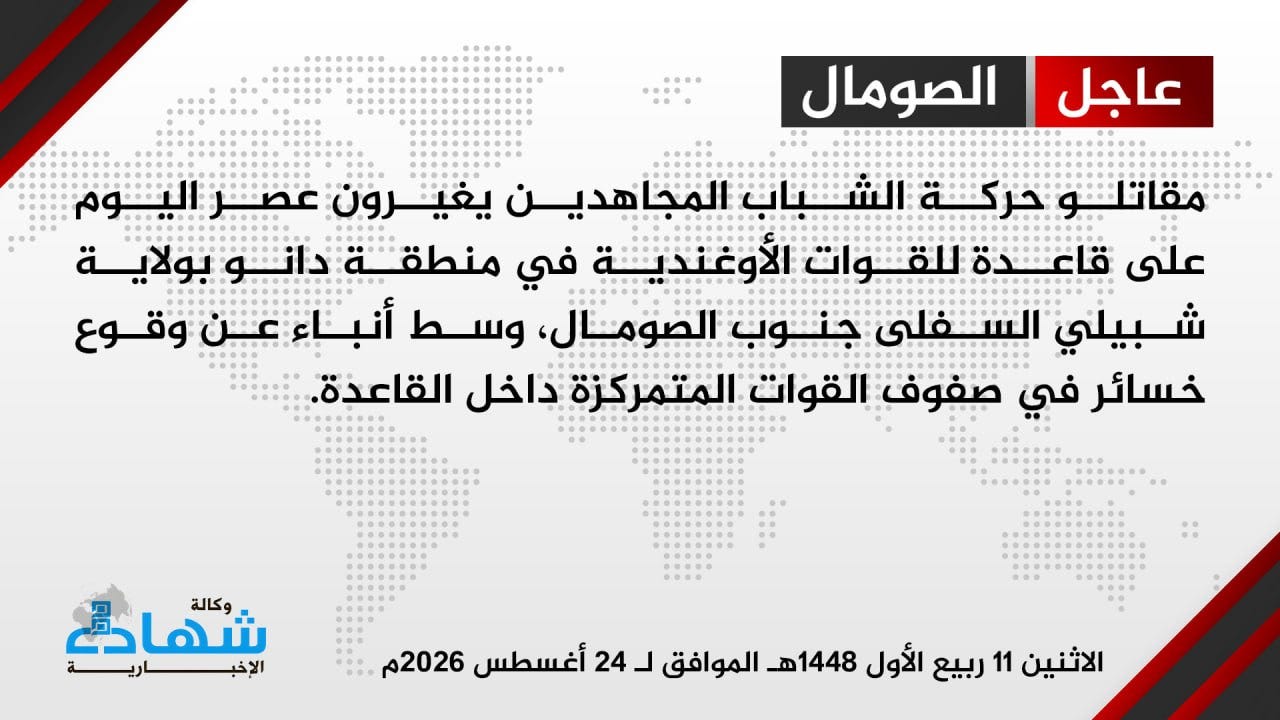
The Shahada News Agency, Harakat al-Shabaab al-Mujahidin (AS), released 14 statements claiming responsibility for 46 attacks.
The targets of the attacks were:
Somali Army, Somali Intelligence, Somali Police, Somali pro-government militia, Burundian Army, Ugandan Army, Ethiopian Army, Kenyan Army.
The areas affected by the attacks were:
1) Somalia = 18
- Afgooye area, Zubayd area, Qoryooley area, Baledogle area, Shalaambood area, Lower Shabelle region;
- Beledweyne area, Hiiran region;
- Mahaday area, Balad area, Middle Shabelle region;
- Mogadishu area.
2) Kenya = 6
- El Galo area, Mandera County;
- Igara area, Garissa County;
- Kenton area, Wajir County;
- Mangai area, Lamu County.
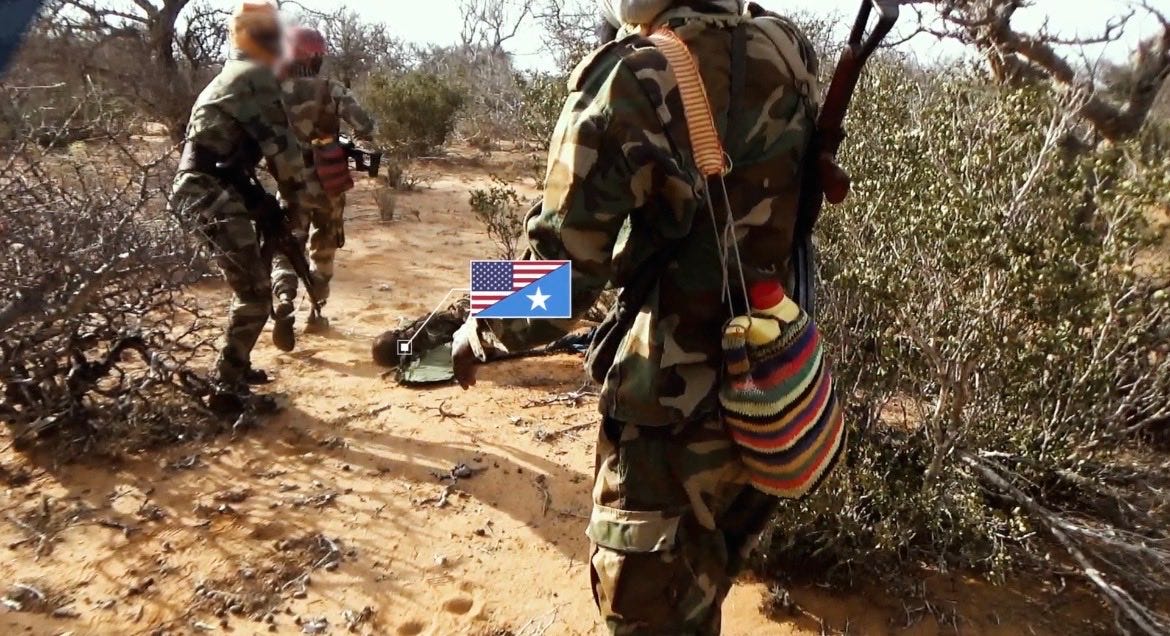
Al-Kataib Media, Harakat al-Shabaab al-Mujahidin, released a 2-minute, 14-second video showing the attack on a convoy of pro-government militias in the Teedan area, in the Hiiran region of Somalia.
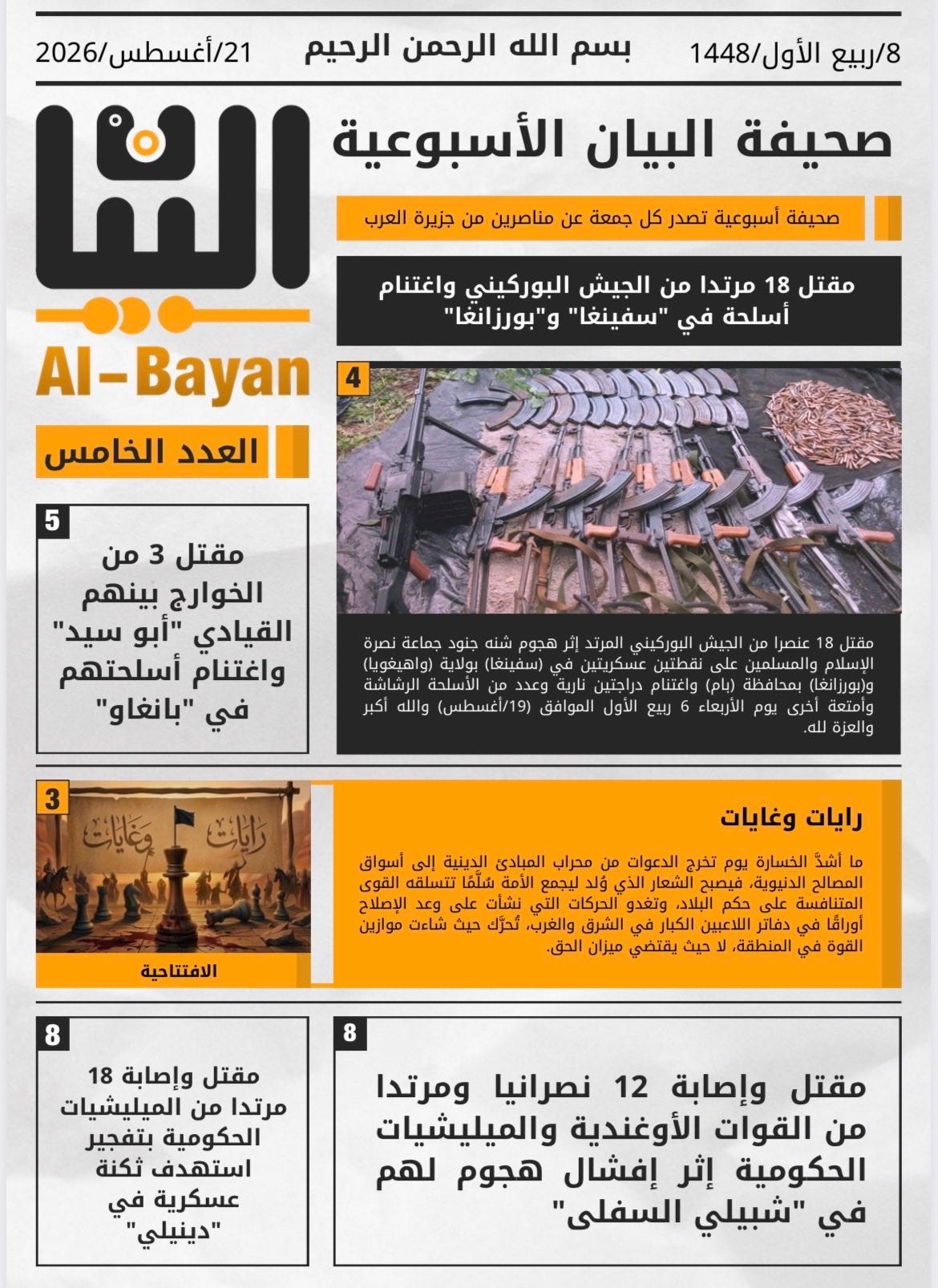
The fifth issue of the weekly Al-Bayan, published by the pro-Al-Qaeda (AQ) media outlet al-Yaqin – this time comprising 21 pages. The issue features the usual infographic summarising the attacks of the past week, religious messages and reports on the activities of al-Shabaab and JNIM.
This issue has two particularly interesting aspects. The first is the editorial, which, whilst discussing the situation in Yemen, fiercely criticises the Houthis, holding them primarily responsible for the country’s destruction: “The Houthis control the country with the green light from their American master and the tacit approval of Islamic movements and parties. There is no doubt that the Houthis are an evil enemy, a murderous criminal and a tyrant who has corrupted the country and its people.”
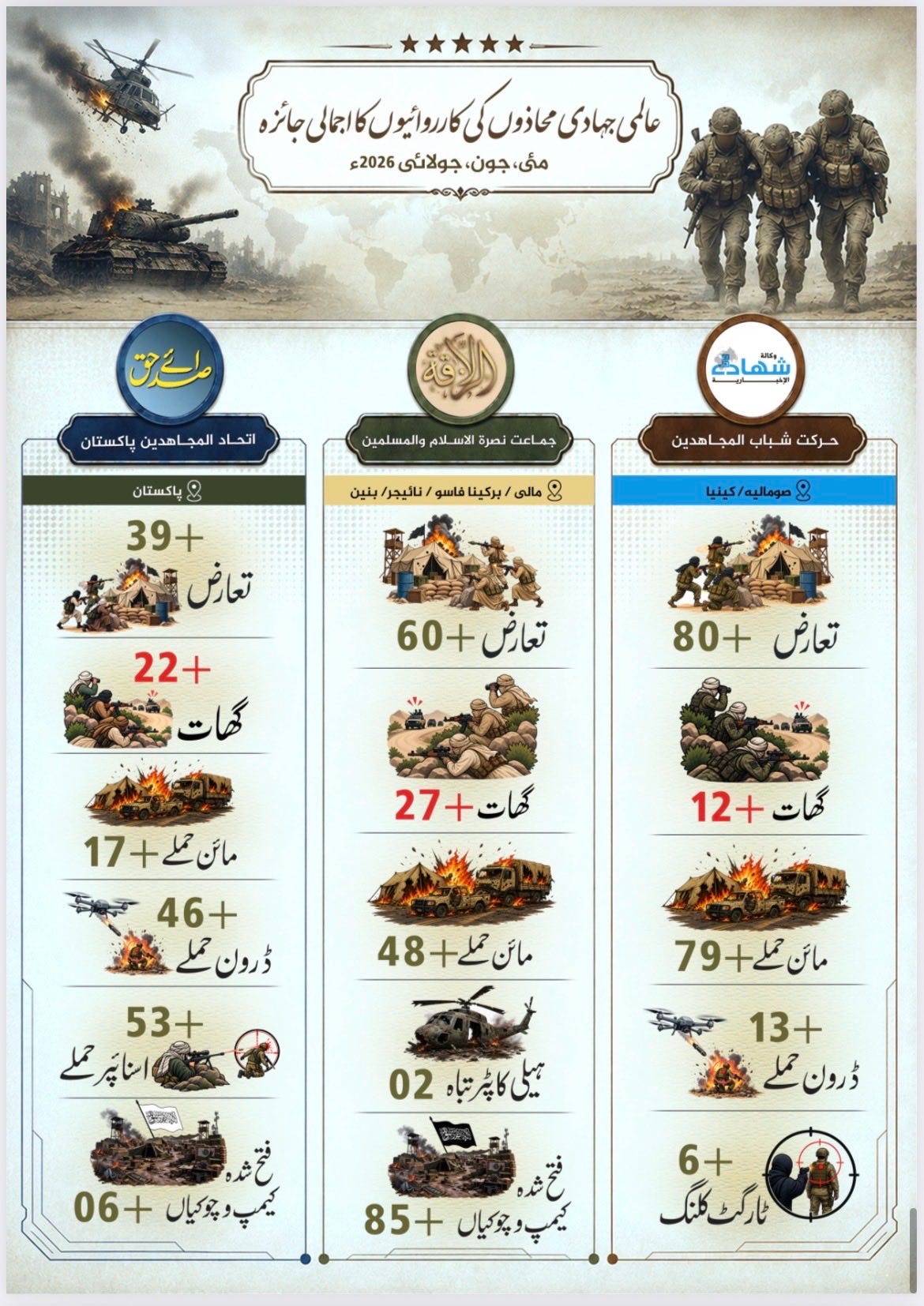
The second interesting point is the second infographic, which shows a breakdown of attacks carried out from May to July 2026 not only by JNIM and al-Shabaab, but also by the Pakistani jihadist group IMP (the same infographic appears in the latest August issue of the AQIS magazine).
Al-Qaeda in the Indian Subcontinent (AQIS) published the August 2026 issue of its magazine “Nawa'i Ghazwat al-Hind”.
The magazine runs to 147 pages and includes a collection of doctrinal, political, and organisational articles focusing on Bangladesh; the use of the internet and smartphones and the dangers they pose; the boycott of Western products and companies; and criticism of Israel and its settlers.
The issue also features a detailed infographic summarising the operations of JNIM, IMP and al-Shabaab in May, June and July 2026.

Islamic State (IS)
The Islamic State’s official media published 2 issues of the weekly al-Naba this week (561). Issue 561, eight pages long, covers the week of 1 to 6 Rabi al-Awaal 1448, from 13 to 19 August 2026. The main infographic summarises the areas affected by military operations this week, including:
Nigeria, Niger, Mozambique, and the Democratic Republic of Congo.
IS claims to have conducted 16 operations in all the mentioned areas and to have caused 35 deaths and injuries.
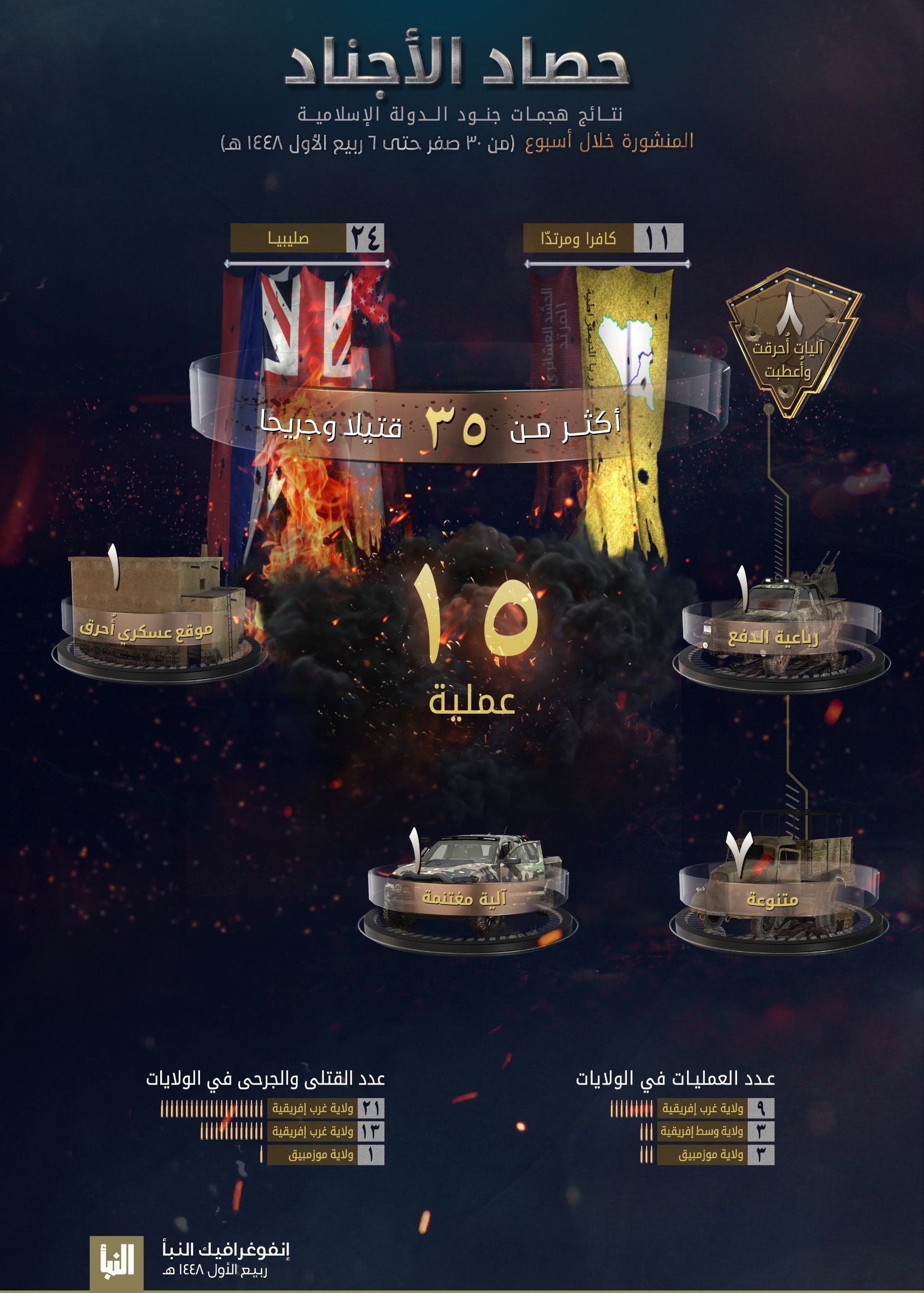
1) West Africa Province: The weekly al-Naba reports 9 attacks carried out by ISWAP militants: 8 against checkpoints, convoys, patrols, and camps belonging to the Nigerian army and pro-government militias in the states of Borno and Yobe, Nigeria; 1 against pro-government Christian militias in the Maroua area, in the Far North region of Cameroon.
2) Central African Province: The weekly al-Naba reports that ISCAP militants carried out three attacks against patrols and barracks of the Congolese army and pro-government militias in the provinces of Ituri and Haute Uele in the Democratic Republic of the Congo.
3) Mozambique Province: The weekly newspaper al-Naba reports that ISM militants carried out three attacks against pro-government Christian militia patrols and against Chinese agricultural companies and vehicles in the districts of Macomia and Quissanga, in the province of Cabo Delgado, Mozambique.
Independent Jihadist Groups
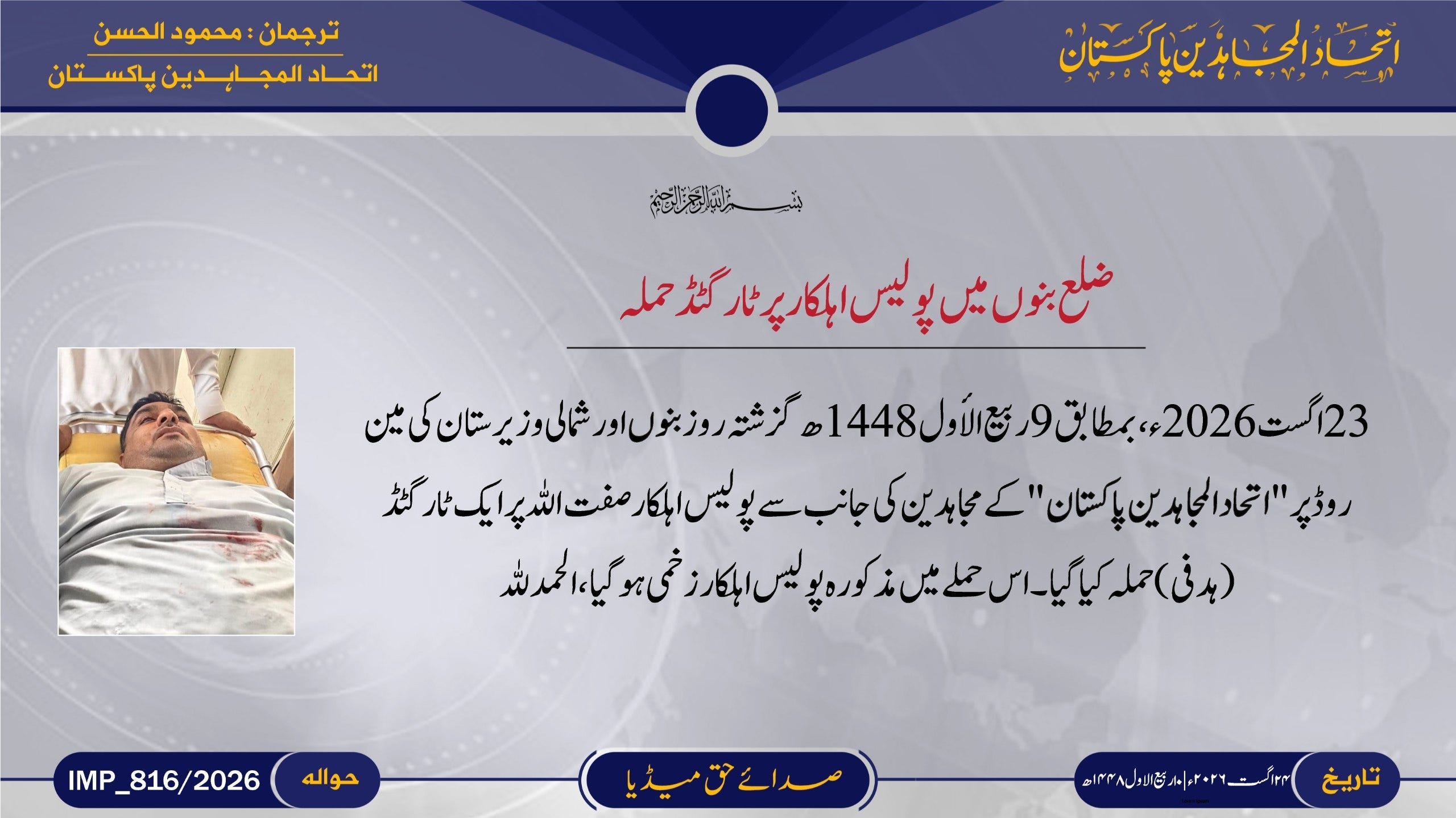
Ittehad-ul-Mujahideen Pakistan (IMP), a Pakistani jihadist organisation comprising the Hafiz Gul Bahadur Group (HBG), Lashkar-e-Islam and the Harkat Inqilab-e-Islami Pakistan (HIIP), released 19 statements, claiming 22 attacks.
Target: Pakistan Army, Pakistan Police, Counter Terrorism Department Police (CTD), Secret/Peace Committee.
Area: North Waziristan district, South Waziristan district, Orakzai district, Khyber district; in the Khyber Pakhtunkhwa Province; Pakistan
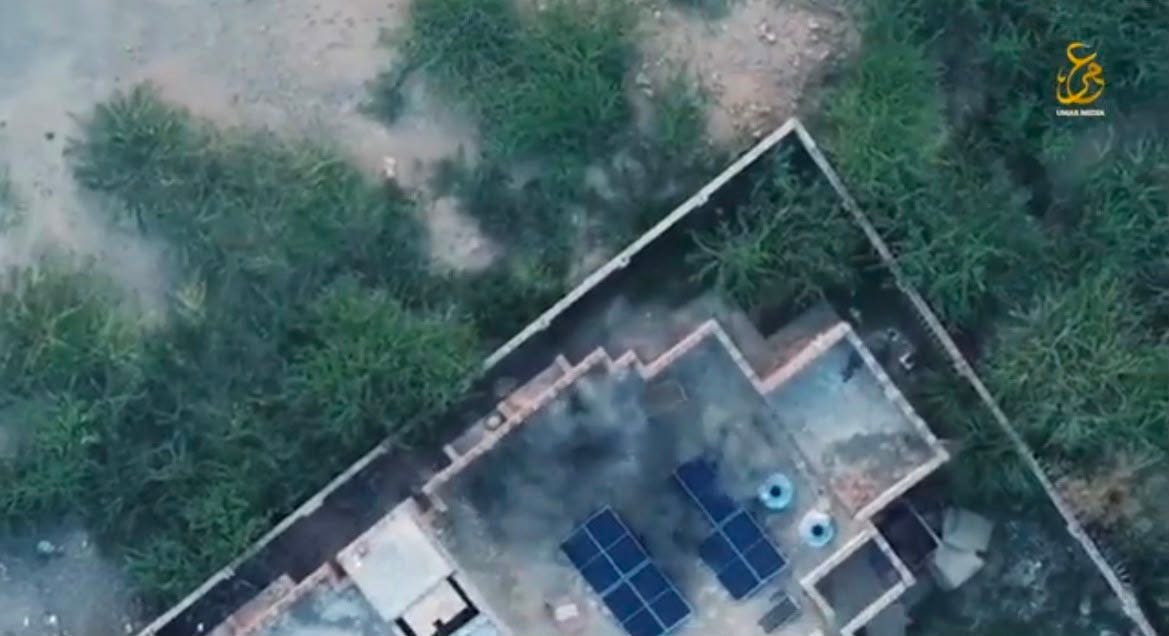
Umar Media, Tehrik-i-Taliban Pakistan (TTP) released a video lasting about 7 minutes to show the attacks carried out by its militants (using drones, snipers, improvised explosive devices, assaults, and ambushes) against Pakistani police and army barracks, outposts, and patrols in the districts of Mohmand, North Waziristan, South Waziristan, Peshawar, Karak, Bajaur, Tak, Khyber, Kohat, DI Khan, southern Punjab, and Kurram, in the Khyber Pakhtunkhwa province of Pakistan.
🔹Weekly Monitoring Notes
The reporting period from 18 to 24 August was characterised by a high but unevenly distributed propaganda cycle. Al-Qaeda affiliates remained the dominant source of operational reporting, with JNIM returning to a significantly higher level of activity and al-Shabaab sustaining the exceptionally elevated tempo observed during the previous reporting period. At the same time, the wider pro-Al-Qaeda media ecosystem continued to consolidate through the parallel development of Al-Bayan and AQIS long-form publishing. Islamic State maintained a comparatively restrained operational media posture, while Pakistan-based jihadist organisations continued to generate persistent claims and multi-method operational documentation.
Within the Al-Qaeda ecosystem, JNIM registered a marked rebound after the lower-volume cycle recorded during the previous week. Az-Zallaqa Media issued 21 statements and six photographic products, claiming 30 attacks across Burkina Faso, Mali and Niger. Burkina Faso represented the clear centre of gravity of the reporting period, accounting for 24 of the claimed operations and covering a broad geographic arc across Gourma, Yatenga, Sissili, Oudalan, Poni, Séno, Soum and Bam provinces. Mali and Niger remained secondary theatres, with operations reported in several central and southern Malian regions and in Tillabéri.
The target profile remained structurally consistent with JNIM’s recent propaganda output, focusing on Malian and Burkinabè forces, VDP and Dozo militias, Russian Africa Corps personnel and Islamic State militants. The continued inclusion of Islamic State among the target categories is noteworthy within the monitoring framework because it confirms that intra-jihadist confrontation remains integrated into JNIM’s public operational narrative rather than treated as a peripheral or exceptional development. This allows the organisation to portray itself simultaneously as an insurgent challenger to state authority, a competitor to foreign military actors and a rival to alternative jihadist structures operating in the same battlespace.
JNIM’s media activity during the week remained primarily operational rather than strategic. Unlike the Abu Mahmoud interview released earlier in August, no comparable leadership-level product was observed. The current cycle instead returned to high-frequency battlefield reporting, suggesting that Az-Zallaqa continues to alternate between periods dominated by strategic communication and periods centred on operational validation. This distinction matters for longitudinal monitoring because the organisation’s propaganda increasingly appears to operate on two parallel levels: immediate documentation of military activity and episodic higher-order messaging focused on governance, legitimacy, and information competition.
Al-Shabaab maintained an exceptionally high level of media activity for a second consecutive reporting period. Shahada News Agency issued fourteen statements and reported responsibility for forty-six attacks. At the same time, Al-Kataib Media released a dedicated video documenting an attack against pro-government forces in the Teedan area of Hiiran. The overall targeting spectrum remained broad, encompassing the Somali Army, Police and intelligence services, local pro-government militias and Burundian, Ugandan, Ethiopian and Kenyan forces.
The geographic distribution reported during the week again demonstrates the breadth of the organisation’s operational communication environment. Activity was documented in Lower Shabelle, Hiiran, Middle Shabelle, and Mogadishu, along with cross-border claims in Mandera, Garissa, Wajir, and Lamu counties in Kenya. The Kenyan component is particularly relevant from a monitoring perspective because it extends beyond the recurrent Mandera and Garissa axes to include Wajir and Lamu, reinforcing the group’s effort to maintain a persistent cross-border narrative rather than presenting its campaign exclusively through the Somali insurgency.
The sustained volume of al-Shabaab claims across consecutive reporting periods is now more important than any single weekly peak. If confirmed by subsequent issues, the current output may indicate that the organisation has established a higher baseline of operational communication. The propaganda function remains closely tied to battlefield visibility, with limited doctrinal innovation. Still, the frequency and geographic dispersion of claims allow the organisation to communicate persistence, simultaneity and regional reach. The Teedan video complements this claims architecture by providing visual reinforcement for operations in a theatre that had already received territorial-control messaging earlier in August.
The wider Al-Qaeda information ecosystem also displayed continued structural development. The fifth issue of Al-Bayan expanded to twenty-one pages, suggesting that the publication is moving beyond an experimental phase and toward a more institutionalised weekly format. Its recurring structure, operational infographics, affiliate reporting, religious messaging and editorial commentary increasingly resemble an attempt to provide a common information layer across different Al-Qaeda-linked theatres.
Two elements of the latest Al-Bayan issue are particularly relevant. The first is the editorial on Yemen and the Houthis, which places an explicitly hostile anti-Houthi narrative within a publication otherwise focused heavily on African affiliate activity. This broadens the product’s geographic and political remit and demonstrates that Al-Bayan is intended not merely as an aggregator of JNIM and al-Shabaab operations, but as a vehicle for wider ideological interpretation of contemporary conflicts.
The second is the incorporation of an infographic covering JNIM, al-Shabaab and IMP operations from May through July. The appearance of the same or closely related statistical product in the latest AQIS magazine is a significant media-development indicator. It suggests increasing circulation of common data products across distinct pro-Al-Qaeda and affiliate-linked publications. From a monitoring perspective, this points toward greater narrative integration within the wider Al-Qaeda information environment, even where organisational command relationships remain separate or ambiguous. IMP’s inclusion alongside recognised Al-Qaeda affiliates is especially notable because it contributes to the gradual normalisation of the Pakistani coalition within a broader jihadist media frame.
AQIS reinforced this trend through the August issue of Nawa’i Ghazwat al-Hind. At 147 pages, the publication continues to demonstrate substantial investment in long-form ideological and organisational communication. Its thematic range- Bangladesh, digital technology, smartphones, boycott campaigns, Israel and settler-related narratives- combines regional political framing with behavioural guidance and broader ideological messaging. The replication of cross-organisational statistics involving JNIM, al-Shabaab and IMP further reinforces the impression of an increasingly interconnected media discourse linking South Asian and African theatres.
Islamic State official propaganda remained comparatively restrained. Al-Naba issue 561 reported sixteen operations and thirty-five deaths and injuries, considerably below the high-volume reporting cycles observed earlier in the summer. African provinces nevertheless continued to dominate the organisation’s geographic profile. West Africa Province accounted for the majority of the detailed attacks, followed by Central Africa and Mozambique Province.
ISWAP remained the principal operational contributor, with attacks against Nigerian military targets in Borno and Yobe and an additional operation against pro-government Christian militias in northern Cameroon. ISCAP continued to report attacks against Congolese forces and allied militias in Ituri and Haut-Uélé, while Islamic State Mozambique maintained pressure in Macomia and Quissanga. The reported targeting of Chinese agricultural companies and vehicles in Cabo Delgado is noteworthy within the media cycle because it extends the target narrative beyond local security actors and Christian communities toward foreign-linked economic interests.
The Islamic State output therefore remains Africa-centred but currently lacks the strategic amplification observed in earlier reporting periods, when major provincial infographics, high-casualty attacks or leadership communications dominated the media cycle. The current profile is one of continuity rather than expansion, with official propaganda primarily sustaining visibility across established provinces.
Independent jihadist activity remained concentrated in Pakistan. Ittehad-ul-Mujahideen Pakistan released nineteen statements claiming twenty-two attacks across North and South Waziristan, Orakzai and Khyber. The target set remained unchanged, focusing on the Pakistani Army, Police, Counter Terrorism Department and local security structures. The volume represents a stable and comparatively high operational reporting rhythm, reinforcing IMP’s position as one of the most persistent independent jihadist communicators currently monitored in South Asia.
TTP complemented this output with a seven-minute operational video covering a particularly broad geographic set of districts and attack methods. The inclusion of drones, sniper attacks, IEDs, ambushes and direct assaults within a single production continues the organisation’s established emphasis on tactical diversity. More importantly, the geographic spread across Mohmand, the Waziristan districts, Peshawar, Karak, Bajaur, Tank, Khyber, Kohat, Dera Ismail Khan, Kurram and southern Punjab allows Umar Media to frame the campaign as geographically distributed rather than confined to traditional insurgent strongholds.
Taken together, the Pakistan-related products demonstrate two complementary propaganda models. IMP relies heavily on frequent claims and quantitative operational continuity. At the same time, TTP increasingly combines statistical reporting with longer-form visual products designed to display tactical sophistication, geographic reach and force professionalism. Both models contribute to a broader narrative of sustained pressure against Pakistani security institutions.
Overall, Week 18 to 24 August is characterised by three principal monitoring developments. First, JNIM returned to a high operational reporting tempo, with Burkina Faso again dominating its geographic distribution. Second, al-Shabaab sustained an unusually elevated volume of claimed activity for a second consecutive week, strengthening the case for monitoring whether the current level represents a new operational communications baseline rather than a temporary surge. Third, the growing interaction between Al-Bayan and AQIS media products, particularly through shared statistical representations of JNIM, al-Shabaab and IMP, suggests increasing cross-theatre narrative integration within the wider Al-Qaeda-aligned information ecosystem.
The broader propaganda environment remains decentralised but increasingly interconnected. Operational claims continue to provide the numerical backbone of jihadist messaging, while recurring magazines, statistical infographics and cross-affiliate references are progressively creating a more coherent transregional narrative connecting the Sahel, the Horn of Africa and South Asia. This development deserves continued monitoring because the importance of these products lies not only in the information they contain, but in the emerging media architecture through which geographically separated organisations are increasingly presented as components of a common jihadist struggle.
Distribution patterns remained stable across established encrypted and semi-encrypted platforms (Element, Telegram, Rocket Chat, Chirpwire, Signal, UpScrolled, Platform), with no observable shifts in dissemination channels or media architecture.
🔒Executive Intelligence Cycle
This assessment is part of a broader analytical cycle.
Founding subscribers receive the Executive Intelligence Briefing, which integrates all threat assessments, cognitive domain analysis, and a rolling 30–90-day forecast into a single monthly strategic synthesis.
© Daniele Garofalo Monitoring - All rights reserved.
Daniele Garofalo is an independent researcher and analyst specialising in jihadist terrorism, Islamist insurgencies, and armed non-state actors.
His work focuses on continuous intelligence monitoring, threat assessment, and analysis of propaganda and cognitive/information dynamics, with an emphasis on decision-oriented outputs, early warning, and strategic trend evaluation.
ISSN (International Standard Serial Number): 3103-3520
NATO NCAGE: AX664 (NATO Commercial and Governmental Entity)
UNITED NATIONS Global Marketplace ID: 1210727
ORCID Code: 0009-0006-5289-2874