

This weekly strategic intelligence report documents and summarises jihadist propaganda and military activities from 17 to 23 November, highlights recent developments in the threat, and provides a structured overview of the situation across various organisations and operational theatres.
This report emphasises operational claims and objectives, especially their focus on military targets, to reinforce the strategic importance for threat recognition and motivate policymakers to prioritise threats.
This report emphasises threat trend analysis to help analysts and policymakers feel confident in their understanding of the active threat environment and support strategic decision-making.
This publication includes threat assessments and analyses that aim to reassure policymakers of the depth of understanding of groups’ tactics and the dynamic threat landscape.
🔹 Scope of Monitoring
This issue covers all identifiable official and semi-official propaganda from a predefined list of jihadist groups, selected based on operational relevance and threat level during the reference period, to improve situational awareness.
This focus on documenting and structuring firsthand material is intended to help analysts and policymakers feel assured of the data’s reliability for threat assessment.
🔹 Monitored Propaganda Output and Weekly Strategic Assessments
This issue includes all primary propaganda material released during the week by:
Al-Qaeda and affiliates
JNIM
Al-Shabaab
Islamic State
Al-Naba Newspaper (weekly Issue)
Official IS media channels.
Independent Jihadist Groups
Ittehad Mujahidin Pakistan
Tehreek-e-Taliban Pakistan
Ansar al-Furqan.
The conclusions include the Weekly Strategic Assessments.
Al-Qaeda (AQ)
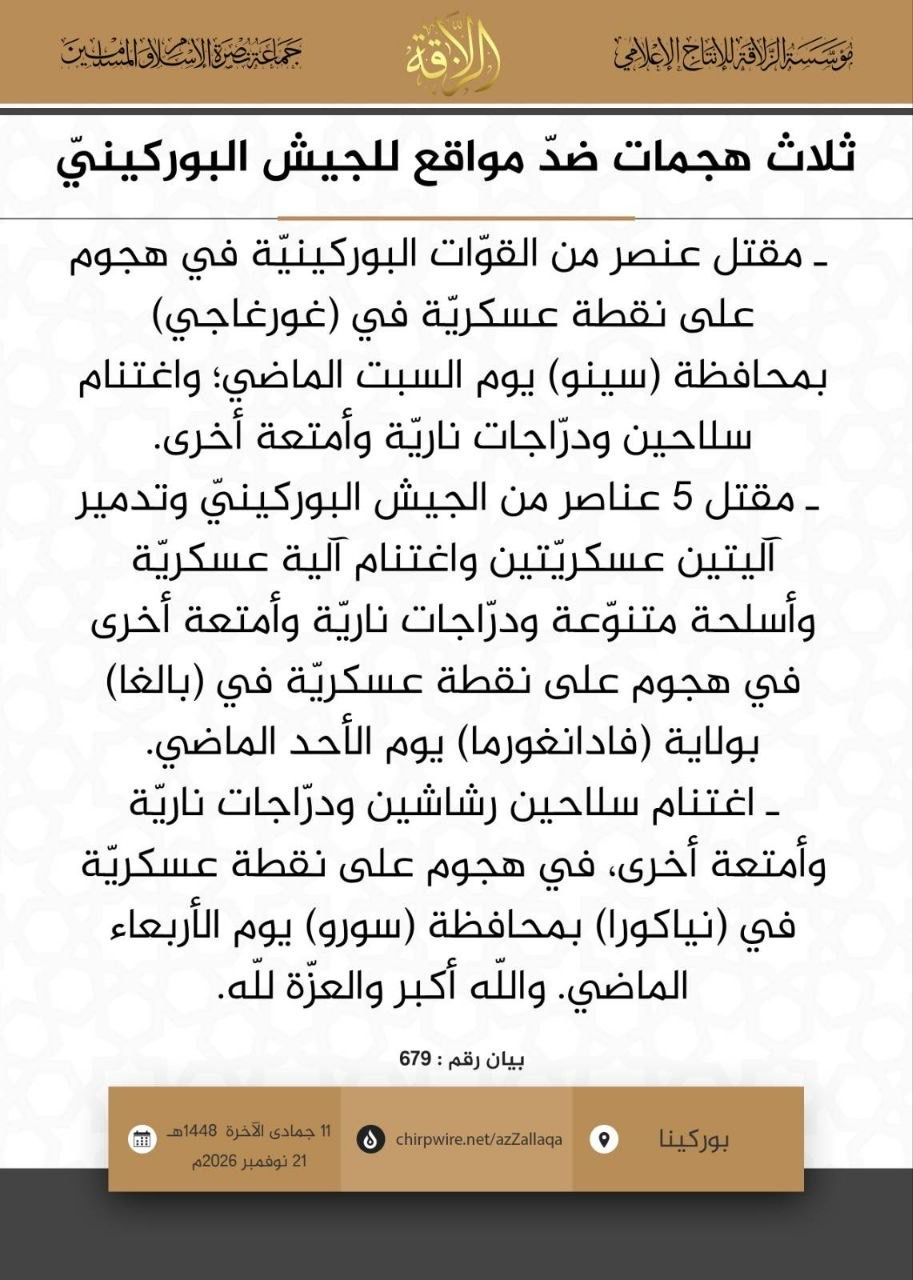
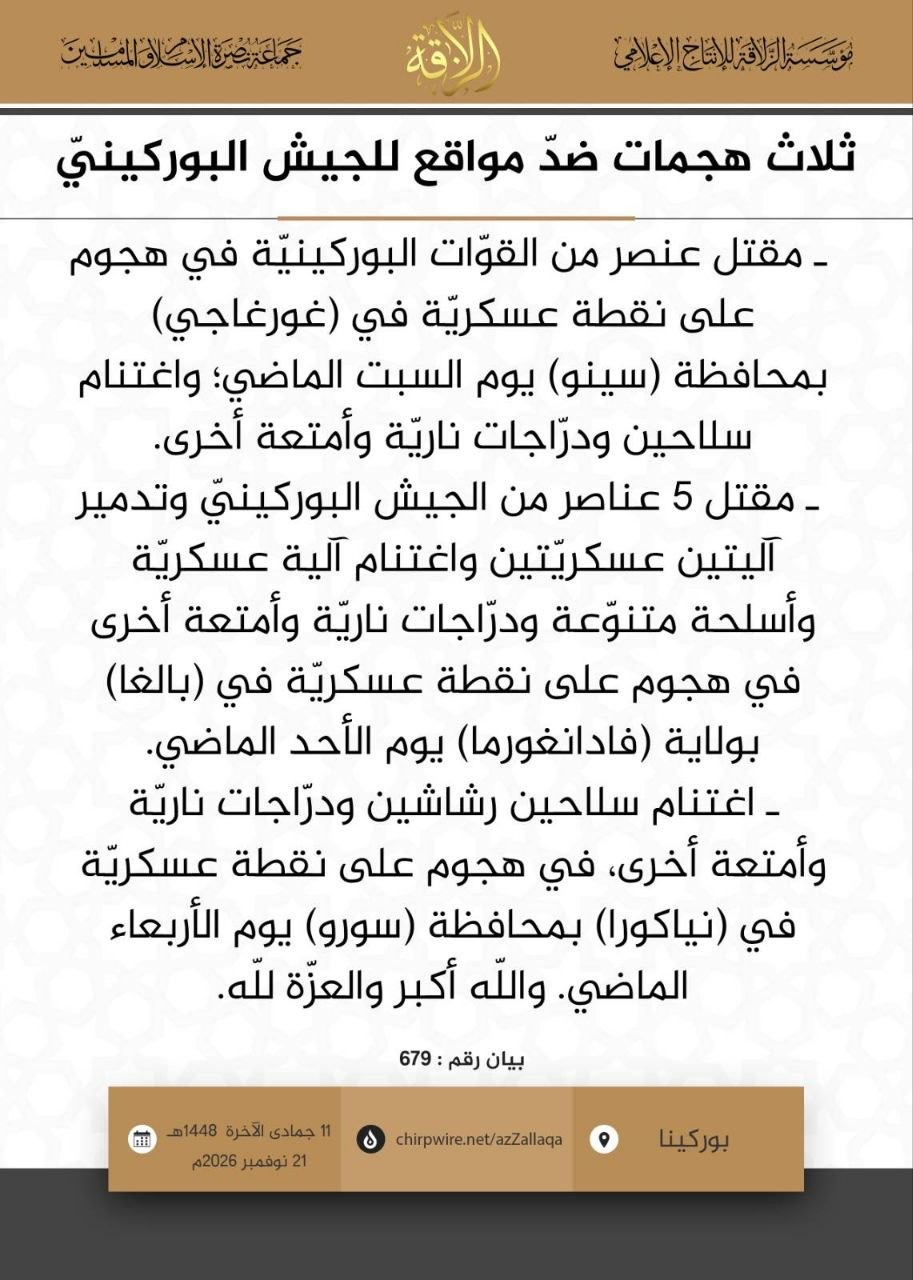
Az-Zallaqa Media, the official media wing of Jama’at Nusrat al-Islam wal-Muslimin (JNIM), issued 11 distinct statements, claiming at least 14 attacks.
The targets included the Malian Army, Malian government-aligned militias, Russian military forces (Africa Corps), the Burkinabé Army, and the Burkinabé VDP militia.
The areas of the claimed attacks were:
Burkina Faso = 10
Séno province, Gourma province, Sourou province, Sanmatenga province, Mouhoun province, and Poni province.
Mali = 4
Mopti region, Ségou region, and Koulikoro region.
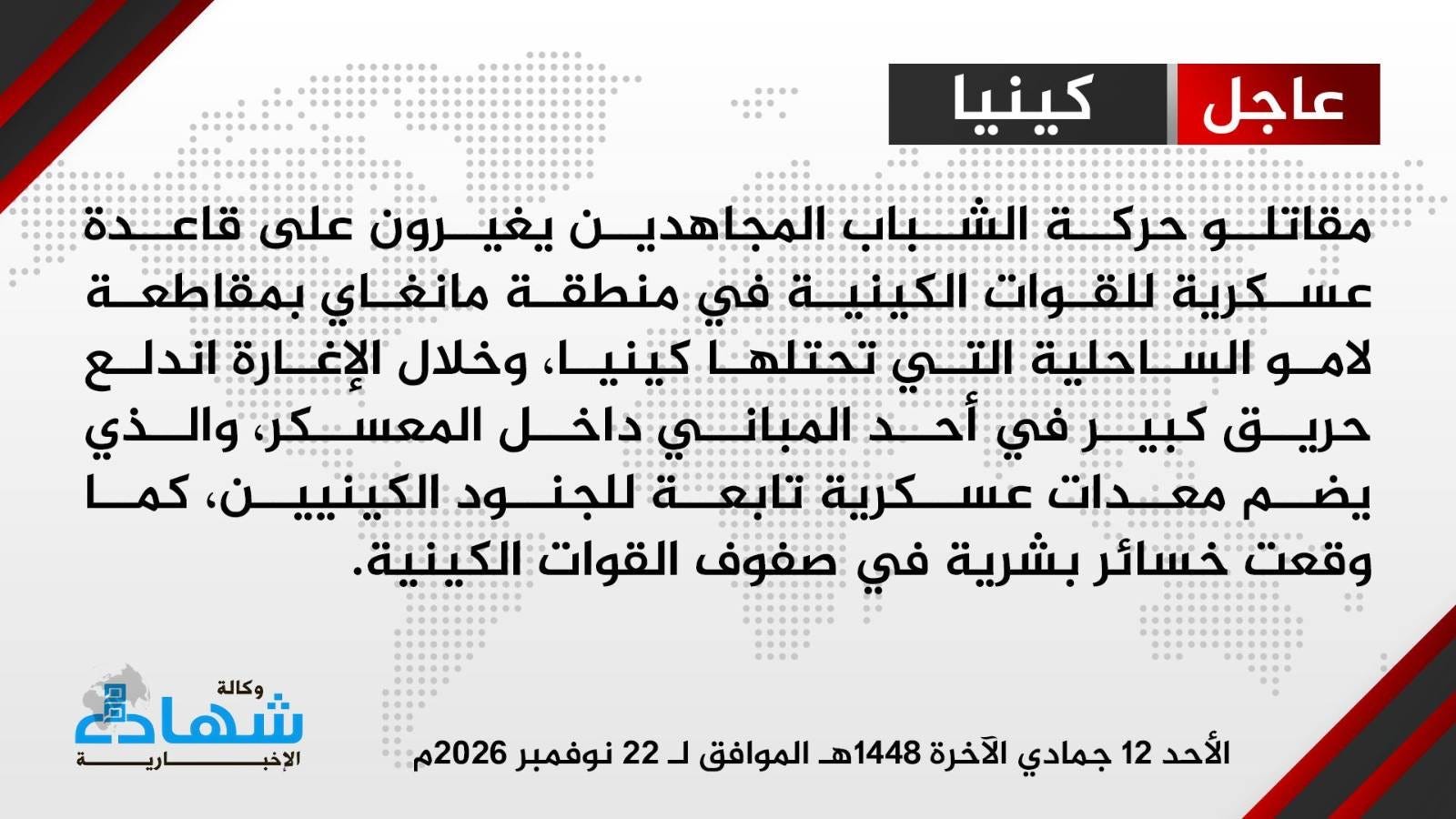
The Shahada News Agency, media outlet of Harakat al-Shabaab al-Mujahidin (AS), released 21 statements, claiming 33 attacks across Somalia and Kenya.
The targets of the attacks included Somali pro-government militias, Somali intelligence and security personnel, Puntland Security Forces, Hirshabelle administration officials, the Ugandan Army, the Burundian Army, and the Kenyan Army.
The areas affected by the attacks were:
Somalia = 29
Bulo Marer area, Golweyn area, Bariire area, Janale area, Zubeyr area, Danaane area, Afgooye area, Mubarak area, Barawe area, Balidogle area, Lower Shabelle region;
Mogadishu and its outskirts, Banaadir region;
Bal’ad area, Jowhar area, Middle Shabelle region;
Kismayo area, Lower Juba region;
Bosaso area, Galgala area, Bari region;
Harardhere area, Mudug region;
Mataban area, Hiiraan region.
Kenya = 4
Rhamu area, Mandera County;
Ijara area, Yumbis area, Fafi constituency, Garissa County;
Mangai area, Lamu County.
Islamic State (IS)
The Islamic State’s Central Media Department published Issue 574 of its weekly newspaper Al-Naba on 19 November 2026. The eight-page edition covers operational claims published between 12 and 18 November 2026, along with an editorial on ideological perseverance and a religious article.
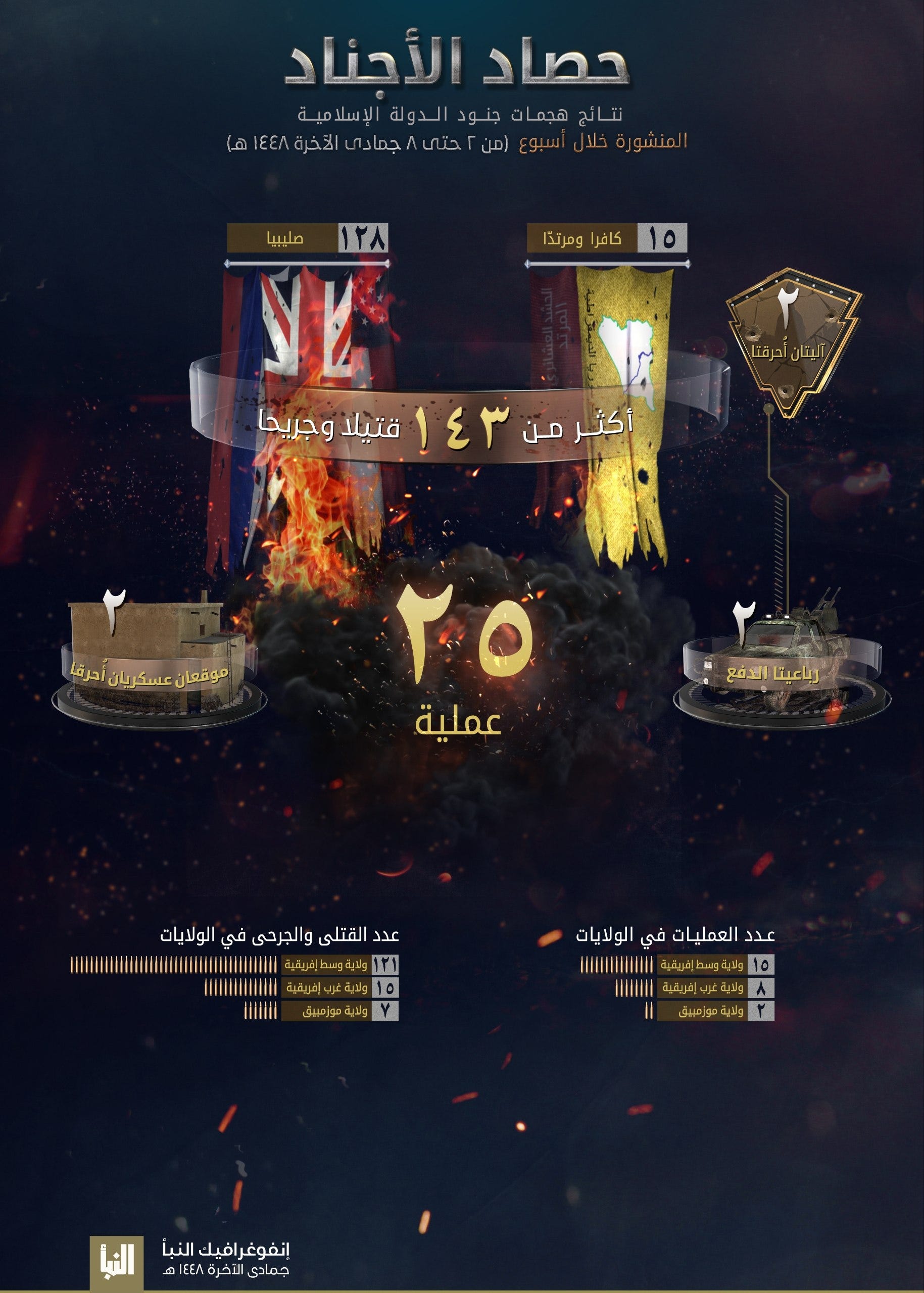
According to the weekly infographic, “Harvest of the Soldiers”, the Islamic State claimed responsibility for 25 attacks across five African countries.
Geographical distribution of claimed attacks:
Democratic Republic of the Congo (DRC): 15
Nigeria: 5
Cameroon: 2
Mozambique: 2
Niger: 1
Distribution by Islamic State province:
Islamic State Central Africa Province (ISCAP): 15 attacks.
Islamic State West Africa Province (ISWAP): 8 attacks.
Islamic State Mozambique Province (ISMP): 2 attacks.
No operations outside Africa were included in the weekly infographic.
Islamic State Central Africa Province (ISCAP) | Democratic Republic of the Congo
Central Africa accounted for 60% of the Islamic State’s reported operations during the week (15 attacks). The publication devotes its front page and most prominent operational article to violence in eastern DRC. The reported attacks affected Ituri, Haut-Uélé and North Kivu provinces.
The principal targets were the Armed Forces of the Democratic Republic of the Congo (FARDC) and Christian civilians. The publication reports attacks against military personnel, killings of civilians, destruction of residential properties, looting and forced displacement. Al-Naba explicitly presents Christian communities as legitimate targets through its sectarian ideological framework. The publication also claims that approximately 30 residential properties and a military facility were burned.
Islamic State West Africa Province (ISWAP) | Nigeria, Cameroon and Niger
ISWAP claimed 8 operations across the Lake Chad Basin and northeastern Nigeria.
In Nigeria, 5 operations were reported across Borno, Yobe and Adamawa States. The targets included the Nigerian Army, Nigerian Police, government-aligned militias and individuals accused of providing intelligence to the security forces.
In Cameroon, 2 attacks targeted the Cameroonian Army in the Far North Region.
In Niger, 1 attack targeted the Nigerien Army in the Diffa Region.
The publication also reports damage to military and police infrastructure and the destruction of vehicles.
Islamic State Mozambique Province (ISMP) | Mozambique
ISMP claimed 2 attacks in Cabo Delgado Province, targeting the Mozambican Army and Christian civilians in the districts of Macomia and Muidumbe.
Separately, Al-Naba reports religious outreach activities in Quissanga District, where militants allegedly gathered local Muslim residents and delivered a religious sermon. This activity is not included in the weekly attack count.
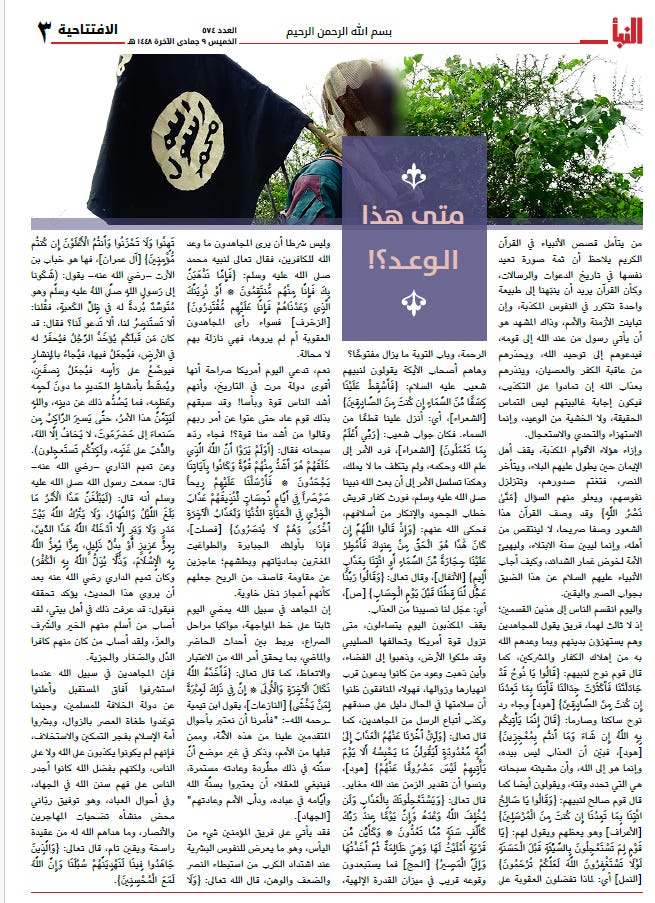
Editorial: “When Will This Promise Be Fulfilled?”
The editorial addresses doubts surrounding the Islamic State’s long-term ideological objectives and the continued military and political strength of the United States and its allies.
Drawing on Quranic accounts and religious traditions, the author argues that the absence of immediate victory does not invalidate the organisation’s ideological promises. The text seeks to counter discouragement among supporters, presenting prolonged confrontation, setbacks and delayed expectations as religious tests rather than evidence of strategic failure.
The editorial also rejects criticism of the Islamic State’s previous predictions concerning the decline of American power and the restoration of the caliphate.
Independent Jihadist Groups
Ittehad-ul-Mujahideen Pakistan (IMP), a Pakistani jihadist organisation comprising the Hafiz Gul Bahadur Group (HBG), Lashkar-e-Islam and Harkat Inqilab-e-Islami Pakistan (HIIP), released 5 statements claiming 10 attacks.
Targets: Pakistan Army and Pakistan Police.
Areas: North Waziristan district and Karak district, in Khyber Pakhtunkhwa Province, Pakistan.
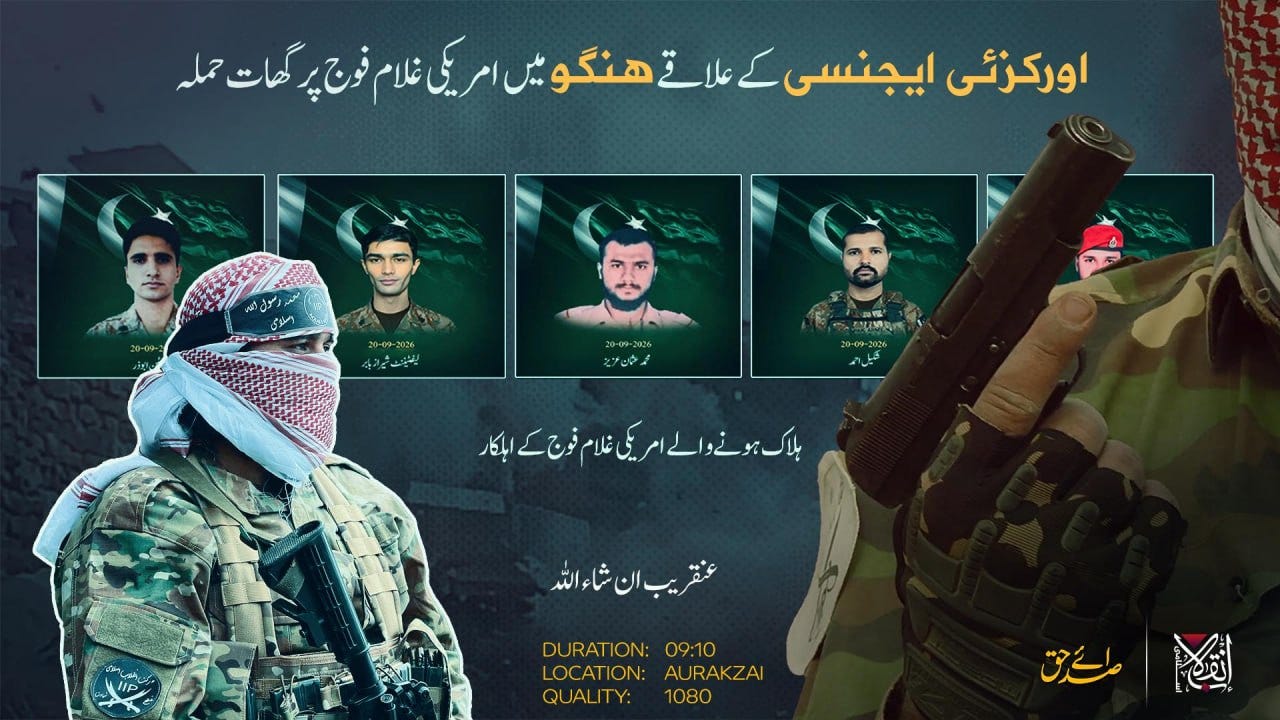
Sada-e-Haq Media, the official media wing of Ittehad-ul-Mujahideen Pakistan (IMP), released a 9-minute and 10-second propaganda video reportedly documenting several attacks against Pakistani military forces in the Orakzai and Hangu districts of Khyber Pakhtunkhwa Province, Pakistan.
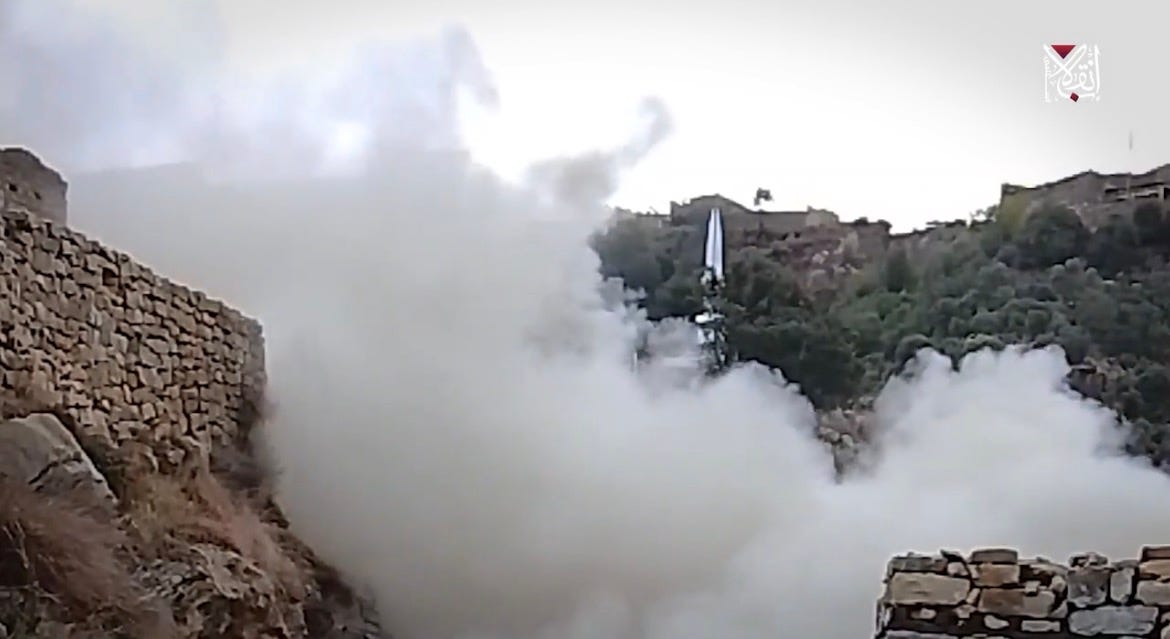
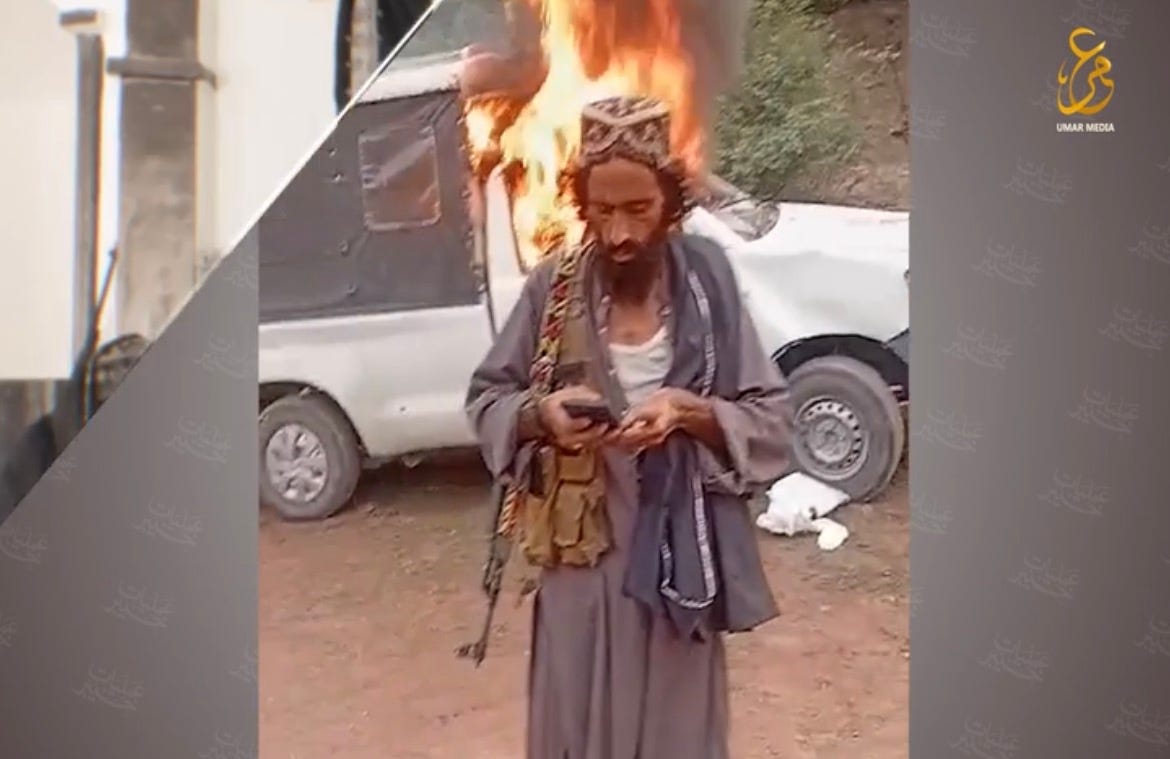
Umar Media, the official media wing of Tehreek-e-Taliban Pakistan (TTP), released a 12-minute and 57-second propaganda video concerning a claimed ambush against a Pakistani police convoy in the Darbo Kach area of Gambat, Kohat district, Khyber Pakhtunkhwa Province, Pakistan.
According to the group’s statement, 12 police personnel, including a Deputy Superintendent of Police (DSP), were killed, 15 were wounded, and 20 surrendered. The footage reportedly documents the attack and its aftermath, including burning police vehicles.
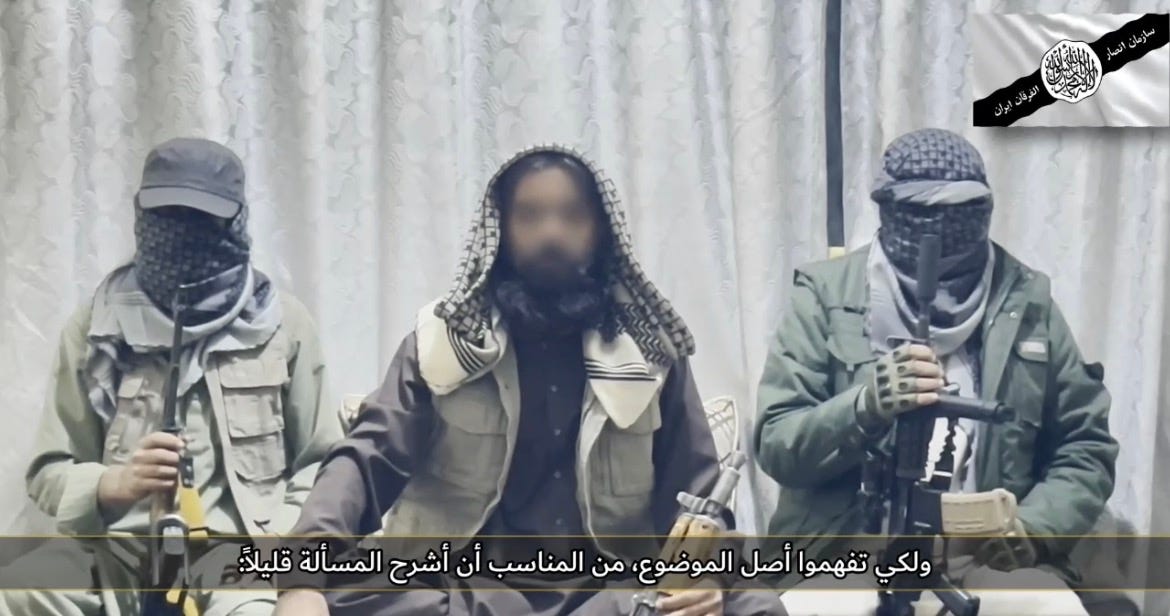
Ansar al-Furqan, an Iranian Sunni jihadist organisation, released an 8-minute propaganda video featuring a statement attributed to Maulana Abdul Hamid Baloch, a founding member of Hizb al-Furqan.
The speaker outlines the historical origins of Ansar al-Furqan, formed through the merger of Harakat al-Ansar and Hizb al-Furqan, and addresses leadership succession disputes and recent internal divisions.
He acknowledges the defection of a faction led by Amir Hamza to Jebhe al-Mubarzeen (People’s Fighters Front), criticising the circumstances surrounding the split and calling for an end to intergroup disputes.
The statement emphasises organisational autonomy, mutual respect, and unity without dissolving individual group identities. The video is particularly noteworthy as a public acknowledgement of internal fragmentation and leadership disputes within the Iranian Baloch jihadist landscape.
🔹Weekly Strategic Assessments
The monitoring period from 17 to 23 November 2026 reveals increasingly differentiated trajectories across the global jihadist landscape.
