


Executive Summary
This analysis examines a short propaganda opus released by the media apparatus of al-Qaeda in the Arabian Peninsula (AQAP), branded under al-Malahim Media, which explicitly celebrates and instrumentalises an attack framed as having occurred in Sydney, Australia.
The document is not operational in nature. Its strategic value lies instead in the cognitive domain: it functions as an incitement tool designed to legitimise violence, promote emulative attacks by unaffiliated actors, and expand the perceived global reach of jihadist action beyond traditional conflict theatres.
The publication deliberately lowers the threshold for participation in violence by explicitly decoupling action from organisational membership, thereby reinforcing a self-starter / lone-actor compatible operational environment. It simultaneously targets Western security institutions, Jewish communities worldwide, and Muslim audiences susceptible to mobilisation narratives.
From a counter-terrorism perspective, the document represents a high-risk cognitive artefact: not because of tactical content, but due to its role in normalising globalised retaliatory violence against civilian and community targets. The text contributes to a broader strategic trend within the al-Qaeda ecosystem that prioritises psychological reach, narrative deterrence, and decentralised mobilisation over centrally coordinated attacks.
Key Judgments
Primary Function: Incitement and Emulation
The opus is designed to legitimise and encourage violence by unaffiliated individuals rather than to direct organised operations.Cognitive, Not Tactical, Warfare
The document operates entirely in the cognitive domain, aiming to shape perceptions of reach, inevitability, and moral legitimacy.Deliberate De-Linking from Organisational Control
Explicit statements dismissing the relevance of group affiliation indicate an intentional strategy to broaden the pool of potential attackers.Globalisation of Target Legitimacy
Jewish communities worldwide are framed as valid targets irrespective of geography, significantly expanding the threat surface.Narrative Deterrence Against Security Institutions
Claims that intelligence, warnings, and security measures are ineffective are aimed at psychological erosion rather than empirical accuracy.Strategic Opportunism Rather Than Command-and-Control
The text suggests an adaptive propaganda posture that capitalises on events without demonstrating operational ownership or coordination.
Abstract
This paper provides a cognitive-domain intelligence analysis of a short propaganda publication attributed to al-Qaeda in the Arabian Peninsula’s media apparatus. Through direct analysis of a primary jihadist source, the study examines how the document functions as an instrument of strategic incitement rather than operational guidance.
The analysis demonstrates that the publication serves three interlinked objectives: legitimising violence against civilian and community targets, enabling emulative action by unaffiliated individuals, and reinforcing perceptions of global jihadist reach. By explicitly dismissing organisational affiliation as a prerequisite for action, the text lowers participation thresholds and increases the likelihood of decentralised, low-capability attacks.
The findings underline the importance of treating such artefacts as indicators of cognitive warfare dynamics rather than isolated propaganda outputs, with direct implications for counter-terrorism policy, preventive security, and strategic communications.
Methodology
This analysis is based on direct qualitative examination of a primary jihadist source, namely a five-page Arabic-language propaganda opus attributed to AQAP’s media ecosystem.
The methodological approach includes:
Full textual translation and semantic analysis of the source material
Discourse analysis focusing on intent, audience targeting, and mobilisation mechanisms
Cognitive warfare assessment, examining narrative construction, deterrence claims, and emulation signalling
Counter-terrorism–oriented threat interpretation, without tactical extrapolation
No secondary reporting, media commentary, or intelligence leaks were used. All assessments derive solely from the content, structure, language, and framing of the primary source.
Methodological Note on the Nature of the Sources and Analytical Approach
The source analysed is a primary jihadist propaganda document, produced for internal and external consumption by extremist audiences. Such materials are inherently performative, strategic, and non-factual in many of their claims.
Accordingly:
Claims of operational success, casualty numbers, or geographic reach are not treated as factual reporting.
The document is analysed as an instrument of influence, not as evidence of capability.
Analytical focus is placed on why specific narratives are constructed, rather than whether they are true.
This approach aligns with best practices in intelligence analysis of extremist media outputs as signals of intent, positioning, and strategic adaptation, rather than as operational disclosures.
Limitations
Single-Source Constraint
The analysis is based on a single discrete document and does not claim to represent the entire al-Qaeda media output.Absence of Metadata and Distribution Context
Without full visibility on dissemination channels, audience reach, and engagement metrics, impact assessment remains inferential.Cognitive Impact Not Directly Measurable
The analysis assesses intended cognitive effects, not empirically observed behavioural outcomes.
Analytical Relevance for Decision-Makers
This document should be treated as an early-warning indicator of narrative-driven threat expansion, particularly in relation to:
Lone-actor or self-initiated violence against community targets
Event-based and ritual-based targeting logic
Psychological intimidation of security institutions
Failure to address such outputs within the cognitive domain risks over-focusing on kinetic indicators while neglecting the narrative conditions that enable decentralised violence.
Intelligence Analysis (CT)
The document explicitly presents itself as a product of the “al-Malahim Media Service” and bears the SHAHED brand. These elements should not be interpreted as mere graphic details but as deliberate signals of positioning within the jihadist media ecosystem. This type of branding serves a dual function: on the one hand, it confers perceived authenticity to an audience already ideologically aligned, and on the other, it ensures brand continuity in the redistribution, archiving, and relaunching of content, facilitating its circulation on similar channels and platforms. The listed author, Awwab al-Husni, should be read as an editorial signature rather than a verifiable identity: his function is to build a recognisable and consistent voice over time, not to provide personal traceability or direct responsibility.
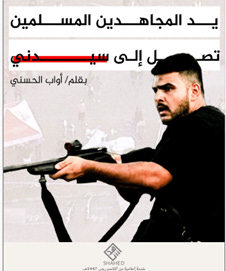
From a genre perspective, the text falls neither into the category of an operational communiqué nor that of a claim of responsibility report. Indeed, it lacks the typical elements of an action bulletin, such as verifiable details, precise timelines, or technical references to the execution of the attack. Instead, it is a micro-leaflet for mobilisation, designed to be brief, easily shareable, and quickly assimilated, with a rhetorical structure based on slogans and powerful mental images. Its value is not informative, but eminently cognitive: the goal is not to transmit data, but rather to guide perceptions, legitimize behaviors, and reinforce interpretative frameworks favourable to violent action.
The temporality of the product also confirms this function. The dating according to the Islamic calendar does not serve to place the text in a contingent information cycle, but rather to insert it into a symbolic and sacred dimension of time, reinforcing the idea of an act within a broader historical and religious narrative. In this sense, the document should be considered a form of “evergreen” propaganda: its effectiveness depends not on the specificity of the event evoked, but on the repeatability of the moral and narrative framework it proposes, making it potentially valid and reusable even over time.
Communicative Target
The communicative target of the text should be interpreted exclusively in cognitive terms, not as a description of an event or an operational claim. The document is not intended to clarify what happened, but rather to guide the recipients’ future behaviour by influencing their perceptions of the effectiveness, legitimacy, and inevitability of violence. From this perspective, the reference to Sydney takes on an eminently symbolic function: the title does not so much affirm the success of an action as the possibility of reaching any geographical space, projecting an idea of global scope that erodes the mental distinction between theatres of conflict and rear areas considered safe. The desired effect is to contaminate the imagery of security, suggesting that territorial sanctuaries, truly separate from the dynamics of conflict, no longer exist.
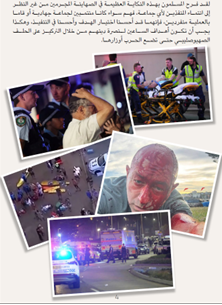
At the same time, the text constructs a clear delegitimisation of any nonviolent alternative, explicitly contrasting armed action with statements, demonstrations, public condemnations, and mediation processes. The derisive reference to international guarantors, regional mediators, and Palestinian political actors not only responds to anti-Western rhetoric but reflects a deeper competition for hegemony in the response to the conflict. Violence is presented as the only lever with real value, while politics and mediation are depicted as ineffective or complicit tools. This approach is typical of contexts in which a militant ecosystem perceives the risk of losing narrative centrality to political, nationalist, or negotiated solutions and reacts by seeking to dilute them.
The most significant element, from a counter-terrorism perspective, however, is the way the document deliberately lowers the threshold for violent action. The assertion that organisational affiliation is irrelevant, and that action is valid whether it comes from members of jihadist groups or individuals acting independently, constitutes the true core of the message. In analytical terms, this is an implicit authorisation structure that eliminates the need for training, affiliation, or inclusion in a formal chain of command. The only requirement becomes the choice of target and the ability to carry out the act. This approach significantly expands the pool of potential perpetrators without incurring the strategic costs associated with maintaining centralised operational capabilities, adapting propaganda to a context where decentralised emulation represents a more sustainable multiplier of impact.
Finally, the text attempts to preemptively neutralise the deterrent effect of security measures by arguing the ineffectiveness of intelligence, early warning systems, and prevention mechanisms. This assertion serves two complementary objectives: first, to instil mistrust and a sense of vulnerability among potentially affected institutions and communities; second, to reduce the potential perpetrator’s perception of risk and interdiction. In this context, the veracity of the assertion is secondary to its usefulness as a psychological tool. What matters is not to demonstrate the inability of security systems, but to suggest it forcefully enough to influence behaviours and expectations.
Targeting: Who the Text Aims to Mobilise and How
The document builds its message on a clear, though not formally stated, audience segmentation. The primary audience consists of individuals already exposed, to varying degrees, to the jihadist ideological ecosystem. For them, it is not necessary to provide operational instructions but rather to strengthen motivations, reduce moral uncertainty, and normalise the use of violence. The text addresses this audience by offering legitimacy, simplification, and a narrative model of action that does not require specific skills or integration into organised structures. Violence is presented as accessible, justified, and celebrated, bridging the psychological gap between ideological adherence and action.
Alongside this primary audience, the text clearly identifies two secondary audiences. On the one hand, Jewish communities globally are portrayed as legitimate targets regardless of their geographical context or direct relationship to the conflict evoked. This representation is not intended to describe an operational plan, but to produce a widespread and persistent intimidation effect, aimed at transforming ordinary community life into a space perceived as permanently exposed to threat. On the other hand, the message is directed at Western security apparatuses, explicitly implicated and devalued, with the intent of undermining their credibility and psychological deterrent function.
The persuasive techniques employed are consistent with this targeting architecture. The use of selective religious references provides a framework of sacralization that suspends critical judgment and transforms violent action into a moral duty. The dehumanisation of the adversary and the use of humiliating tones reinforce emotional distance and lower inhibitions. The insistence on the historical inevitability of conflict and its indefinite duration reduces political complexity to an immutable fate, while the ridicule of nonviolent alternatives further polarises the range of perceived options. Taken together, these elements are not intended to convince a neutral audience, but to consolidate and activate existing predispositions.
Indications on the State of the Movement: What the Text Implicitly Reveals
Beyond its explicit content, the document offers significant insights into the state and evolution of the militant ecosystem that produces it. The repeated emphasis on the irrelevance of organisational membership suggests a growing acceptance, if not an outright preference, for decentralised and uncontrolled forms of violence. This orientation appears consistent with a context in which operational centralisation entails high costs in terms of exposure, vulnerability, and interdiction, while individual emulation allows for maintaining visibility and strategic relevance with minimal organisational investment.
The text also reflects a narrative competition within the Sunni world, in which political actors, regional mediators, and nationalist movements are delegitimised as ineffective or traitorous. This dynamic points to the movement’s perceived need to preserve its symbolic monopoly on the “authentic response” to the conflict, countering any alternative that might channel consensus and mobilisation outside of armed violence. In this sense, the propaganda is directed not only against an external enemy, but also against potential ideological competitors.
Finally, the projection of global legitimacy for violence against Jewish communities, regardless of territorial context, signals a significant expansion of the threat surface. By shifting the conflict from a defined geographical perimeter to a diasporic and transnational dimension, the text makes the target conceptually omnipresent and, consequently, more easily “localised” by individual actors in very different contexts. This shift further reduces the barriers to emulation and strengthens the document’s function as a tool for widespread mobilisation rather than the expression of a centralised operational strategy.
Counter-Terrorism Assessment: risk and possible indicators
From a counterterrorism perspective, the risk associated with this product lies not in the presence of operational instructions or the demonstration of advanced tactical capability, but rather in its cognitive enabling function. The document helps create a narrative environment in which violence appears not only legitimate, but also accessible, morally authorised, and disconnected from formal organisational requirements. In this sense, the primary danger lies in the possibility of low-threshold copycat actions, carried out by individuals or micro-cells without structured ties to jihadist organisations but fully immersed in the proposed ideological framework.
The centrality attributed to community targets and moments of civil aggregation suggests a specific risk linked to predictable and symbolically relevant contexts, in which the psychological and social impact of the act far outweighs its material value. The underlying logic is not that of military damage, but rather the generation of widespread fear, polarisation, and pressure on the institutions responsible for security. In this context, the threat is all the more insidious the more it manifests itself in rudimentary forms, difficult to intercept with traditional intelligence tools geared towards uncovering organised conspiracies.
The indicators useful for a preventive assessment should therefore not be sought in technical or logistical signals, but rather in the absorption and reproduction of the narrative frames promoted by the text. The reiteration of slogans emphasising the global scope of violence, the irrelevance of organisational membership, the devaluation of security measures, and the focus on community events or rituals are signs of internalisation of the message. These elements, observed in online or offline contexts, indicate a progressive reduction of cognitive barriers to action, even in the absence of structured planning.
Operational Implications for Security Systems and Decision-Makers
The operational implications of this type of product require an approach that goes beyond the traditional classification of jihadist propaganda as background noise. Treating the document as a purely ideological artefact risks underestimating its ability to influence behaviour, especially in a context characterised by the increasing decentralisation of the threat. It is necessary to recognise its nature as a cognitive warfare tool, designed to amplify the effectiveness of individual actions through preemptive legitimacy and the promise of symbolic recognition.
In terms of preventive security, the importance of shifting attention from static locations to behavioural and temporal patterns emerges. The text implicitly suggests that vulnerability lies not so much in specific physical spaces as in the predictability of public events, rituals, and moments of community visibility. The most effective protective measures are therefore those that reduce symbolic exposure and predictable routines, rather than those that are exclusively reactive or focused on highly structured threats.
Another critical area concerns strategic communication. The assertion that intelligence and early warning systems are ineffective poses a direct psychological challenge. Responding to this challenge requires a delicate balance: on the one hand, avoiding silence, which can be interpreted as implicit confirmation of vulnerability; on the other, avoiding overly visible or securitised responses, which risk reinforcing the narrative of fear and inevitability. Credible communication, geared toward resilience and the continuity of social life, is an essential component of the response.
Finally, the document calls for reflection on the risk of an excessive focus on organisational attribution. Since the text itself declares group membership irrelevant, a counterterrorism posture focused exclusively on identifying structured networks risks losing sight of the phenomenon of autonomous mobilisation. Effective threat mitigation, therefore, requires systemic attention to radicalisation ecosystems, self-activation dynamics, and emulation processes, rather than simply identifying traditional chains of command.
Conclusion: Cognitive Warfare and Strategic Significance
The document analysed in this assessment should not be interpreted as an operational text, nor as a reliable account of events or capabilities. It does not provide tactical guidance, actionable detail, or evidence of command-and-control, and it is not intended to do so. Its significance lies elsewhere. The publication functions primarily as a cognitive artefact designed to legitimise violence, shape behavioural expectations, and lower the psychological barriers to action by framing violent conduct as morally authorised, accessible, and independent of organisational affiliation.
The strategic value of the text resides in its capacity to enable action indirectly through narrative rather than through instruction. By normalising decentralised violence, delegitimising non-violent alternatives, and projecting an image of global reach and inevitability, the document contributes to an environment in which individual or loosely connected actors may perceive violence as both necessary and sufficient. In this sense, the text does not seek to direct specific attacks, but to condition the cognitive space in which such attacks become thinkable, justifiable, and replicable.
Importantly, the effects generated by this type of publication are systemic rather than episodic. The impact does not depend on the success or failure of a single action, nor on the veracity of specific claims, but on the cumulative reinforcement of narratives that erode distinctions between conflict zones and civilian spaces, between organised militancy and individual action, and between political grievance and violent response. Over time, such outputs contribute to a persistent background of threat by sustaining emulative dynamics and expanding the perceived legitimacy of target selection across geographic and social boundaries.
For intelligence and security practitioners, the relevance of this document lies therefore not in what it reports, but in what it enables. Its centre of gravity is neither operational nor tactical, but cognitive. It operates in the domain where perceptions are shaped, thresholds are lowered, and violence is transformed from an exceptional act into a normalised response. Understanding and addressing this dimension is essential, as it is within the cognitive domain that the strategic effects of such texts are generated, sustained, and ultimately exploited.
© Daniele Garofalo Monitoring - All rights reserved.
Daniele Garofalo is an independent researcher and analyst specialising in jihadist terrorism, Islamist insurgencies, and armed non-state actors.
His work focuses on continuous intelligence monitoring, threat assessment, and analysis of propaganda and cognitive/information dynamics, with an emphasis on decision-oriented outputs, early warning, and strategic trend evaluation.
Daniele Garofalo Monitoring is registered with the Italian National ISSN Centre and the International Centre for the Registration of Serial Publications (CIEPS) in Paris.ISSN (International Standard Serial Number): 3103-3520ORCID Code: 0009-0006-5289-2874Support my research, analysis, and monitoring with a donation here via PayPal.Me/DanieleGarofalo88