

Executive Intelligence Overview
This weekly intelligence brief documents and structures official jihadist propaganda output released between 9 and 15 May, providing structured situational awareness across multiple organizations and theatres.
This brief underscores the critical operational claims and targets, emphasizing their relevance to threat recognition and strategic priorities, helping analysts and policymakers recognize the ongoing threat and its impact on their strategic priorities.
volume and distribution of official propaganda output,
organizational and geographic dispersion across theatres,
This focus on operational claims in West Africa, the Middle East, and South Asia highlights active threats and underscores the need for analysts and policymakers to understand and address these regional dangers.
The focus on organizational and media analysis, including new branding and campaign framing, aims to reassure analysts and policymakers that monitoring channels remain stable and dependable, strengthening their confidence in threat awareness.
The purpose of this product is to support systematic monitoring, providing reassurance to analysts and policymakers that threat trends are being tracked thoroughly and their efforts are crucial in threat understanding.
This publication does not include threat assessments, intent evaluation, or operational forecasting. Those components are addressed separately in dedicated analytical outputs.
🔹 Scope of Monitoring
This issue covers all identifiable official propaganda released by a predefined list of jihadist organizations and affiliated groups, selected for operational relevance and threat level, during the reporting period.
The focus on documentation, classification, and structured presentation of primary-source material aims to instill confidence in analysts and policymakers about the reliability of the data used for threat assessment.
🔹 Sources & Collection Methodology
The analysis is based exclusively on primary-source propaganda material, including official magazines, videos, photo sets, statements, claims of responsibility, and audio statements, to clarify the scope of sources used and enhance data reliability for threat assessment.
Official magazines,
Videos,
Photo sets,
Statements and claims of responsibility,
Audio statements.
Material is collected and categorized by organization, media outlet, and content type.
The study relies on OSINT, IMINT, SOCMINT, and Digital HUMINT collection streams.
No secondary reporting, media commentary, or interpretative overlay is applied.
🔹 Analytical Boundaries & Limitations
Fluctuations in volume, language, or format serve as signals of activity trends, which analysts should interpret within a broader context to support accurate threat assessment and avoid overestimating significance.
They shouldn’t be considered in isolation as indicators of strategic shifts, operational escalation, or changes in intent and capability; instead, they should be analyzed within broader intelligence products.
Strategic shifts,
Operational escalation,
Intent or capability changes.
All higher-order analytical interpretation is conducted separately within:
Intelligence Briefs,
Strategic Threat Outlooks,
Cognitive and Information Domain Assessments.
🔹 Monitored Propaganda Output and Weekly Monitoring Notes
This issue includes all primary propaganda material released during the week by:
Al-Qaeda and affiliates
AQAP
JNIM
Al-Shabaab
Islamic State
al-Naba Newspaper (weekly issue)
Official IS media channels.
Independent Jihadist Groups
Ittehad Mujahidin Pakistan
Tehrik-i-Taliban Pakistan
Jamāʿat Ahl as-Sunna li-daʿwa wa l-Jihād
The conclusions are included in the Weekly Monitoring Notes.
Al-Qaeda (AQ)
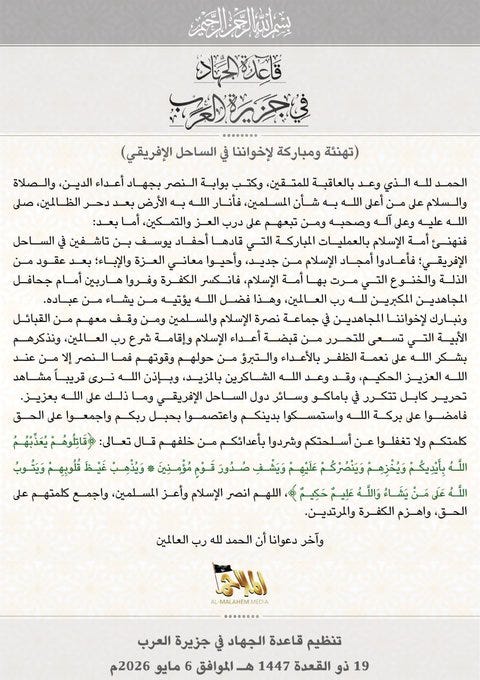
Al-Malahem Media, Al-Qaeda in the Arabian Peninsula (AQAP), published a statement entitled: “Congratulations and blessings to our brothers in the African Sahel”.
The statement congratulates Jama’at Nusrat al-Islam wal-Muslimin (JNIM) on its recent military operations in the African Sahel, hailing its operations as a model for confronting “the enemies of the faith” and local government forces.
The statement urges members and supporters of jihadist groups to remain steadfast and continue fighting.
The text directly alludes to the possibility of replicating the Taliban’s “liberation of Kabul” in the cities and towns of the African Sahel as well.
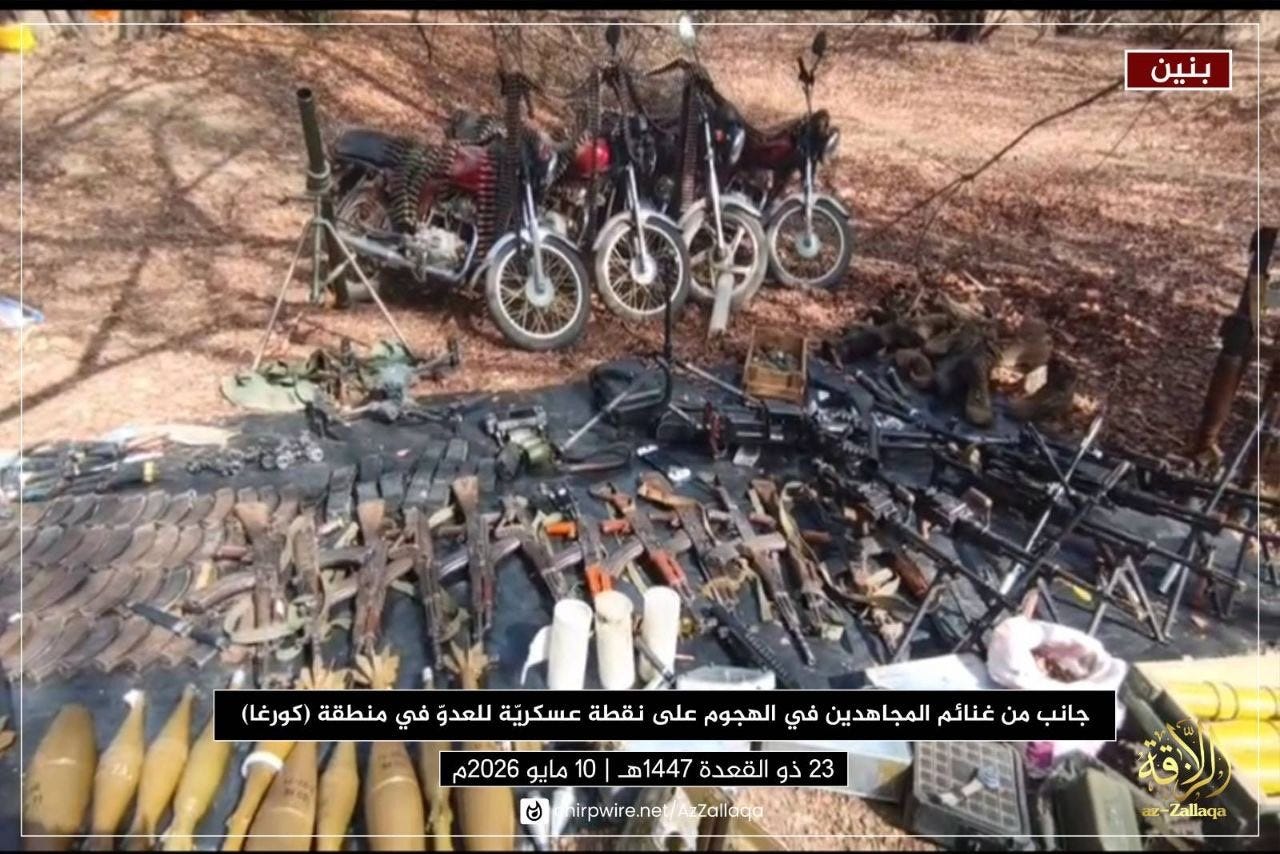
Az-Zallaqa Media, Jama’at Nasr al-Islam wal Muslimin (JNIM), issued 19 statements and 10 photos, claiming 22 attacks.
The targets of the attacks were: the Malian Army, the Russian PMC Africa Corps, the Burkinabé Army, the VDP militia, the Niger Army, and the Benin Army.
The areas of the attacks were :
1) Burkina Faso = 14
- Yatenga province, Sissili province.
2) Mali = 6
- Ségou region, Timbuctù region.
3) Benin = 1
- Korga area, Atakora department.
4) Niger = 1
- Tillaberi region.
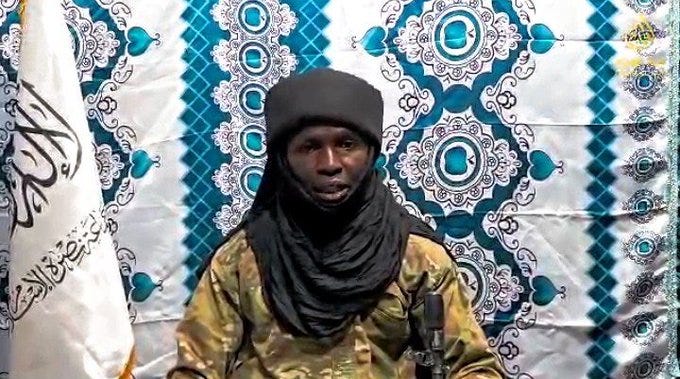
Al-Fatah Media and Jama’at Nasr al-Islam wal Muslimin (JNIM) released a video message from Abu Huzayfa al-Bambari.
In the video, he denies any foreign involvement in the coordinated attacks of 25 April across Mali.
Abu Huzayfa also mentioned the involvement of civilians in the clashes in Bamako, Kati, and Ségou, threatening ‘severe punishment’ through a complete blockade of the capital, which would affect both food supplies and fuel.
However, he adds that certain measures could be relaxed for people requiring urgent medical assistance, having received several complaints from citizens stranded inside or outside Bamako. Mali
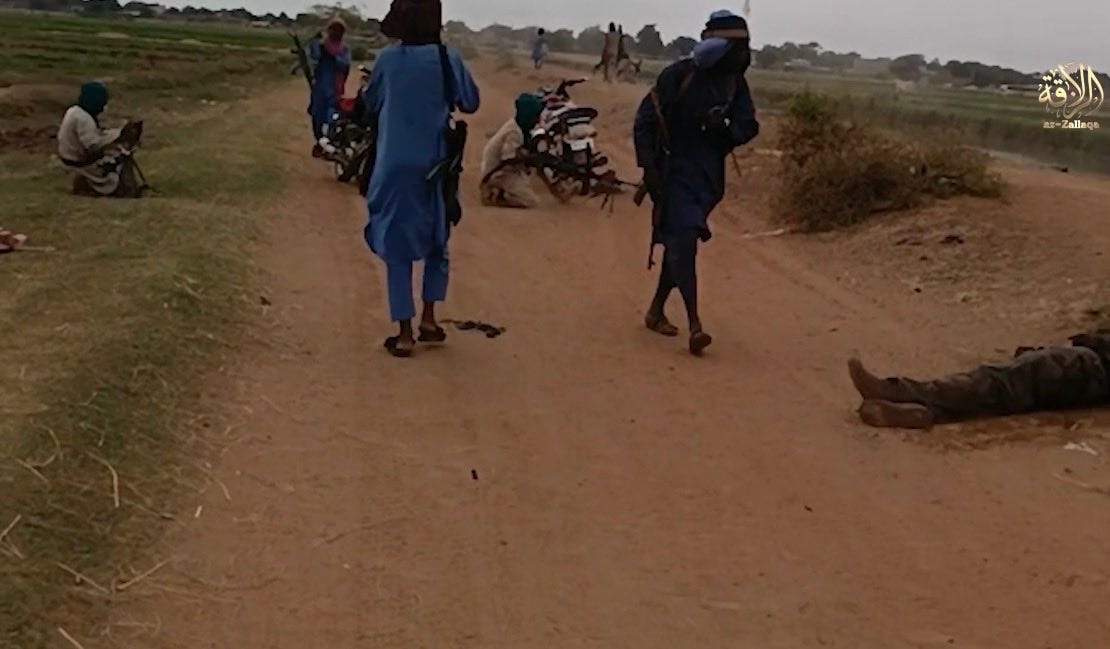
Az-Zallaqa Media, Jama’at Nasr al-Islam wal Muslimin (JNIM), published a 1-20 minute video showing an attack on the Malian army Patrol in the Niono district of the Ségou region. Mali
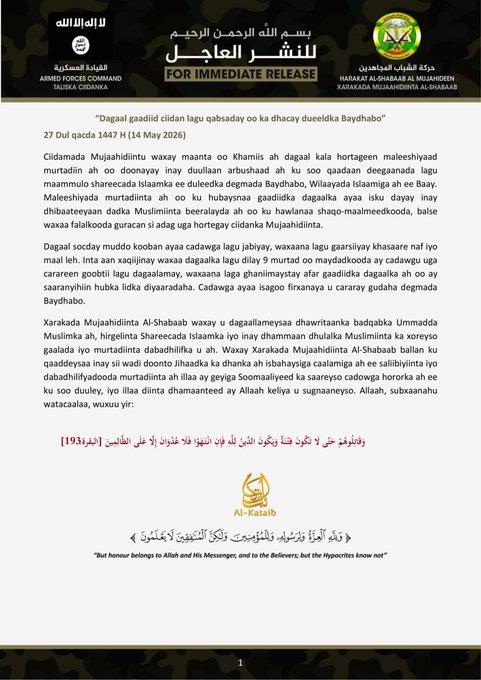
Al-Kataib Media, Harakat al-Shabaab al-Mujahidin (AS), released a statement from its military command announcing violent clashes between its militants and the Somali armed forces.
In the statement, AS emphasizes that it will continue the struggle “for the establishment of Islamic Sharia law” and the expulsion of foreign forces from Somali territory, urging civilians to stay away from the bases, headquarters, and facilities of foreign forces and the local forces supporting them. Somalia
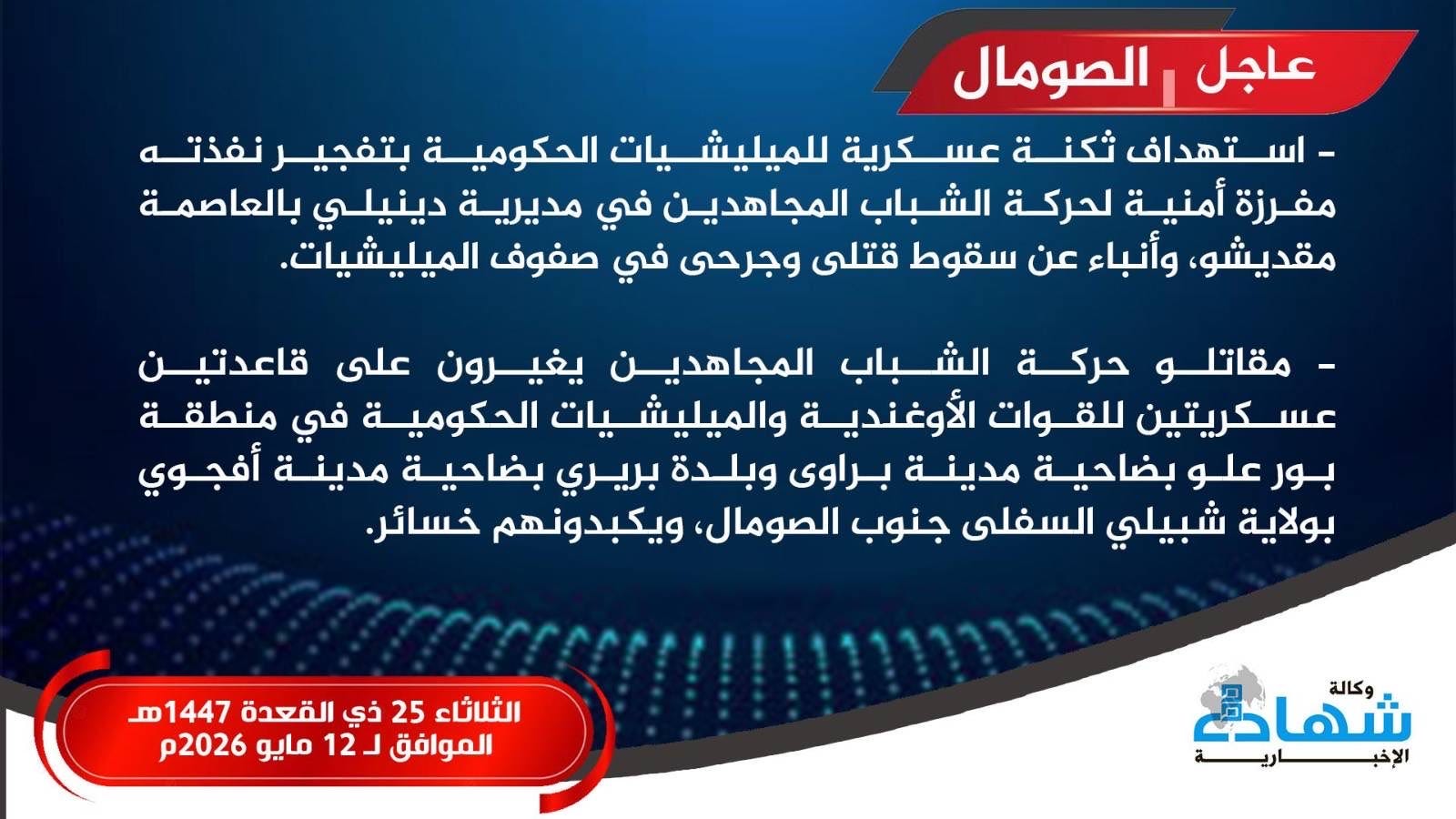
Shahada News Agency, Harakat al-Shabaab al-Mujahidin (AS), released 10 statements claiming responsibility for 17 attacks.
The targets of the attacks were:
Somali army, Ugandan Army, Somali pro-government militia.
The areas affected by the attacks were:
1) Somalia = 17
- Beledweyne area, Hiiran region; Musgaway area, Galguduud region; Janale area, Mubarak area, Barawe area, Bariire area, Afgoye area, Lower Shabelle region; Baidoa area, Bay region; Mogadishu area.
Islamic State (IS)
The official media of the Islamic State published an issue of the weekly al-Naba this week (547). The main infographic summarises the areas affected by military operations this week, including: Nigeria, Cameroon, Syria, Somalia, Pakistan, Mozambique, and the Democratic Republic of Congo.
IS claims to have conducted 26 operations in all the mentioned areas and to have caused 158 deaths and injuries.
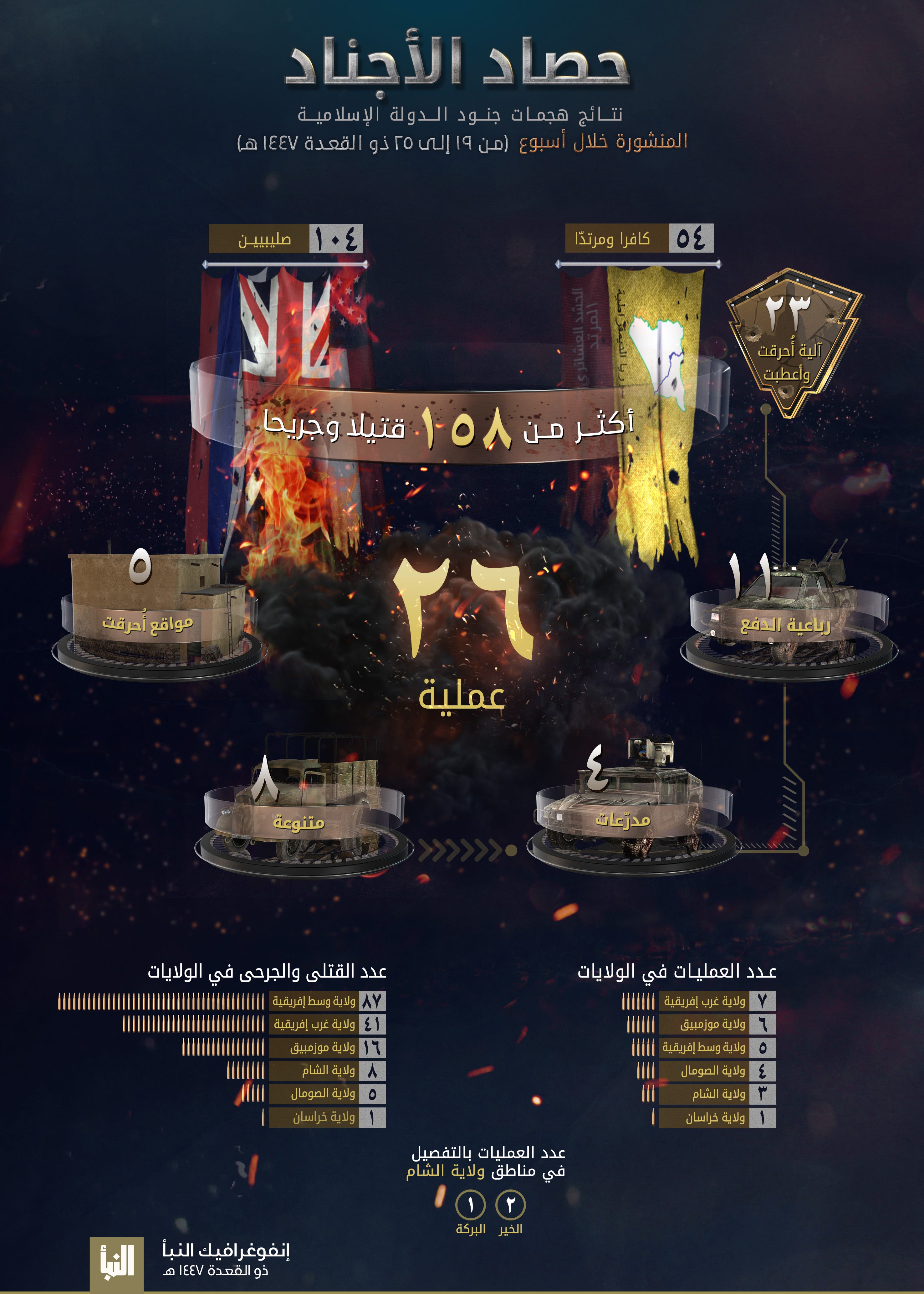
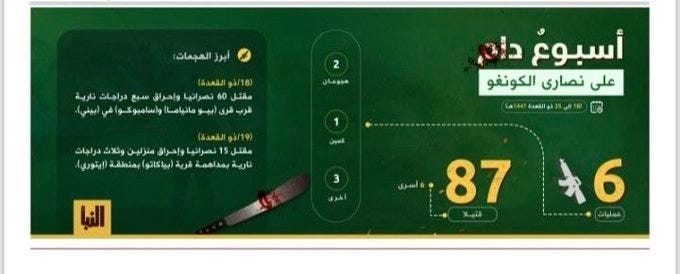
In this issue of the weekly magazine al-Naba, Islamic State published an infographic showing the terrorist attacks carried out over the past seven days by ISCAP militants against civilians and Christian villages in the provinces of Ituri and North Kivu.
ISCAP claims to have carried out 6 attacks and killed 87 people. DR Congo
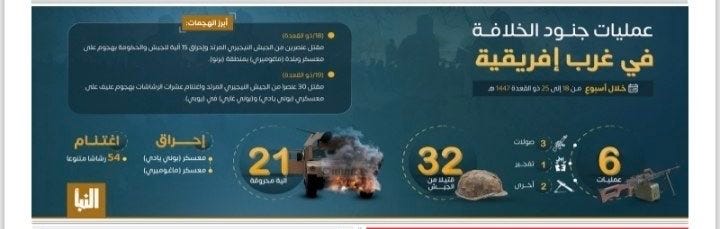
In this issue of the weekly al-Naba, Islamic State also published an infographic showing the terrorist attacks carried out over the past 7 days by ISWAP militants against the Nigerian army (particularly against military camps) in the states of Borno and Yobe. ISWAP claims to have carried out six attacks and killed 32 soldiers. Nigeria
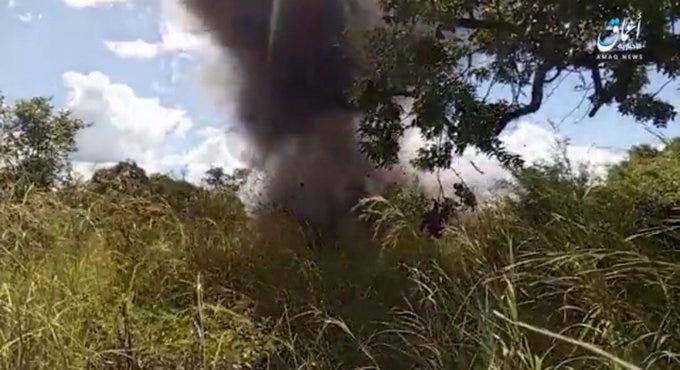
The Amaq news agency, the official media of the Islamic State, released a 27-second video showing an IED attack carried out by militants in the province of Mozambique (ISM) against a Rwandan army patrol in the district of Macomia, in the province of Cabo Delgado.
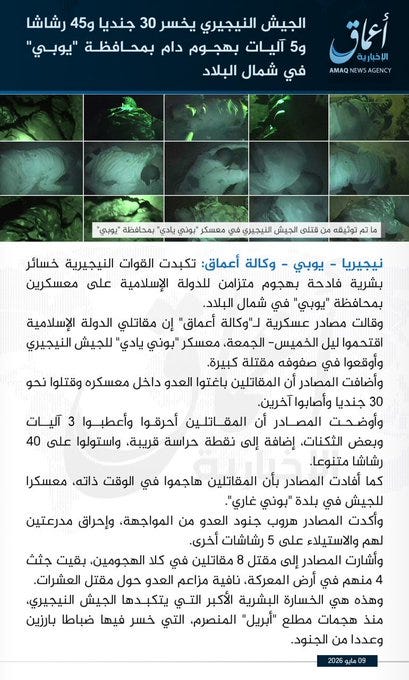
The Amaq News Agency, the official media of the Islamic State, has released a 59-second video showing militants from the West Africa Province (ISWAP) carrying out two large-scale attacks on two Nigerian army camps in the Buni Yadi area, in Yobe State. Nigeria
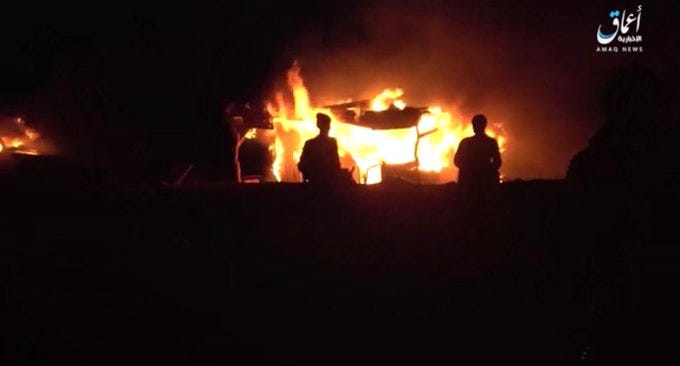
The Amaq news agency, the official media of the Islamic State, published a lengthy statement claiming responsibility for multiple nighttime attacks carried out by militants from the West Africa Province (ISWAP) against a Nigerian army camp in the Magumeri area, Borno State. Nigeria
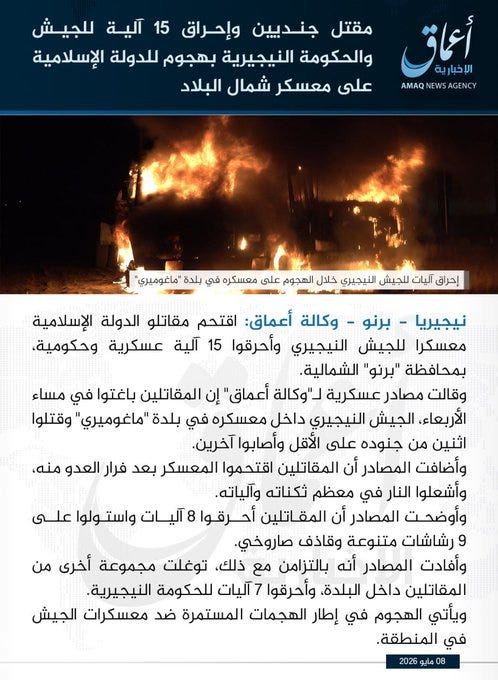
The Amaq News Agency, the official media of the Islamic State, published a lengthy statement claiming that militants from the West Africa Province (ISWAP) have launched 2 major attacks on 2 Nigerian army camps in the Buni Yadi area, in Yobe State. Nigeria
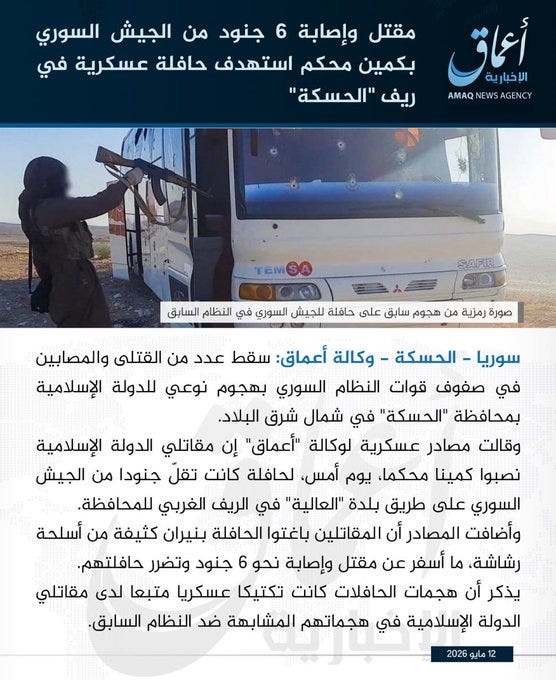
Amaq News Agency, the Islamic State’s official media, published a lengthy statement claiming an ambush on a Syrian Army patrol in the area of al-Hasaka governorate. Syria
Independent Jihadist Groups
Ittehad-ul-Mujahideen Pakistan (IMP), a Pakistani jihadist organization comprising the Hafiz Gul Bahadur Group (HBG), Lashkar-e-Islam, and the Harkat Inqilab-e-Islami Pakistan (HIIP), released 17 statements, claiming 17 attacks.
Target: Pakistan Army, Pakistan Police, Frontier Corps,
Area:
- Hangu district, Mohmand district, North Waziristan district, South Waziristan district, Orakzai district, Bannu district;
Khyber Pakhtunkhwa Province. Pakistan
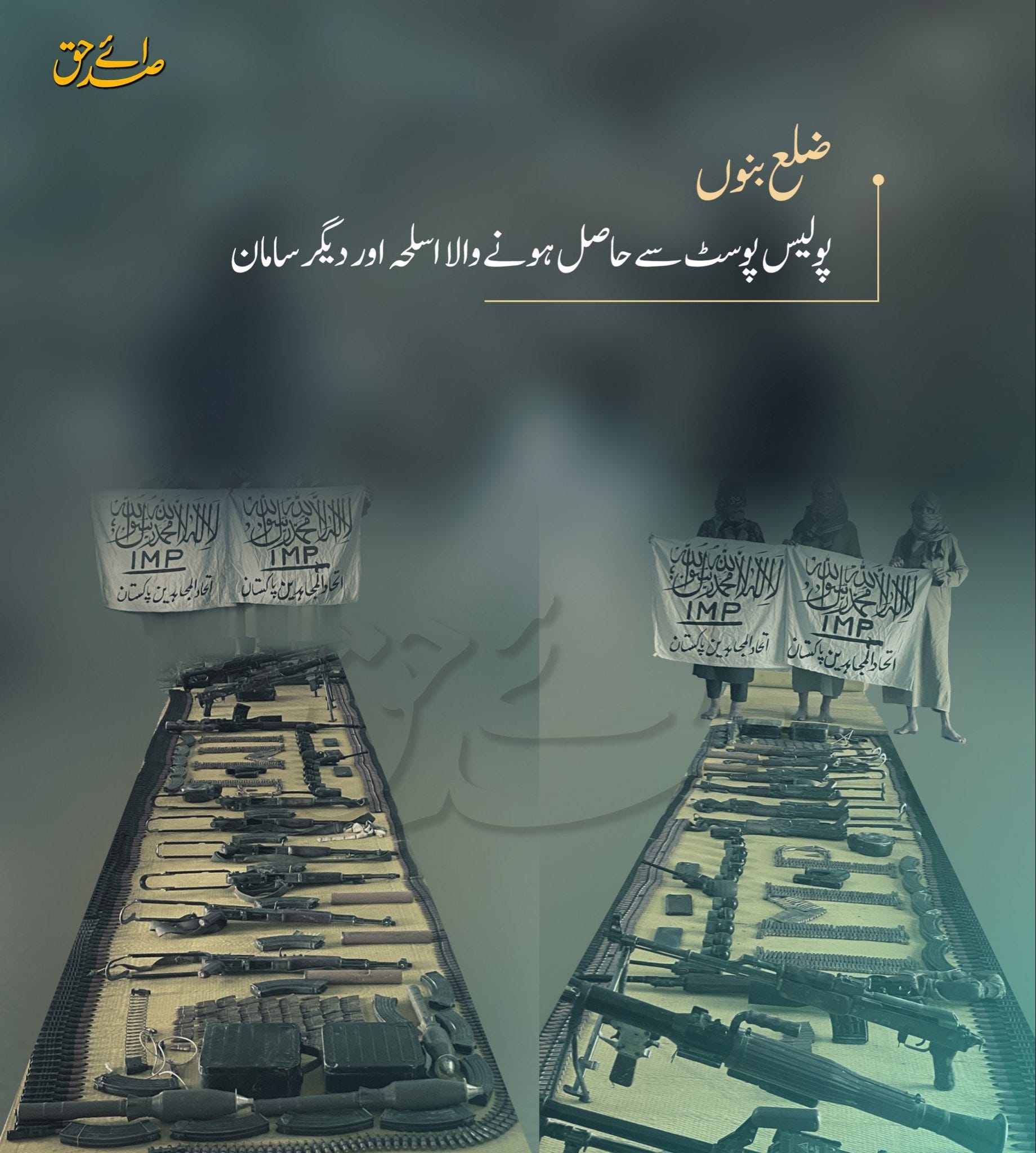
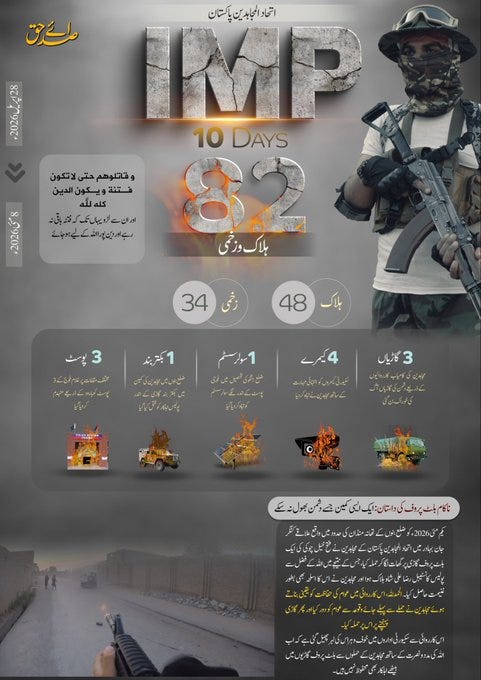
Ittehad-ul-Mujahideen Pakistan (IMP), a Pakistani jihadist organization comprising the Hafiz Gul Bahadur Group (HBG), Lashkar-e-Islam, and Harkat Inqilab-e-Islami Pakistan (HIIP), has released an infographic detailing the targets of operations carried out over the last 10 days (28 April – 8 May). Pakistan
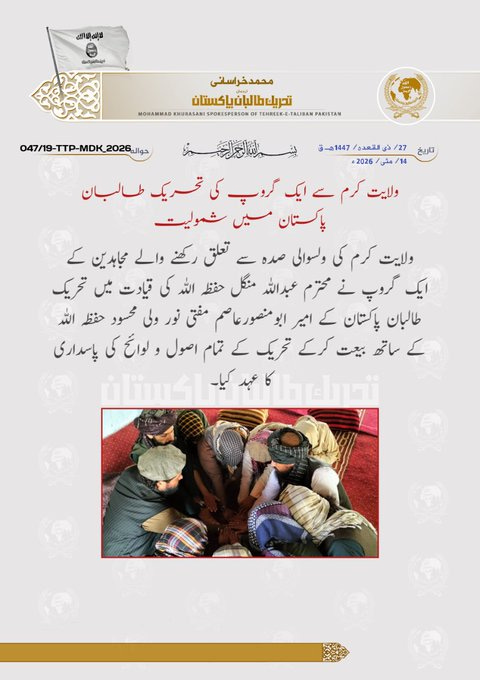
Mohammad Khorasani, spokesperson for Tehrik-e-Taliban Pakistan (TTP), announced in a statement that jihadist groups from the area of Kurram district pledged allegiance to Tehreek-e-Taliban Pakistan and its emir, Abu Mansoor Asim Mufti Noor Wali Mehsud Hafizullah. Pakistan
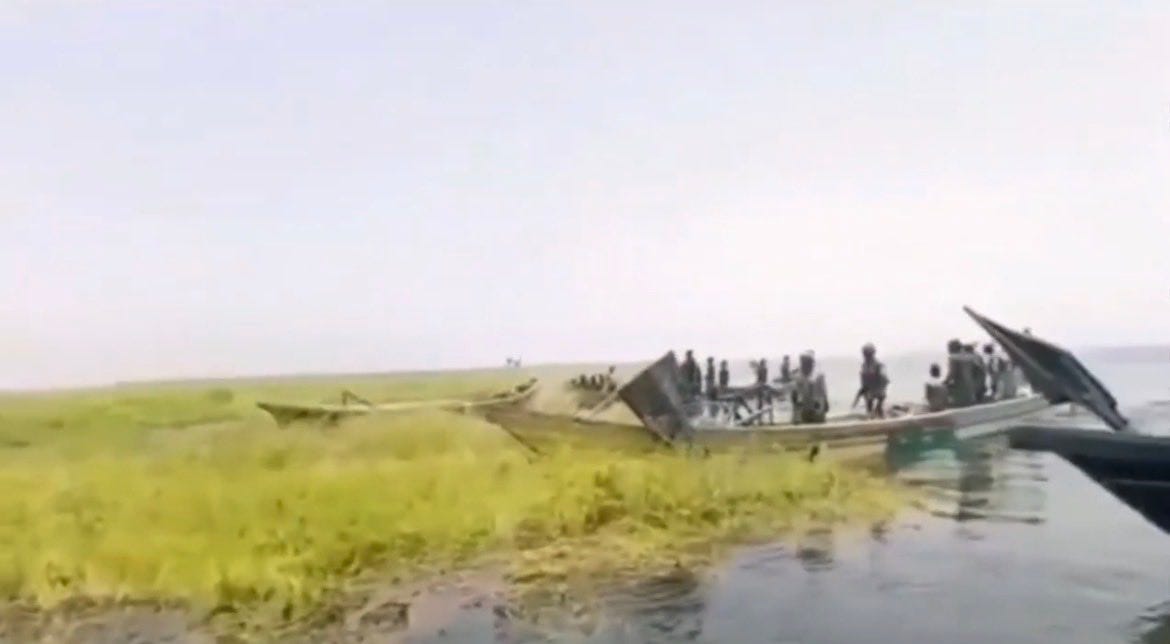
Jamāʿat Ahl as-Sunna li-daʿwa wa l-Jihād, also known as Boko Haram, released a video lasting around four minutes showing an attack on a Chadian army base in the Bara Tolorom area, in the Lake Chad basin, using armed boats. Chad
🔹Weekly Monitoring Notes
The reporting period from 9 to 15 May shows a sustained high-output propaganda cycle, with strong activity across Al-Qaeda affiliates, Islamic State official media, and Pakistan-based jihadist networks. The week is defined by four main features: AQAP’s public endorsement of JNIM’s Sahel campaign, JNIM’s continued coercive messaging around Bamako, the Islamic State’s renewed emphasis on ISCAP and ISWAP, and persistent operational consolidation by IMP and TTP in Pakistan.
