

Executive Intelligence Overview
This weekly intelligence brief documents and structures official jihadist propaganda output released between 1 and 8 May, providing structured situational awareness across multiple organizations and theatres.
This brief underscores the critical operational claims and targets to emphasize their relevance to threat recognition and strategic priorities, helping analysts and policymakers recognize the ongoing threat and its relevance to their strategic priorities.
volume and distribution of official propaganda output,
organizational and geographic dispersion across theatres,
This focus on operational claims in West Africa, the Middle East, and South Asia highlights active threats and underscores the importance of analysts and policymakers in understanding and addressing these regional dangers.
The focus on organizational and media analysis, including new branding and campaign framing, aims to reassure analysts and policymakers that monitoring channels remain stable and dependable, supporting their confidence in threat awareness.
The purpose of this product is to support systematic monitoring, providing reassurance to analysts and policymakers that threat trends are being tracked thoroughly and their efforts are crucial in threat understanding.
This publication does not include threat assessments, intent evaluation, or operational forecasting. Those components are addressed separately in dedicated analytical outputs.
🔹 Scope of Monitoring
This issue covers all identifiable official propaganda released by a predefined list of jihadist organizations and affiliated groups, selected for operational relevance and threat level, during the reporting period.
The focus on documentation, classification, and structured presentation of primary-source material aims to instill confidence in analysts and policymakers about the reliability of the data used for threat assessment.
🔹 Sources & Collection Methodology
The analysis is based exclusively on primary-source propaganda material, including official magazines, videos, photo sets, statements, claims of responsibility, and audio statements, to clarify the scope of sources used.
Official magazines,
Videos,
Photo sets,
Statements and claims of responsibility,
Audio statements.
Material is collected and categorized by organization, media outlet, and content type.
The study relies on OSINT, IMINT, SOCMINT, and Digital HUMINT collection streams.
No secondary reporting, media commentary, or interpretative overlay is applied.
🔹 Analytical Boundaries & Limitations
Fluctuations in volume, language, or format serve as signals of activity trends, which analysts should interpret within a broader context to support accurate threat assessment and avoid overestimating significance.
They shouldn’t be considered in isolation as indicators of strategic shifts, operational escalation, or changes in intent and capability; instead, they should be analyzed within broader intelligence products.
Strategic shifts,
Operational escalation,
Intent or capability changes.
All higher-order analytical interpretation is conducted separately within:
Intelligence Briefs,
Strategic Threat Outlooks,
Cognitive and Information Domain Assessments.
🔹 Monitored Propaganda Output and Weekly Monitoring Notes
This issue includes all primary propaganda material released during the week by:
Al-Qaeda and affiliates
AQAP
JNIM
Al-Shabaab
AQIS
Islamic State
al-Naba Newspaper (weekly issue)
Official IS media channels.
Independent Jihadist Groups
Ittehad Mujahidin Pakistan
Tehrik-i-Taliban Pakistan
The conclusions are included in the Weekly Monitoring Notes.
Al-Qaeda (AQ)
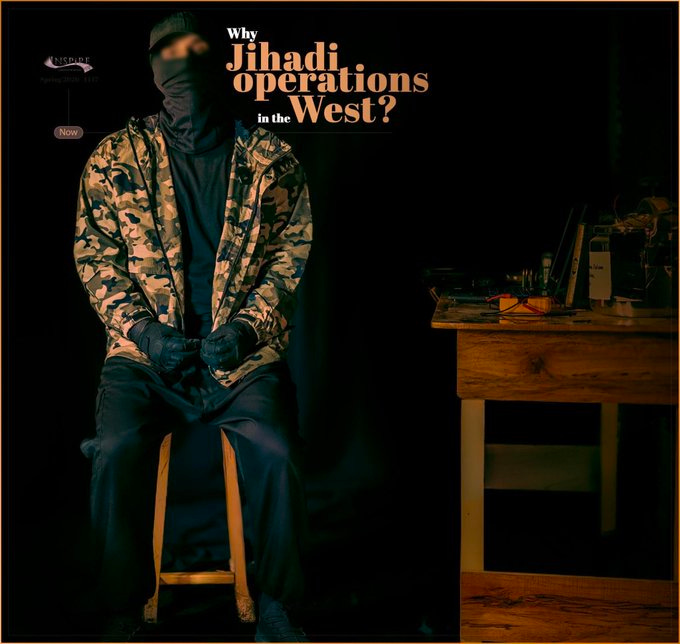
Al-Qaeda in the Arabian Peninsula (AQAP) has released a 3-minute 47-second video from its propaganda series “Inspire, Open Source Jihad”, entitled “Why do we call for jihadist operations in Western countries?”, which contains messages inciting individuals to carry out attacks within Western countries, with a focus on what it described as “taking the battle to the heart of the enemies”.
The video includes messages of incitement delivered by a spokesperson for the “Inspire” team, as well as excerpts from previous speeches by Al-Qaeda leaders Abu Yahya al-Libi and Azzam al-Amriki.
The video focused on promoting what it described as “individual jihad” and “lone wolf” operations, arguing that carrying out individual operations within Western countries is one of the most “damaging and influential” methods in terms of security, politics, and the economy.
The video also includes calls for Muslims living in the West to take action against Western and Israeli interests.
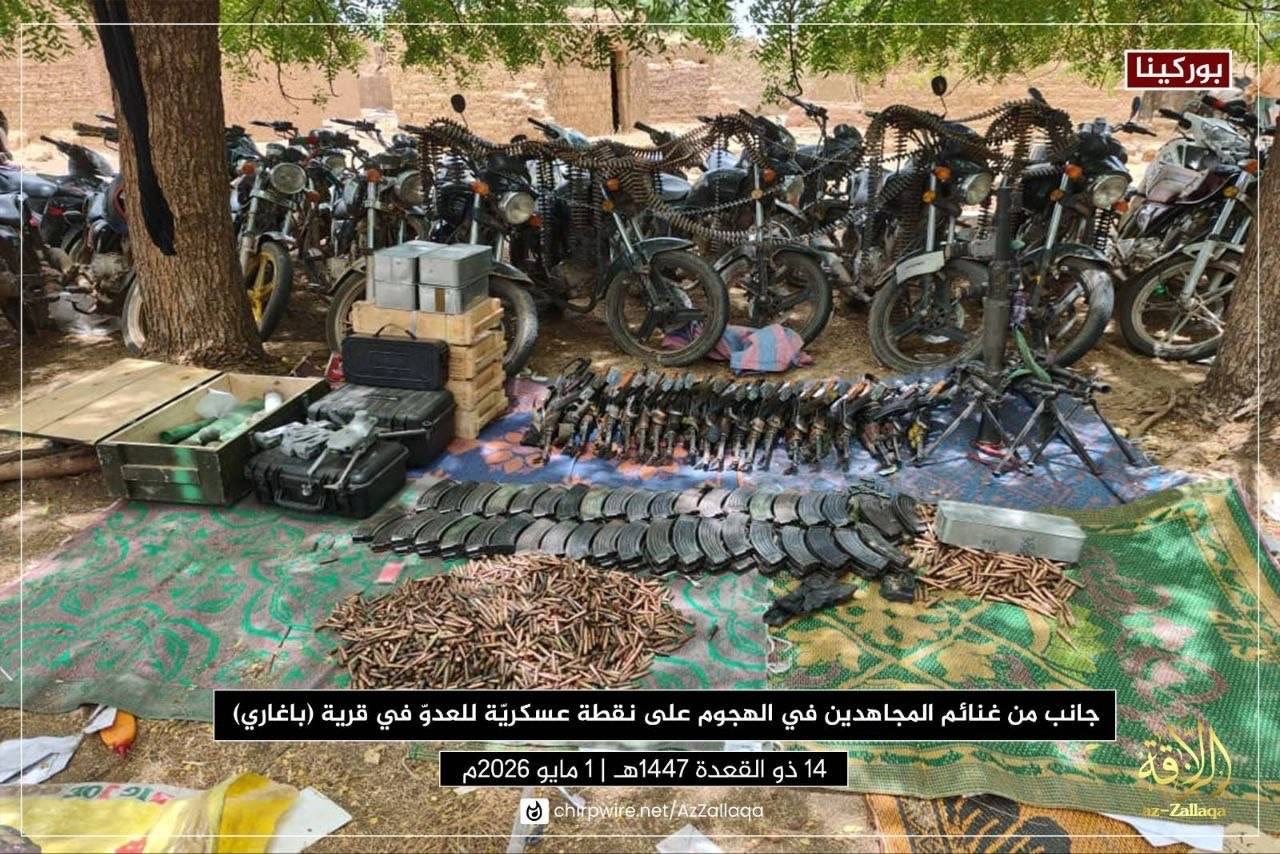
Az-Zallaqa Media, Jama’at Nasr al-Islam wal Muslimin (JNIM), issued 16 statements and 7photos, claiming 12 attacks.
The targets of the attacks were: the Malian Army, the Burkinabé Army, and the VDP militia.
The areas of the attacks were :
1) Burkina Faso = 15
- Yatenga province, Houet province, Loroum province, Boulgou province, Sissili province, Gourma province.
2) Mali = 8
- Mopti region, Ségou region, Timbuctù region.
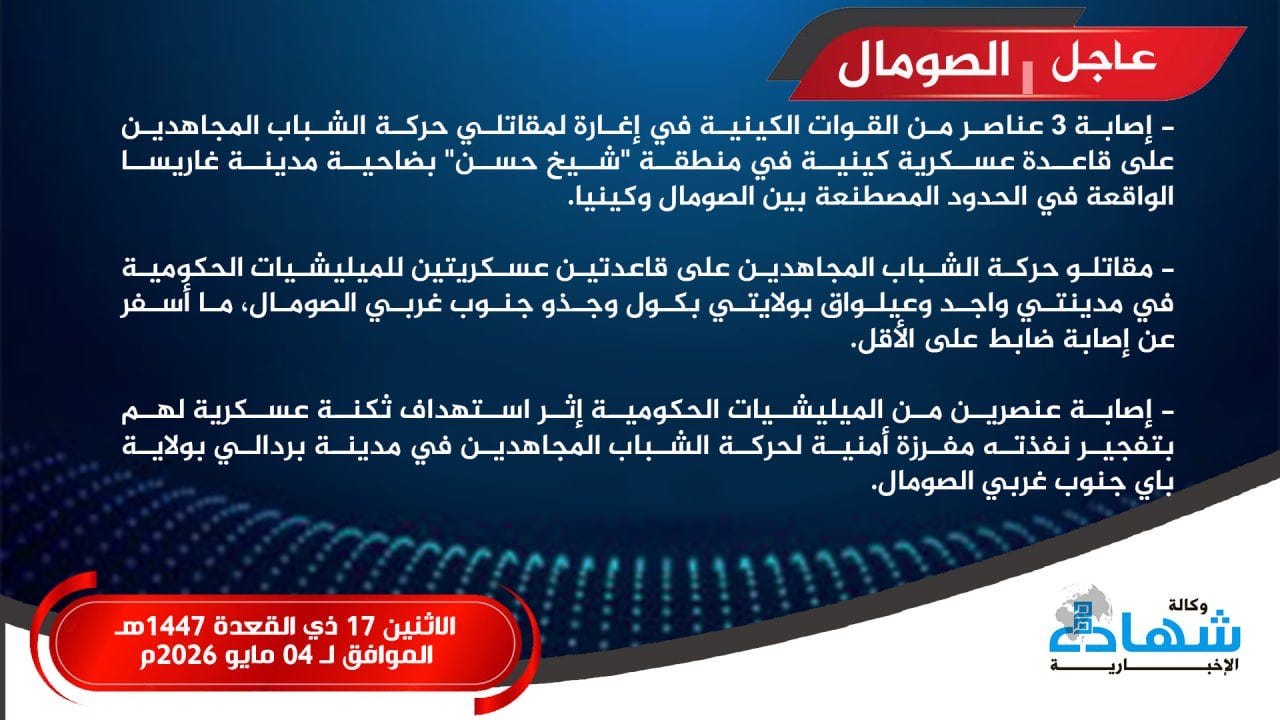
The Shahada News Agency, Harakat al-Shabaab al-Mujahidin (AS), released 9 statements claiming responsibility for 18 attacks.
The targets of the attacks were: the Somali army, the Kenyan army, the Burundi Army, the Ugandan Army, the Ethiopian Army, and the Somali pro-government militia.
The areas affected by the attacks were:
1) Somalia = 16
- Halgan area, Hiiran region; Baxdo area, Galguduud region; Garbaharey area, Luuq area, El Wak area, Balad Hawa area, Gedo region; Wajid area, Bakool region; Bal’ad area, Mahda area, Middle Shabelle region; Audgle area, Lower Shabelle region; Baidoa area, Bardale area, Qansahdere area, Bay region.
2) Kenya = 2
- Laman Ka Sheik Hassan area, Garissa County.
- El Galo area, Mandera County.
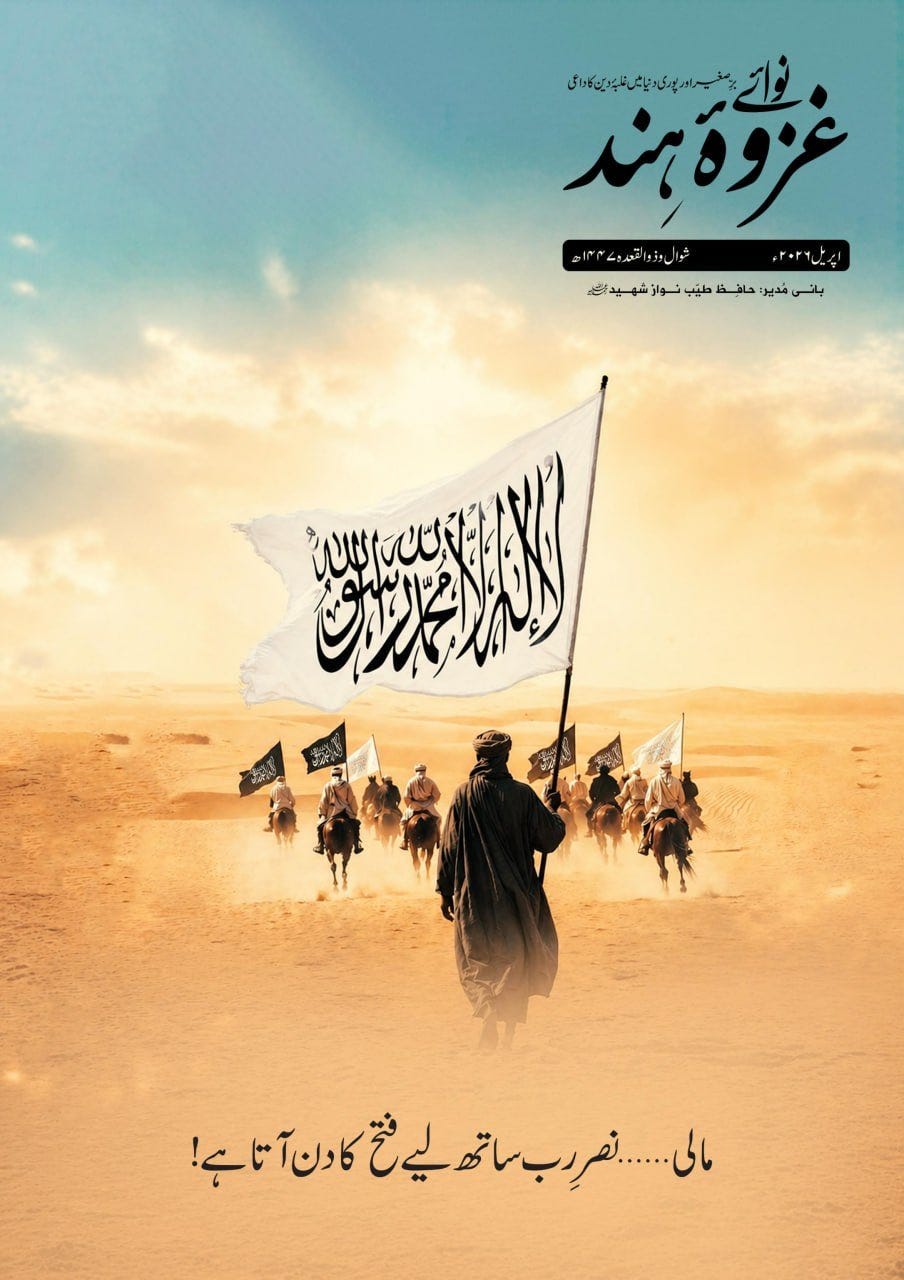
Al-Qaeda in the Indian Subcontinent (AQIS) published the May 2026 issue of its magazine “Nawa’i Ghazwat al-Hind”, continuing its ideological and propaganda activities focused on South Asia, particularly Pakistan.
The publication combines ideological and religious messages, anti-state narratives against Pakistan, pro-jihadist mobilization themes, commentary on regional and global conflicts, and glorification of operations and strategic framing.
This issue focuses on: the delegitimization of Pakistani institutions, anti-Western and anti-Israeli rhetoric (in particular, recent Israeli laws targeting Palestinian prisoners), calls for ideological resistance and militant perseverance, Open Source and VPN, propaganda tailored for Urdu-speaking sympathizers and radical circles.
Islamic State (IS)
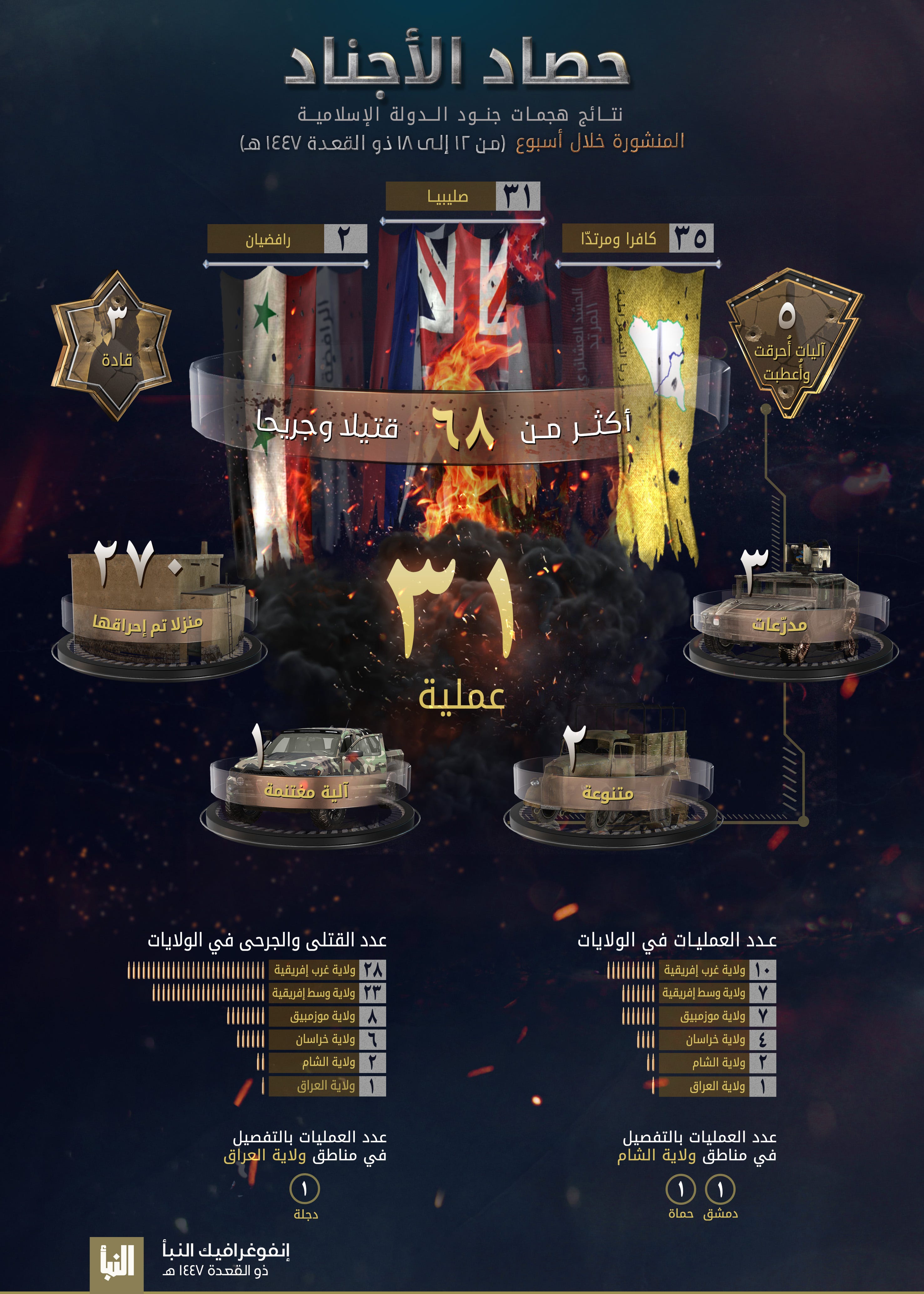
The official media of the Islamic State published an issue of the weekly al-Naba this week (546). Issue 545, eight pages long, covers the week of 12 to 18 Dhul Qi’dah 1447, from 1 to 6 May 2026. The main infographic summarises the areas affected by military operations this week, including: Nigeria, Syria, Iraq, Pakistan, Mozambique, and the Democratic Republic of Congo.
IS claims to have conducted 31 operations in all the mentioned areas and to have caused 68 deaths and injuries.
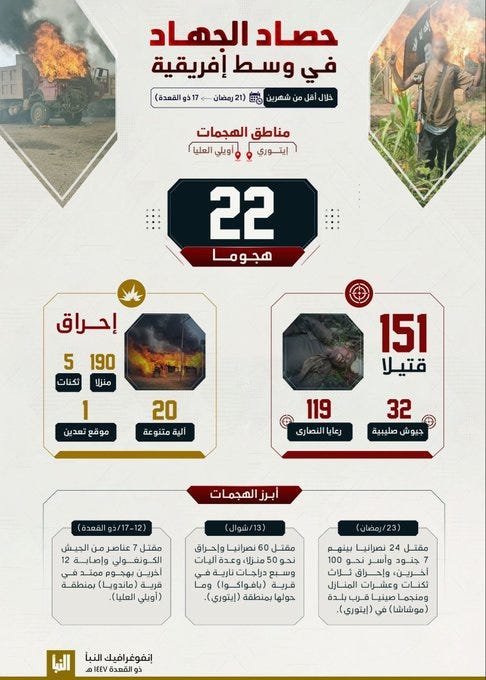
In this issue of al-Naba Newspaper, No. 546, Islamic State published an infographic detailing ISCAP’s activities over the past two months. 22 attacks carried out, 151 killed or wounded. Targets: Christian civilians, pro-government militias, the Congolese army. 190 homes and churches burned, 5 barracks and 1 mining site destroyed in the provinces of Ituri and Haut-Uele. DR Congo
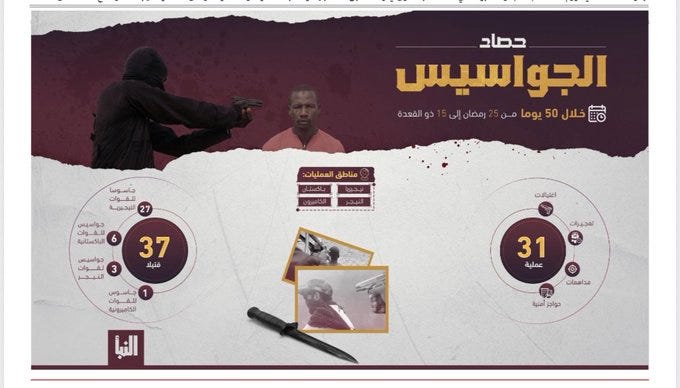
In this latest Islamic State also published an infographic showing data on operations carried out over the past 50 days against individuals who collaborate with regular armies by providing information on Islamic State – in other words, against those whom IS describes as “spies”. IS claims to have carried out 31 operations to kill “spies” in Pakistan, Nigeria, Cameroon, and Niger.
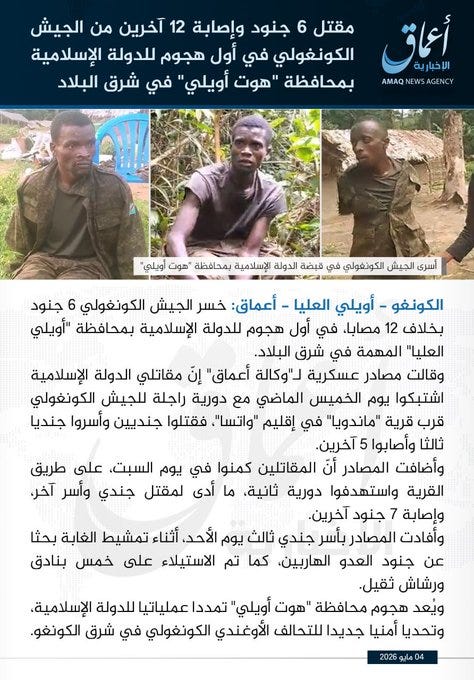
The Amaq news agency, the official media of the Islamic State, issued a statement claiming responsibility for an attack carried out by ISCAP against a Congolese army patrol in the Watsa area, in the province of Haut-Uélé, in the Democratic Republic of Congo.
This represents ISCAP’s attempt to expand into the DRC.
Independent Jihadist Groups
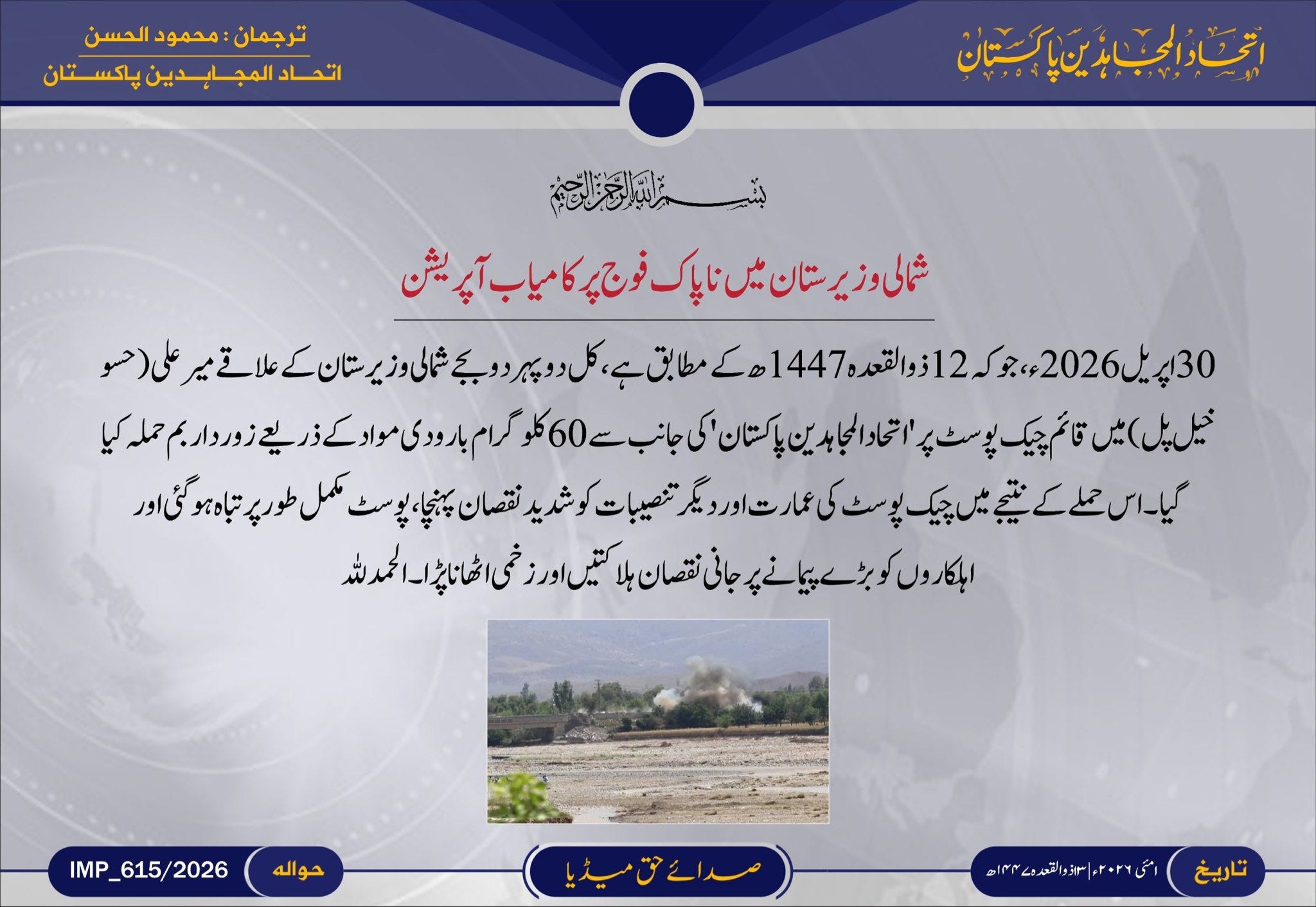
Ittehad-ul-Mujahideen Pakistan (IMP), a Pakistani jihadist organization comprising the Hafiz Gul Bahadur Group (HBG), Lashkar-e-Islam, and the Harkat Inqilab-e-Islami Pakistan (HIIP), released 28 statements, claiming 28 attacks.
Target: Pakistan Army, Pakistan Police, Frontier Corps,
Area:
- Bannu district, Hangu district, Orakzai district, Khyber district, North Waziristan district, South Waziristan district;
Khyber Pakhtunkhwa Province. Pakistan
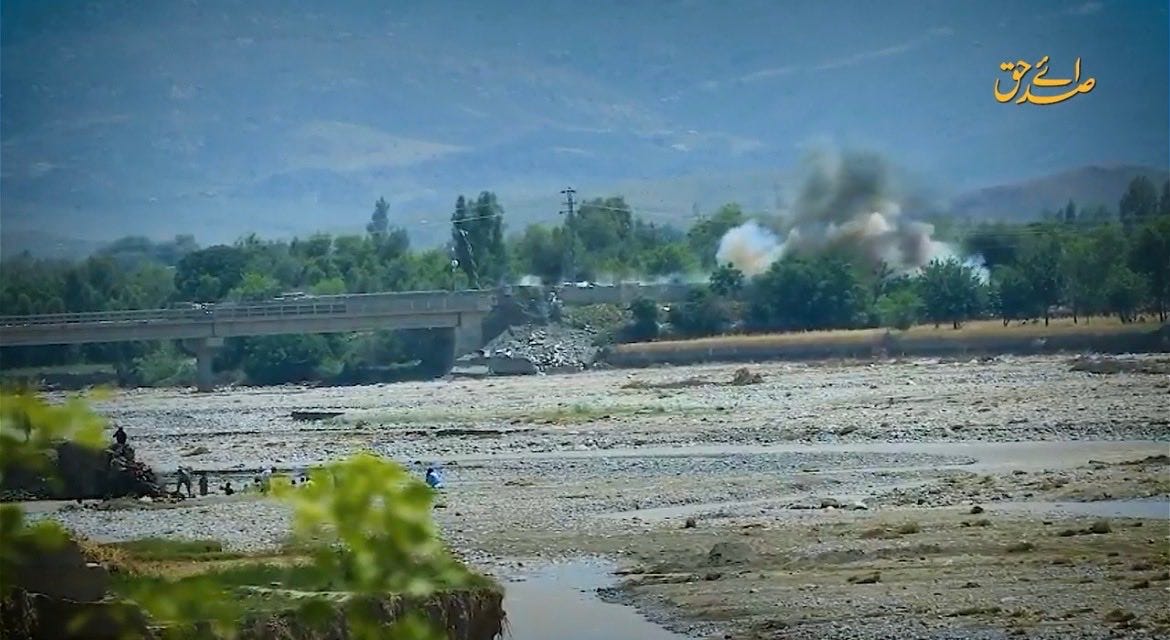
As-Saif Media, Ittehad-ul-Mujahideen Pakistan (IMP), a Pakistani jihadist organization comprising the Hafiz Gul Bahadur Group (HBG), Lashkar-e-Islam, and Harkat Inqilab-e-Islami Pakistan (HIIP), released a 1-minute 24-second video showing an IED attack against the Pakistani army in the North Waziristan district, Pakistan.
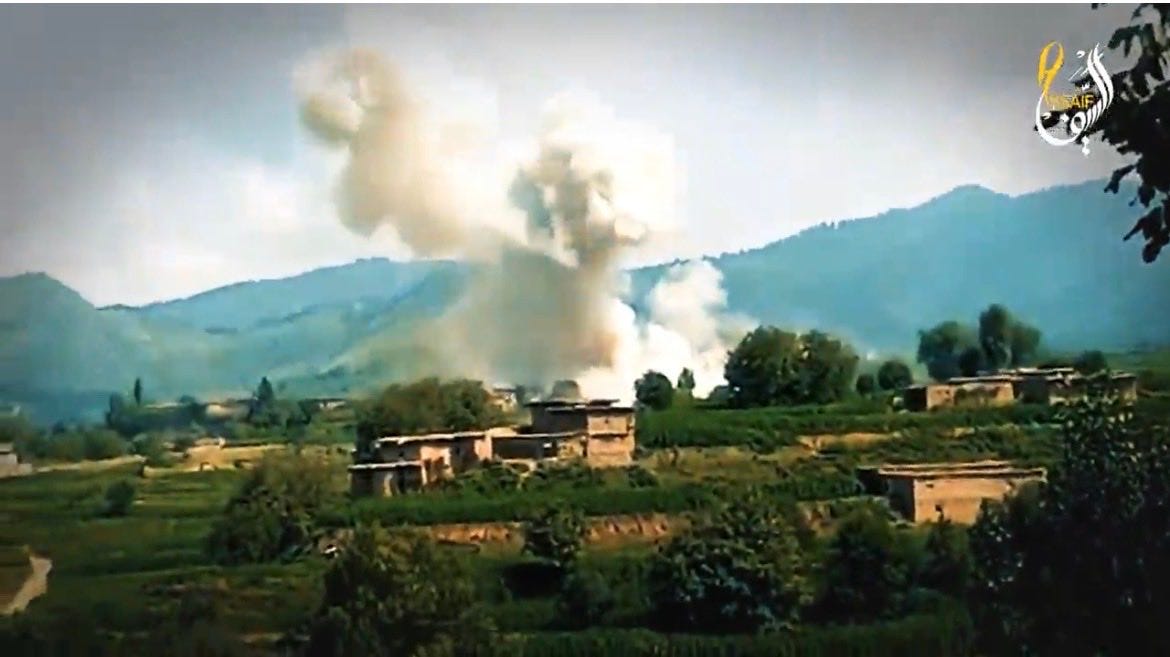
As-Saif Media, Ittehad-ul-Mujahideen Pakistan (IMP), a Pakistani jihadist organization comprising the Hafiz Gul Bahadur Group (HBG), Lashkar-e-Islam, and Harkat Inqilab-e-Islami Pakistan (HIIP), has released a video lasting 6 minutes and 25 seconds showing a massive suicide attack against the Pakistani army in the Khyber district of Pakistan.
IMP claims to have killed 57 soldiers.
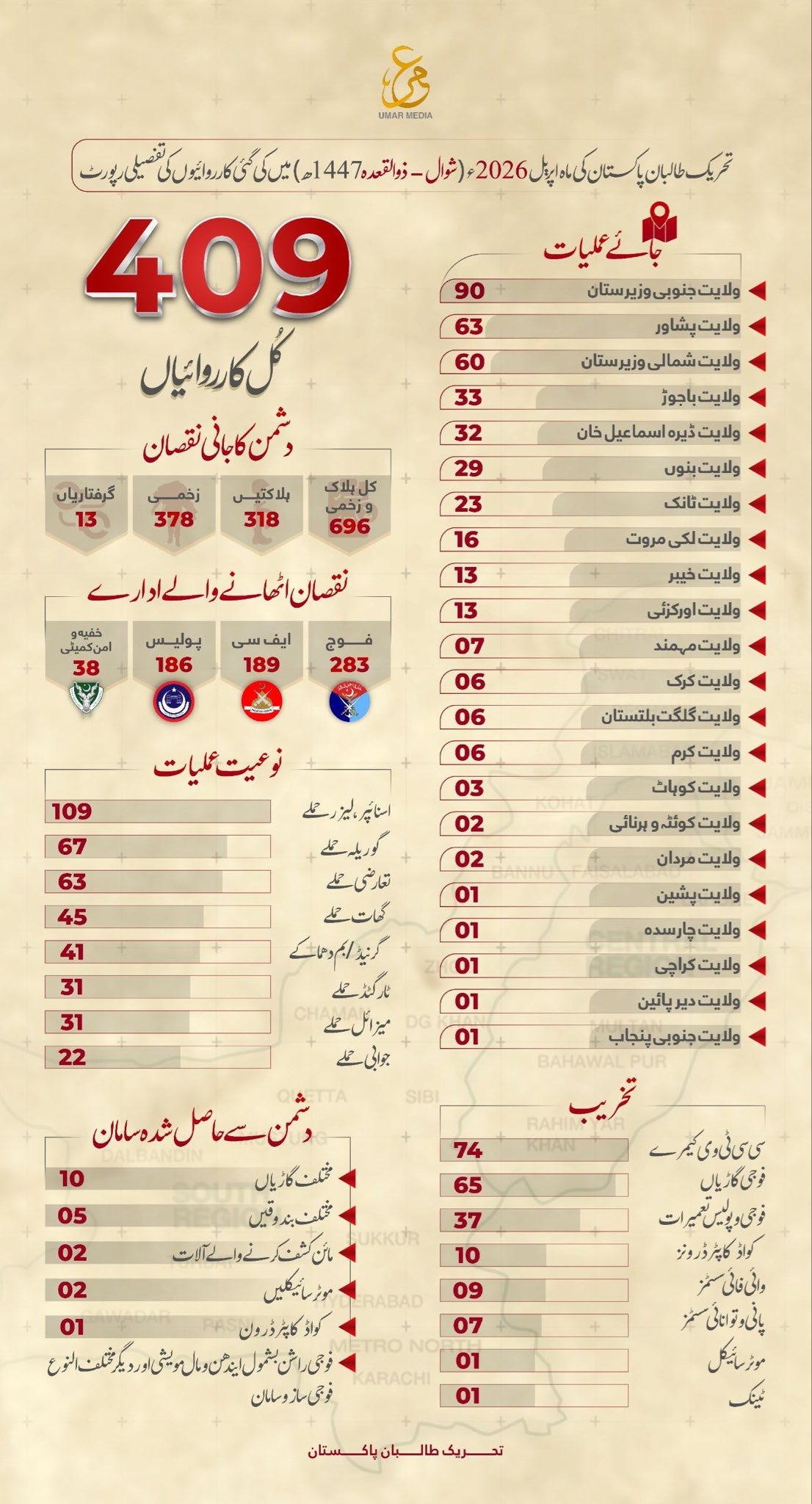
Umar Media, Tehrik-i-Taliban Pakistan (TTP), published its usual infographic summarising the attacks conducted in the previous month.
In April, the TTP claimed 409 attacks. The attacks affected 22 different Pakistani districts. Pakistan
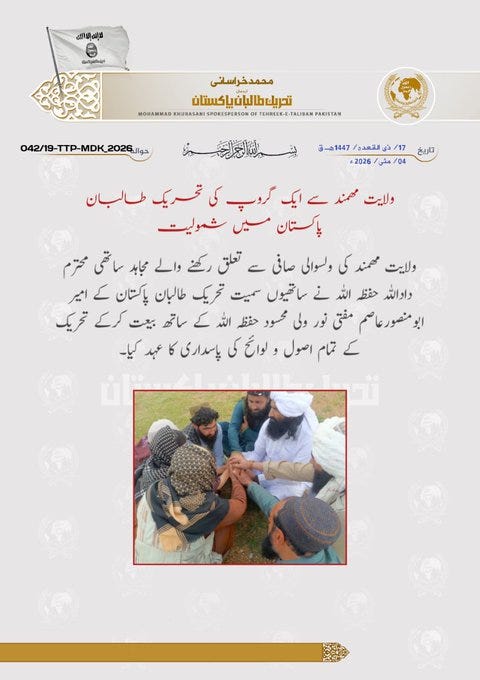
Mohammad Khorasani, spokesperson for Tehrik-e-Taliban Pakistan (TTP), announced in a statement that jihadist groups from the area of Mohmand district pledged allegiance to Tehreek-e-Taliban Pakistan and its emir, Abu Mansoor Asim Mufti Noor Wali Mehsud Hafizullah. Pakistan
🔹Weekly Monitoring Notes
The reporting period from 1 to 8 May shows a high-density propaganda cycle, with increased activity across Al-Qaeda affiliates, Islamic State official media, and Pakistan-based jihadist networks.
