

Executive Intelligence Overview
This weekly intelligence brief documents and structures official jihadist propaganda output released between 16 and 23 March, providing structured situational awareness across multiple organisations and theatres.
The brief emphasizes the high volume and diversity of jihadist propaganda output, underscoring the persistent threat across multiple theatres and alerting analysts and policymakers to ongoing operational activity.
volume and distribution of official propaganda output,
organisational and geographic dispersion across theatres,
The focus on operational claims in West Africa, the Middle East, and South Asia aims to keep analysts and policymakers aware of active threat zones requiring attention and strategic response.
appearance of new branding, campaign framing, or affiliate-level media differentiation.
The purpose of this product is to support systematic monitoring, structured comparison across reporting cycles, and longitudinal trend tracking. It provides an evidentiary baseline for subsequent analytical products and deeper theatre-specific assessments.
This publication does not include threat assessments, intent evaluation, or operational forecasting. Those components are addressed separately in dedicated analytical outputs.
🔹 Scope of Monitoring
This issue covers all identifiable official propaganda released by a predefined list of jihadist organisations and affiliated groups, selected based on operational relevance and threat level, during the reporting period.
The focus is strictly on documentation, classification, and structured presentation of primary-source material, enabling analytical reuse and historical comparison over time.
🔹 Sources & Collection Methodology
The analysis is based exclusively on primary-source propaganda material, including:
Official magazines,
Videos,
Photo sets,
Statements and claims of responsibility,
Audio statements.
Material is collected and categorised by organisation, media outlet, and content type.
The study relies on OSINT, IMINT, SOCMINT, and Digital HUMINT collection streams.
No secondary reporting, media commentary, or interpretative overlay is applied.
🔹 Analytical Boundaries & Limitations
Fluctuations in volume, language, or format serve as signals of activity trends, aiding analysts in understanding activity patterns without overestimating their significance.
They shouldn’t be considered in isolation as indicators of strategic shifts, operational escalation, or changes in intent and capability; instead, they should be analyzed within broader intelligence products.
Strategic shifts,
Operational escalation,
Intent or capability changes.
All higher-order analytical interpretation is conducted separately within:
Intelligence Briefs,
Strategic Threat Outlooks,
Cognitive and Information Domain Assessments.
🔹 Monitored Propaganda Output and Weekly Monitoring Notes
This issue includes all primary propaganda material released during the week by:
Al-Qaeda and affiliates
AQAP
JNIM
Al-Shabaab
AQIS
Islamic State
al-Naba Newspaper (weekly issue)
Official IS media channels.
Independent Jihadist Groups
Tehrik-e-Taliban Pakistan
Ittehad Mujahidin Pakistan
Ansar al-Furqan
JAS/Boko Haram
The conclusions are included in the Weekly Monitoring Notes.
Al-Qaeda (AQ)
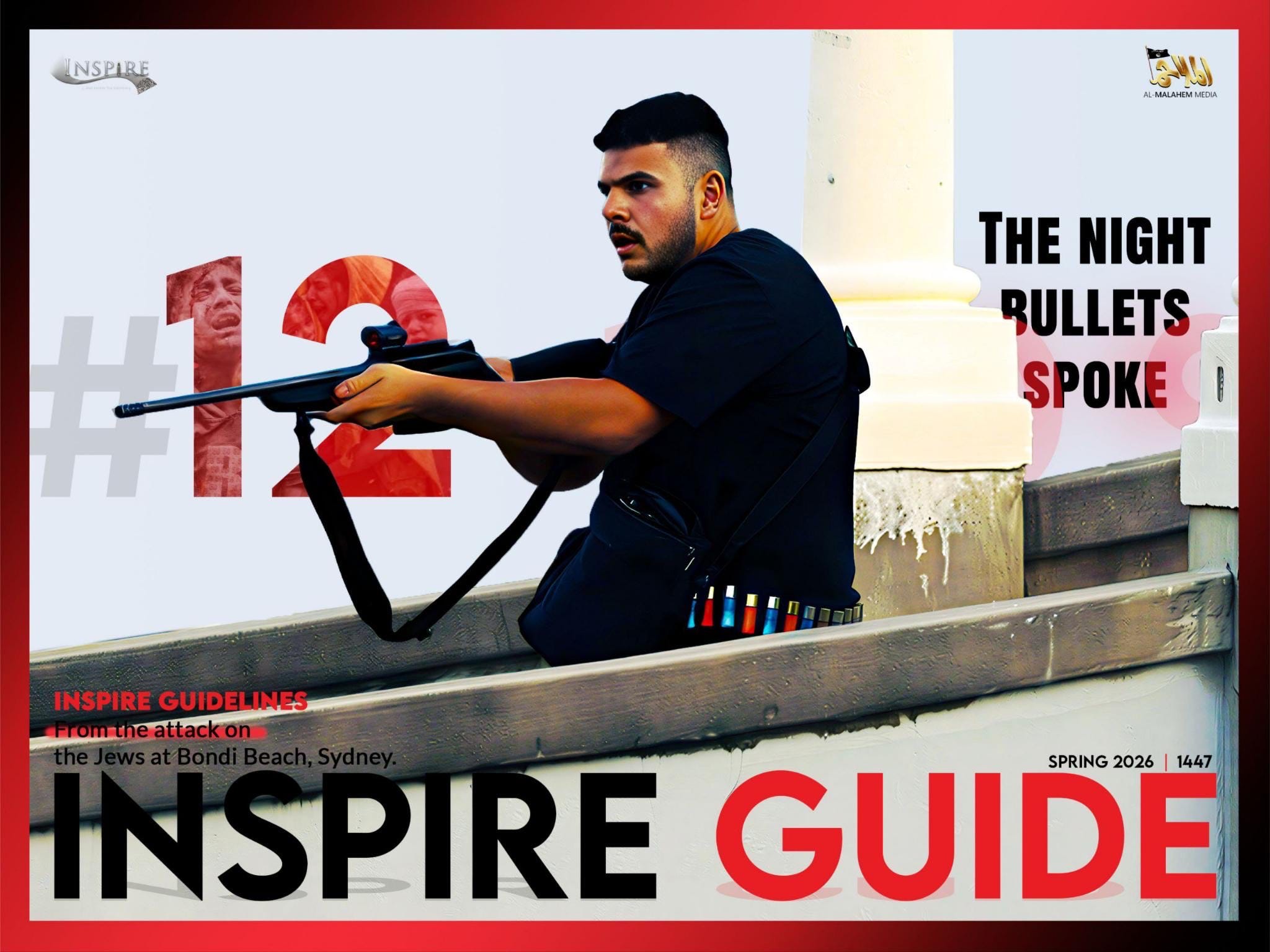
Al-Malahem Media, Al-Qaeda in the Arabian Peninsula (AQAP), has published issue 12 of its magazine “Inspire Guide”, part of the Open Source Jihad series, entitled: “Tonight, the bullets speak”.
The opening pages include an account of the shooting attack against Jewish civilians at Bondi Beach, Australia, with a description of the attacker, the context of the event, and its repercussions. The magazine features images of the attack and related photographs, as well as references to Western political and media reactions.
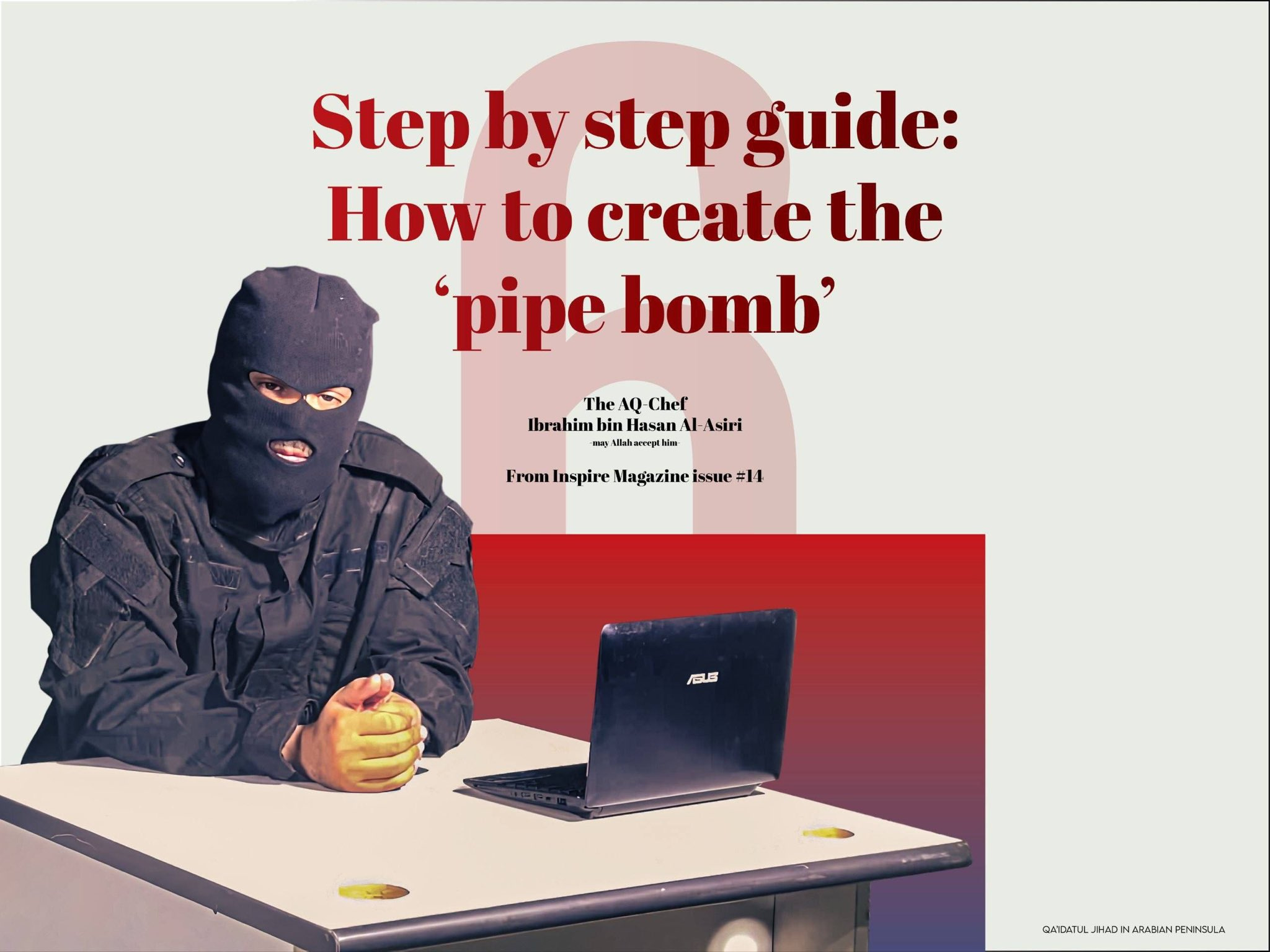
The most striking section begins on page 7, where there are detailed instructions for constructing improvised explosive devices (IEDs), with a visual demonstration of basic components such as batteries, wires, and switches. The magazine illustrates the step-by-step procedure for preparing the electrical circuit and the explosive charge, and for assembling the device, with explanatory images at each stage.
It also contains sections extolling the attacks of lone wolves, emphasising the use of simple and readily available means. Examples of attack methods such as shootings, stabbings, and vehicle-ramming attacks are presented, along with illustrative photos of past incidents.
The magazine concludes with motivational messages and calls to engage in what is termed individual jihad.
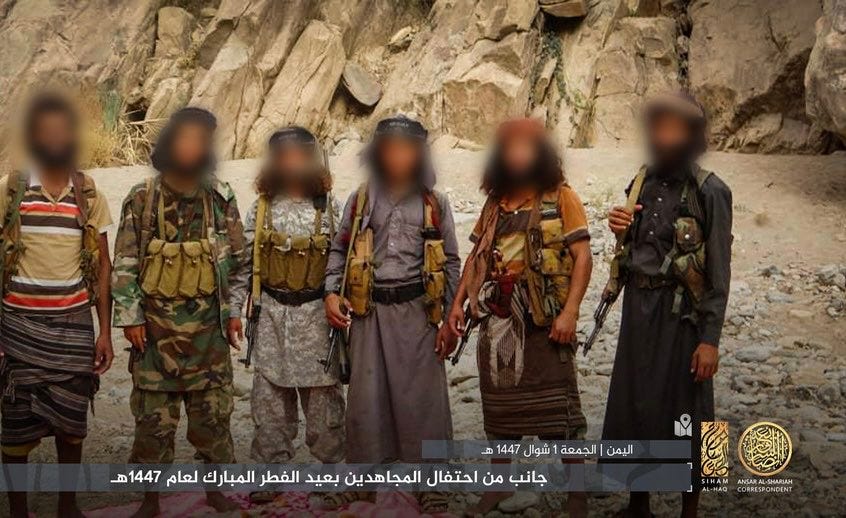
Siham al-Haq media, Al-Qaeda in Arabian Peninsula (AQAP), published a photo report showing its fighters celebrating Eid. Yemen
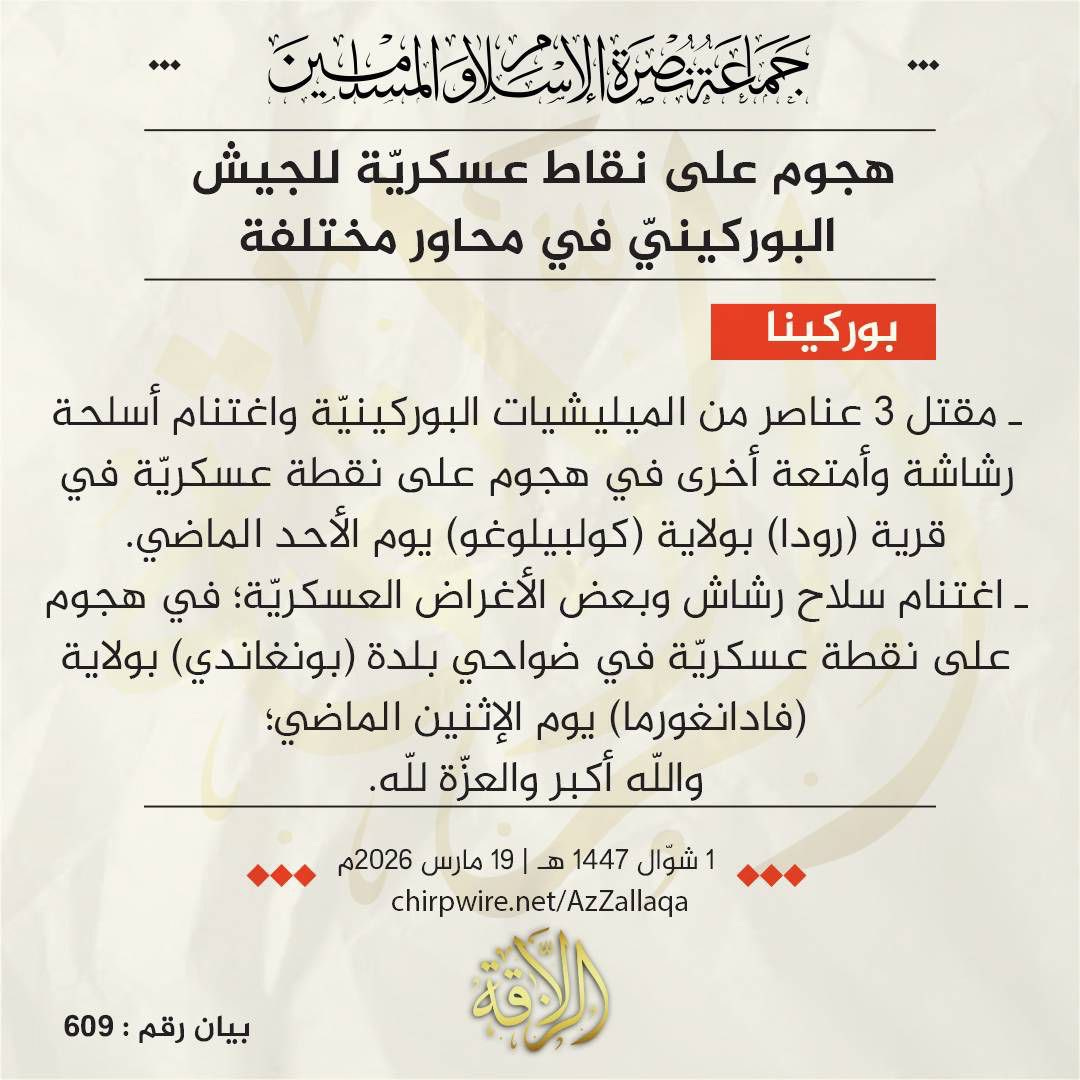
Az-Zallaqa Media, Jama’at Nasr al-Islam wal Muslimin (JNIM), issued 13 statements and 12 photos, claiming 16 attacks.
The targets of the attacks were: the Malian Army, the Russian PMC Africa Corps, the Burkinabé Army, the VDP militia, and the Niger Army.
The areas of the attacks were :
1) Burkina Faso = 12
- Sissili province, Mouhoun province, Koulpélogo province, Gourma province, Soum province, Yatenga province;
2) Mali = 4
- Ségou region, Sikasso region, Kidal region.
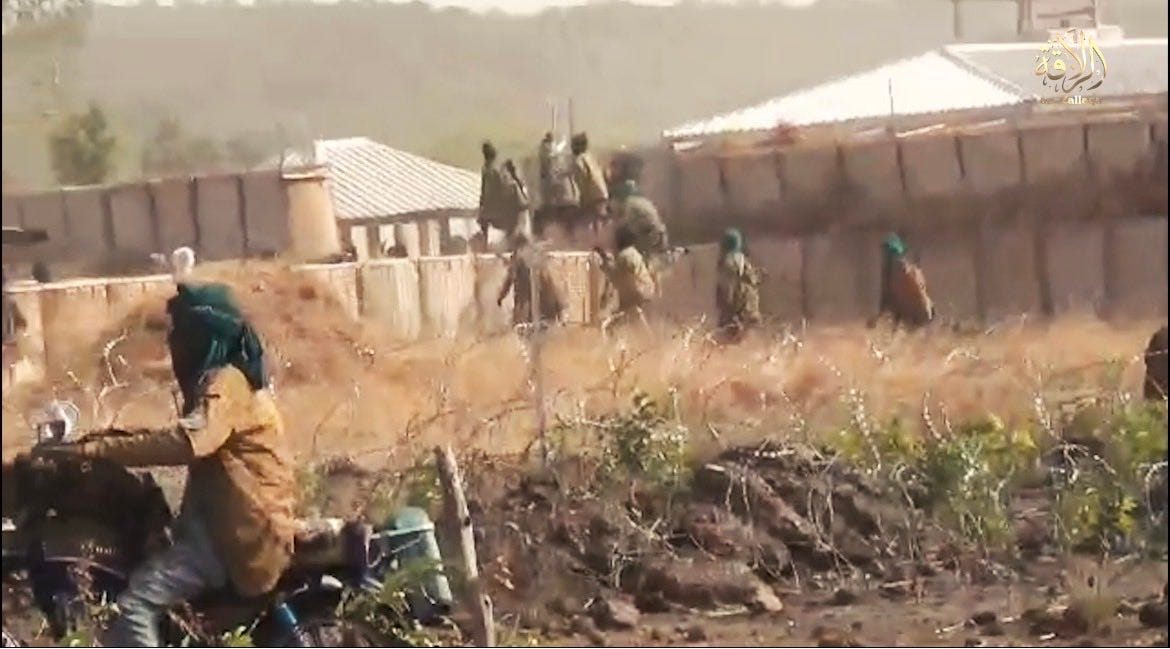
Az-Zallaqa Media, Jama’at Nasr al-Islam wal Muslimin (JNIM), released a 5-minute 29-second video showing a massive attack on a Beninese Army base and barracks in the department of Alibouri. Benin
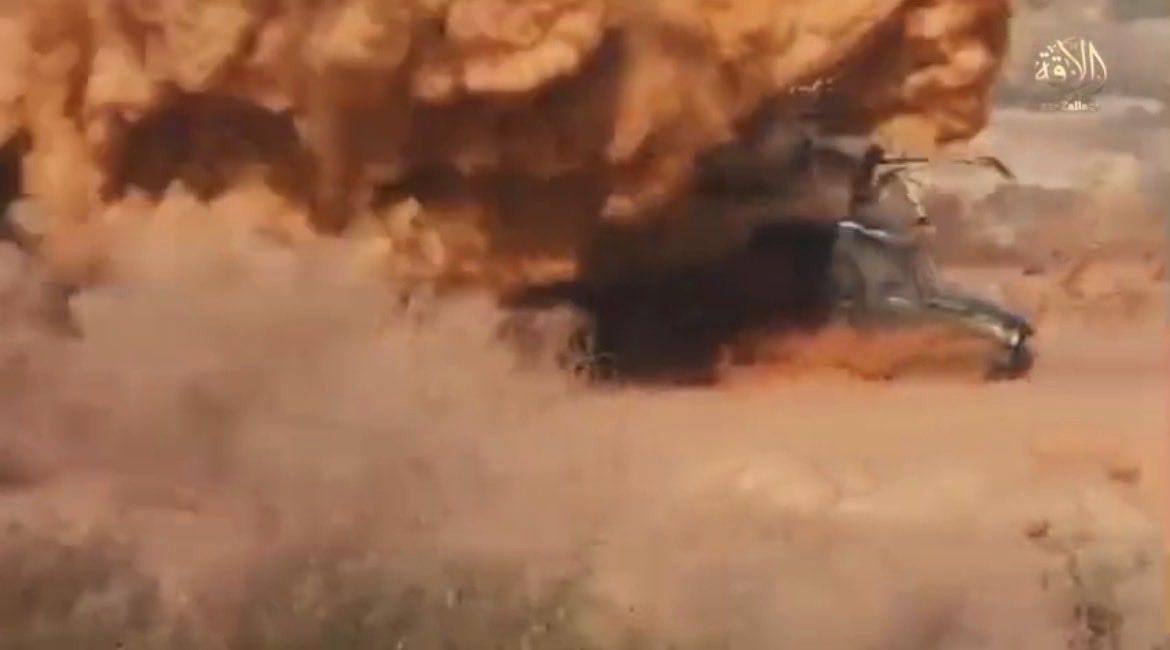
Az-Zallaqa Media, Jama’at Nasr al-Islam wal Muslimin (JNIM), has released a 55-second video showing an IED ambush on a Nigerien army patrol in the Tillaberi region. Niger
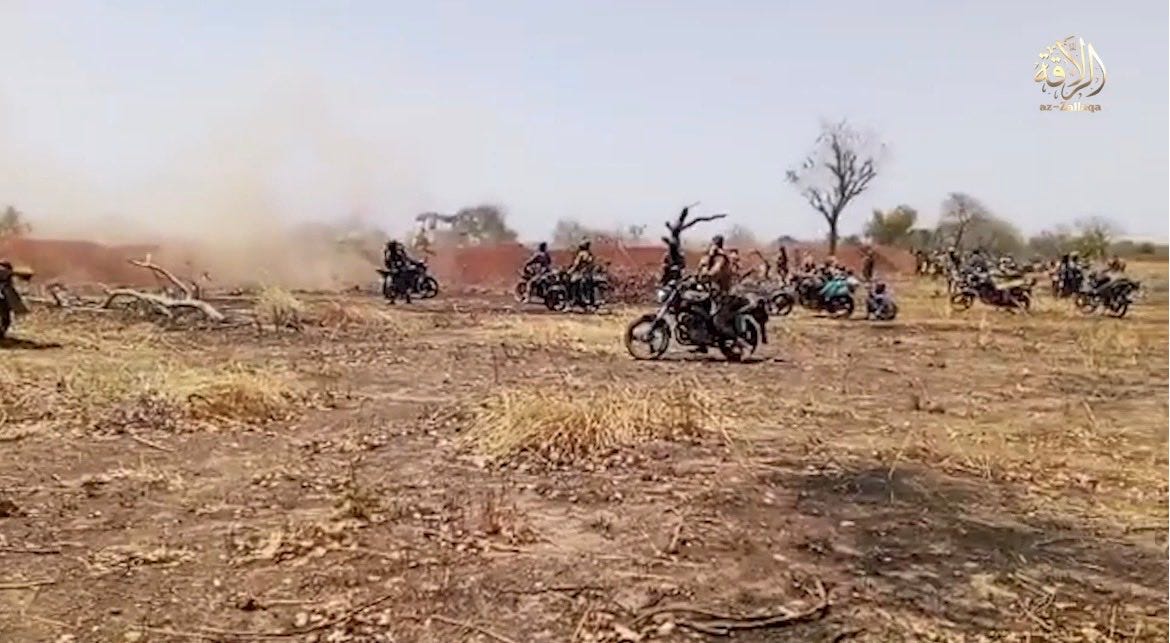
Az-Zallaqa Media, Jama’at Nasr al-Islam wal Muslimin (JNIM), has released a 3-minute 15-second video showing a massive attack on a Burkinabe Army base and barracks in the Labare area. Burkina Faso
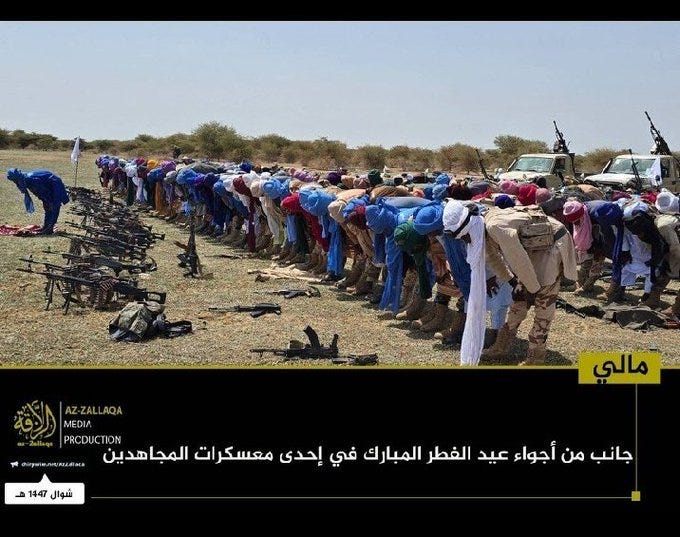
Az-Zallaqa, a JNIM media outlet, has published photos of its fighters celebrating Eid. Mali
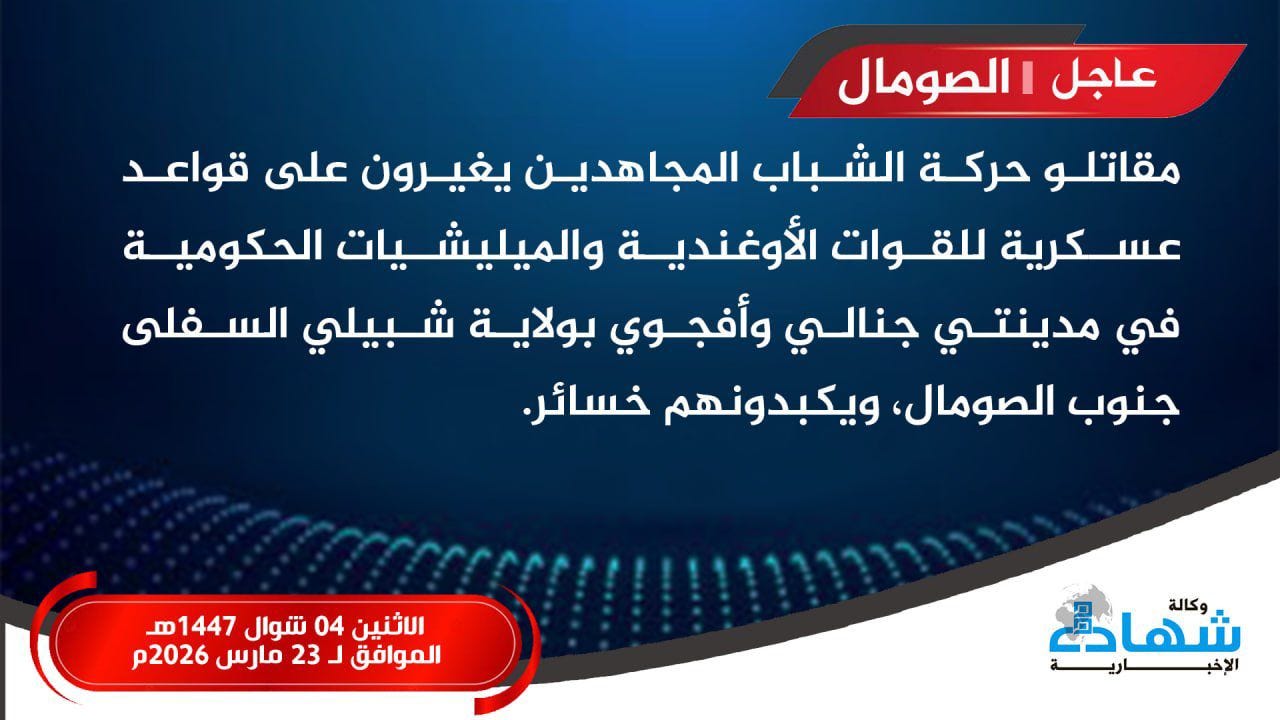
The Shahada News Agency, Harakat al-Shabaab al-Mujahidin (AS), released 5 statements claiming responsibility for 10 attacks.
The targets of the attacks were:
Somali pro-government militias, Somali Army, Somali intelligence, Jubaland Darawiish Force, Ugandan Army, Burundi Army.
The areas affected by the attacks were:
1) Somalia = 10
- Dusa Mareb area, Galguduud region; Garba Harre area, Beled Hawo area, Gedo region; Mahaday area, Middle Shabelle region; Bar Sanguni area, Lower Juba, Beledweyne area, Hiiran region; Janale area, Afgoye area, Lower Shabelle.
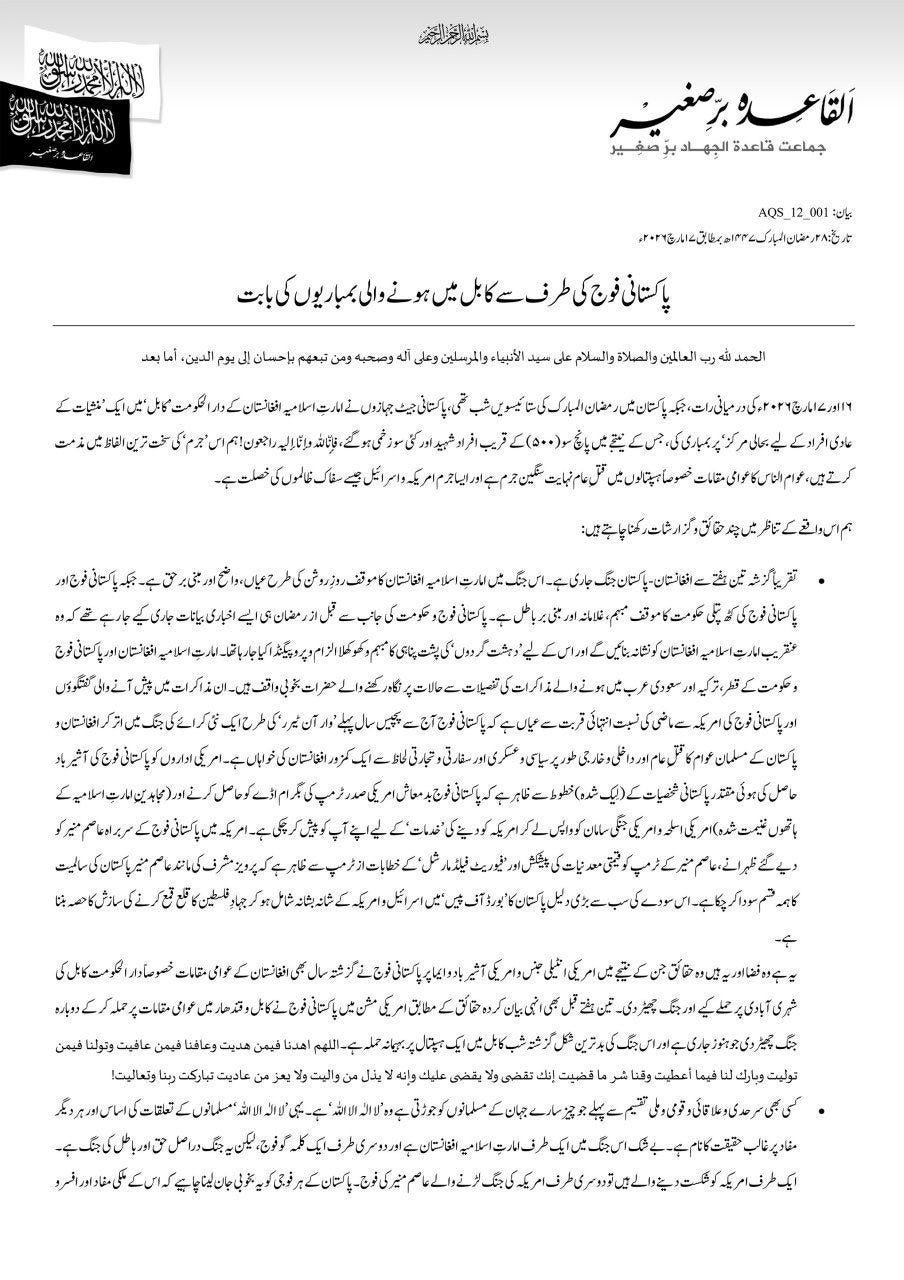
Al-Qaeda in the Indian subcontinent (AQIS) has issued a two-page statement focusing on the political and security situation related to military operations in Pakistan and regional developments in Afghanistan.
The statement addresses what is described as the involvement of the Pakistani army in an ongoing conflict on Afghan soil, presenting such involvement within a critical framework that links it to broader political and security agendas. The text presents an ideological narrative that casts these operations as serving foreign interests, with reference to the United States as an influential actor in shaping military policies in the region.
The statement focuses on describing the conflict as part of a prolonged confrontation between Islamic groups and external powers, employing religious rhetoric to interpret and present the events within an ideological framework. It uses references to historical events and regional contexts to reinforce this narrative, emphasising the continuity of the conflict rather than its isolated nature.
The text also includes references to the repercussions of military operations on the local context, presenting them as a broader narrative on the impact of these policies on local communities, highlighting instability as a direct consequence of military operations.
Overall, this media product reflects an attempt to reinterpret the conflict in the region within an overall ideological framework, focusing on the delegitimisation of state actors and presenting the conflict as part of a long-term strategic clash that transcends national borders.
Islamic State (IS)
The official media of the Islamic State published an issue of the weekly al-Naba this week (539). Issue 539, eight pages long, covers the week of 23 to 29 Ramadan 1447, from 12 to 18 March 2026.
The main infographic summarises the areas affected by military operations this week, including Nigeria, Niger, Syria, Somalia, and the Democratic Republic of Congo, highlighting key operational zones. IS claims to have conducted 21 operations in all the mentioned areas and to have caused 103 deaths and injuries.
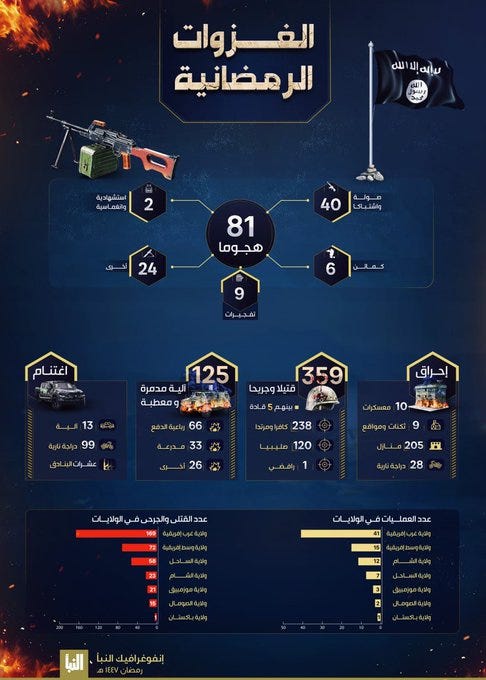
In this issue of al-Naba, the Islamic State published an infographic in which it claims to have carried out 81 attacks during the month of Ramadan.
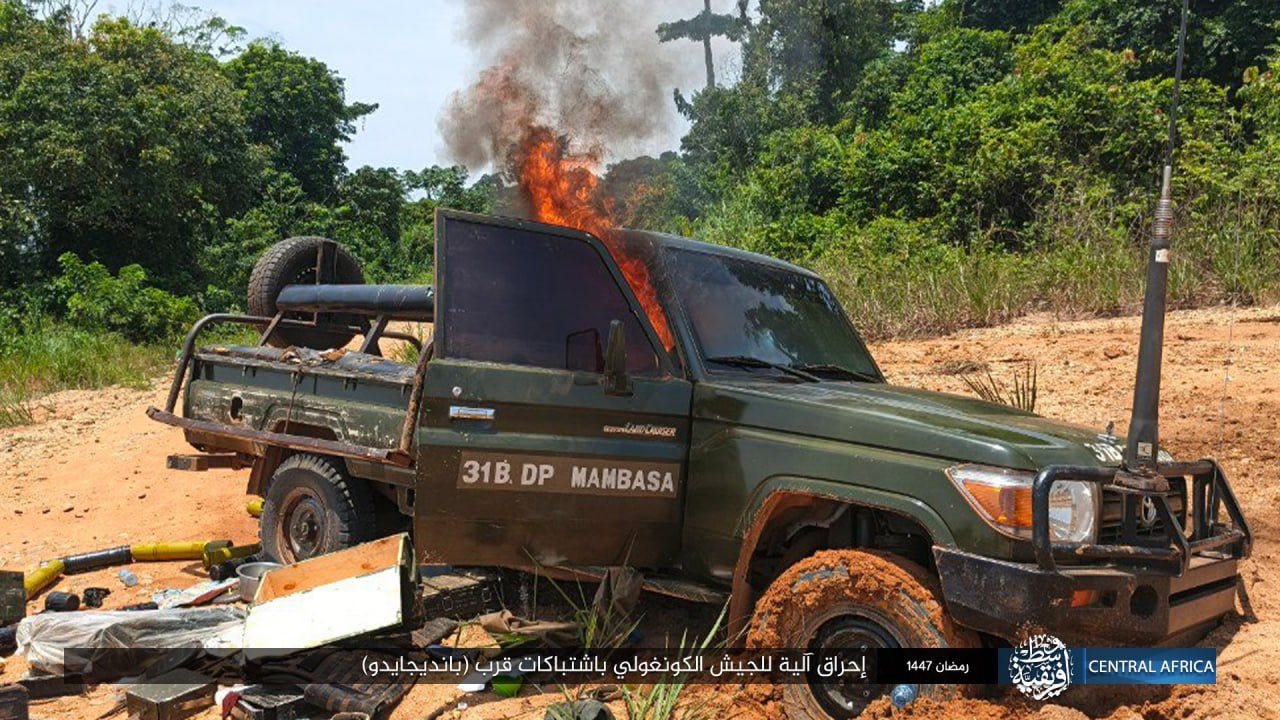
The official media of the Islamic State published a photo reportage from the Central Africa Province (ISCAP) to show the results of an ambush on a Congolese Army patrol in the province of Ituri, Democratic Republic of Congo.
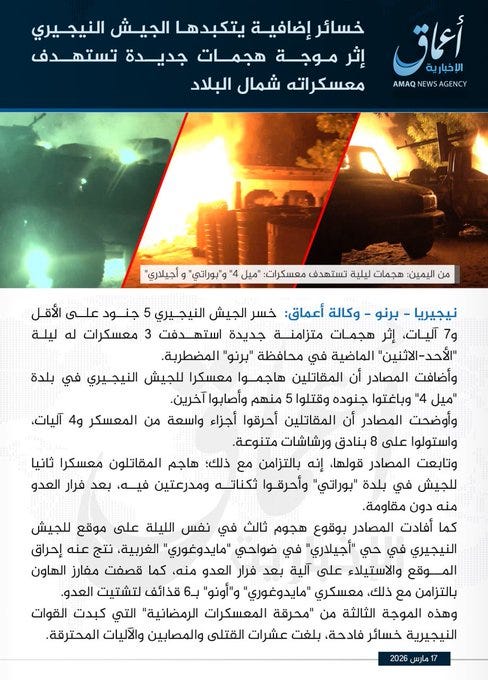
The Amaq news agency, the official mouthpiece of Islamic State, has published a lengthy statement claiming responsibility for 3 major nighttime attacks carried out by militants from the West Africa Province (ISWAP) against three Nigerian army camps in the Mile 4 Axis, Buratai area, and Maiduguri area, Borno State. Nigeria
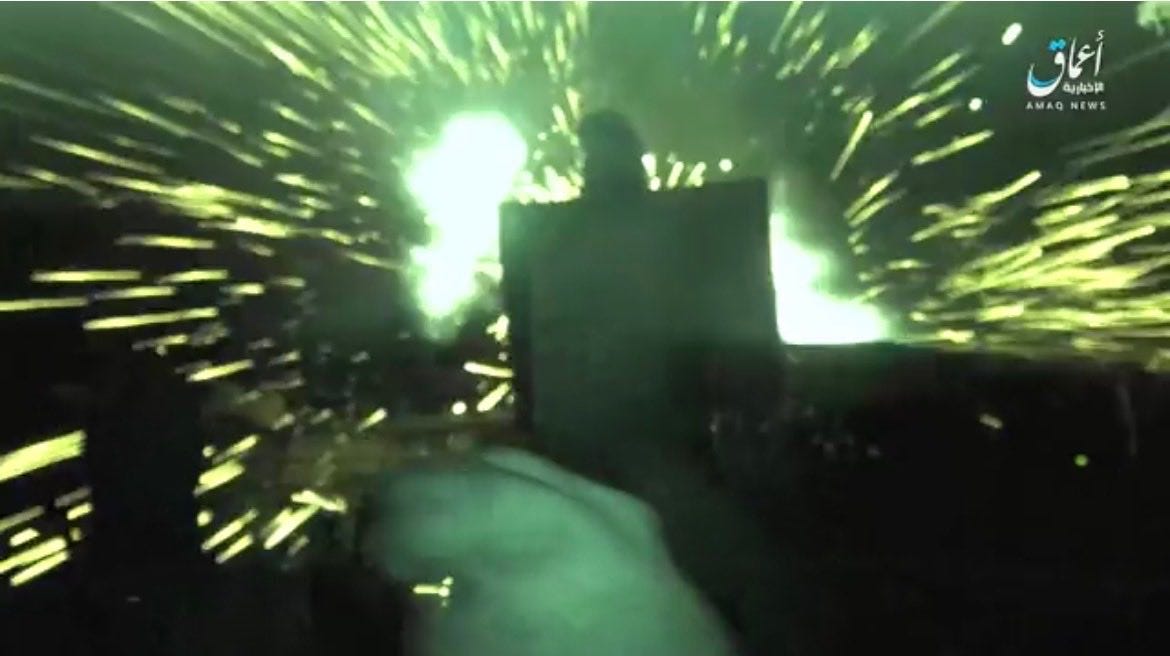
The Amaq news agency, the official media outlet of Islamic State, has released a 1-minute 31-second video showing three major night-time attacks carried out by militants from the West Africa Province (ISWAP) against three Nigerian army camps in the Mile 4 axis, the Buratai area, and the Maiduguri area, in Borno State. Nigeria
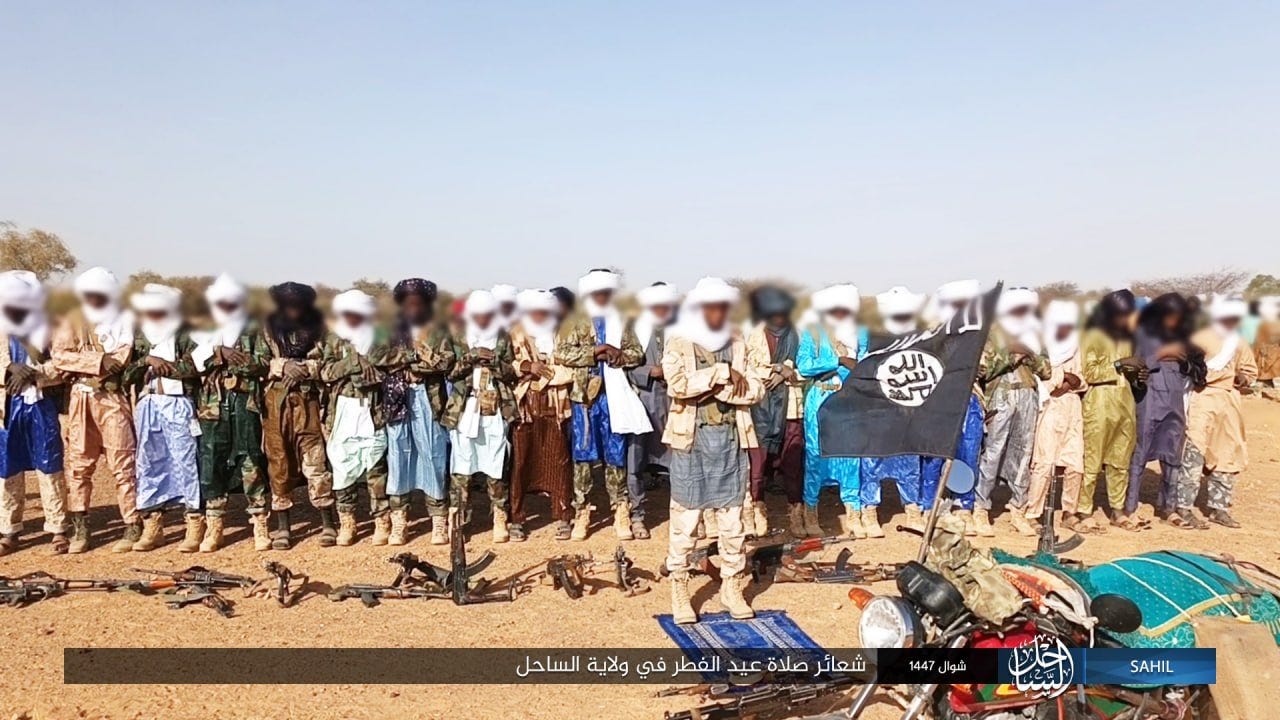
The Islamic State’s official media outlets have published photo reports from ISCAP, ISWAP, and IS-Sahel celebrating Eid.
Independent Jihadist Groups
Umar Media, Tehreek-e-Taliban Pakistan (TTP) released a 1-minute and 53-second video showing its militants ambushing a Pakistani Police patrol with IEDs in the Peshawar area in Pakistan.
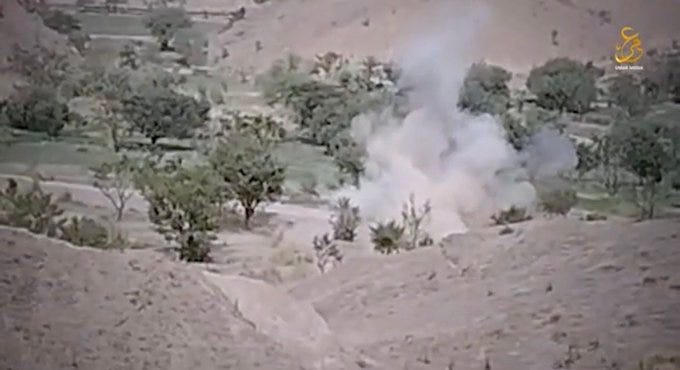
Al-Mansur Media, Ittehad-ul-Mujahideen Pakistan (IMP), a Pakistani jihadist organisation comprising the Hafiz Gul Bahadur (HBG) group, Lashkar-e-Islam, and Harkat Inqilab-e-Islami Pakistan (HIIP), has released a 1:15-minute video showing sniper attacks against the Pakistani Army convoy in the districts of Bannu, in the province of Khyber Pakhtunkhwa, Pakistan.
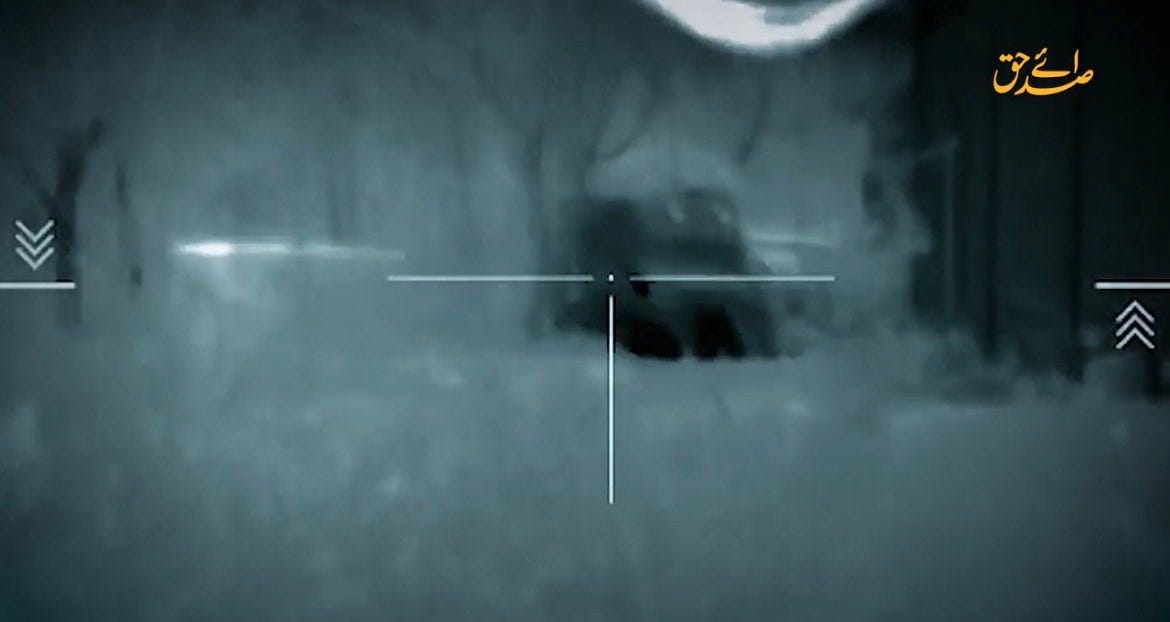
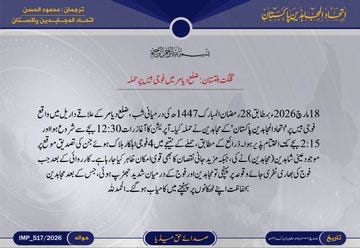
Ittehad-ul-Mujahideen Pakistan (IMP), a Pakistani jihadist organisation comprising the Hafiz Gul Bahadur Group (HBG), Lashkar-e-Islam, and the Harkat Inqilab-e-Islami Pakistan (HIIP), released 7 statements, claiming 7 attacks.
Target: Pakistan Army, Frontier Corps,
Area:
- Lakki Mareat district, South Waziristan, North Waziristan district, Khyber district, Khyber Pakhtunkhwa Province.
- Diamer district, Gilgit Baltistan province;
Pakistan.
Ansar al-Furqan’s official media outlets have published photos of its fighters celebrating Eid. Iran
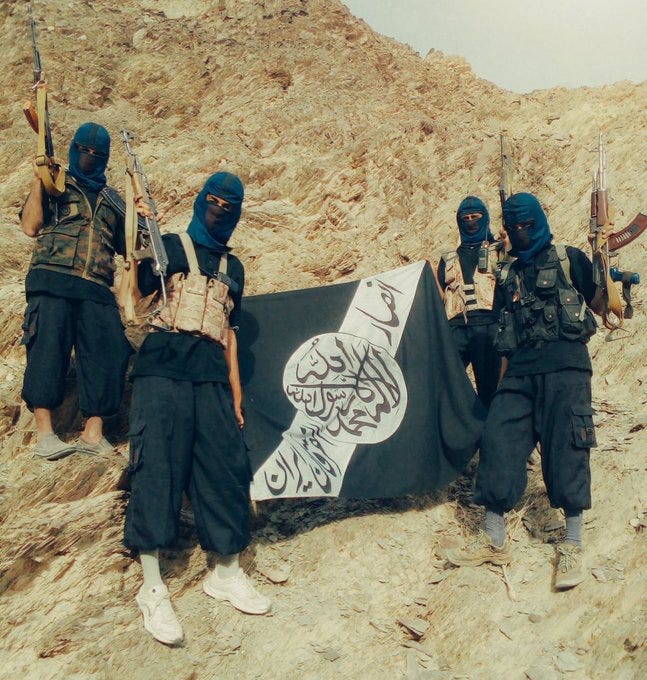
Unofficial media outlets have published videos and photos of JAS/Boko Haram’s Bakura Doro faction, showing its militants celebrating Eid. Lake Chad Basin
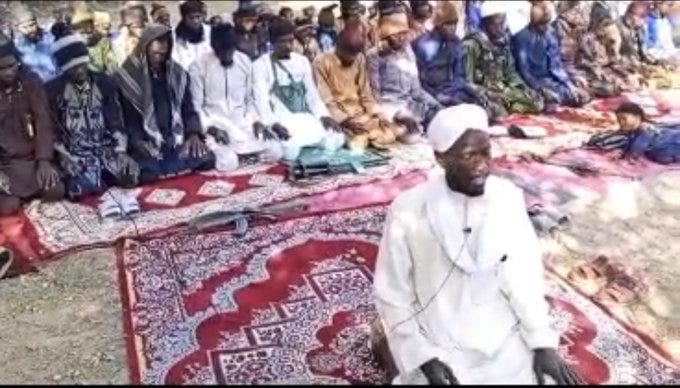
Unofficial media outlets have published videos and photos of JAS/Boko Haram’s Ali Ngude faction, showing its militants celebrating Eid. Nigeria/Cameroon
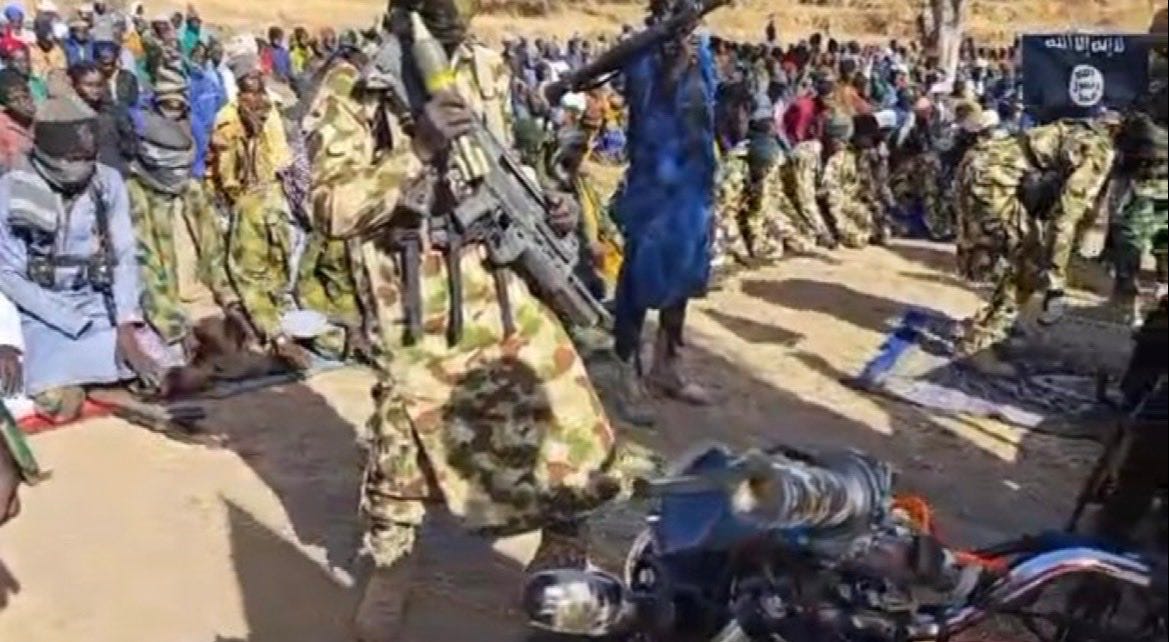
🔹Weekly Monitoring Notes
During the reporting period 16–23 March, jihadist propaganda output remained elevated and structurally diversified, combining operational claims, instructional content, ideological framing, and symbolic messaging linked to Eid. The week shows a balanced distribution between Al-Qaeda affiliates and Islamic State media ecosystems, with continued but secondary visibility from Pakistan-based independent groups and Lake Chad Basin factions.
A combination of operational continuity and qualitative diversification characterised al-Qaeda-linked output. JNIM maintained a steady tempo of claims across Burkina Faso and Mali, with additional projection into Benin and Niger through video-documented attacks. The release of multiple videos showing large-scale assaults and IED ambushes confirms sustained emphasis on battlefield visibility and cross-border operational reach. The geographic spread, particularly the inclusion of Benin, reinforces the group’s continued expansion dynamics within the coastal West Africa axis. Alongside operational reporting, JNIM also integrated symbolic content through Eid-related imagery, reinforcing cohesion and internal morale messaging.
AQAP output represented the most qualitatively significant development within the Al-Qaeda ecosystem during the week. The release of Inspire Guide Issue 12 reintroduced a structured instructional product combining operational inspiration, technical guidance, and ideological justification. The inclusion of step-by-step IED construction instructions, combined with references to simple attack methodologies such as shootings and vehicle-based attacks, indicates a continued focus on decentralised violence and individual action. This type of media product operates as both propaganda and capability-transfer material, reinforcing the group’s long-standing approach to remote activation. Additional photo content linked to Eid celebrations complemented this output with symbolic and identity-driven messaging.
AQIS maintained its presence through a written statement focused on Pakistan and Afghanistan, reinforcing a narrative that frames regional military dynamics as part of a broader ideological confrontation. The content remained consistent with its established communication style, centred on delegitimising state actors and embedding local conflicts within a transnational framework.
Al-Shabaab activity remained operationally consistent but quantitatively more contained compared to the previous week. Claims covered multiple regions in central and southern Somalia, with targets including Somali forces, regional militias, and African Union contingents. The absence of large-scale video releases and the reliance on statements indicate a stable but less media-intensive cycle.
Islamic State media output maintained a structured and disciplined rhythm. Al-Naba issue 539 followed the standard format, with operations distributed across West Africa, the Sahel, Somalia, Syria, and the Democratic Republic of Congo. The inclusion of a Ramadan-wide infographic claiming a high number of attacks reinforces the group’s attempt to frame the period as operationally productive. Amaq releases were heavily concentrated in northeastern Nigeria, particularly around coordinated nighttime attacks on military positions in Borno State. Supporting video and photo material from ISWAP and ISCAP continued to emphasise battlefield effectiveness and target engagement. The presence of Eid-related imagery across multiple provinces added a parallel symbolic layer to the operational narrative.
Independent jihadist groups maintained steady but secondary visibility. Ittehad-ul-Mujahideen Pakistan continued its claims-based reporting across Khyber Pakhtunkhwa and adjacent areas, supported by short sniper-attack footage. TTP output remained limited to a single ambush video. In parallel, visual material linked to Ansar al-Furqan in Iran and JAS factions in the Lake Chad Basin focused on Eid celebrations, contributing to the broader thematic overlap between operational propaganda and symbolic messaging during the period.
Distribution patterns remained stable across established encrypted and semi-encrypted platforms (Element, Telegram, Rocket Chat, Chirpwire, Signal, UpScrolled), with no observable shifts in dissemination channels or media architecture.
Overall, Week 16–23 March is characterised by a dual-layered propaganda environment, combining sustained operational reporting with a strong symbolic component linked to Eid, and a notable reintroduction of instructional content within the Al-Qaeda ecosystem.
🔒 Executive Intelligence Cycle
This assessment is part of a broader analytical cycle.
Founding subscribers receive the Executive Intelligence Briefing, which integrates all threat assessments, cognitive domain analysis, and a rolling 30–90 day forecast into a single monthly strategic synthesis.
© Daniele Garofalo Monitoring - All rights reserved.
Daniele Garofalo is an independent researcher and analyst specialising in jihadist terrorism, Islamist insurgencies, and armed non-state actors.
His work focuses on continuous intelligence monitoring, threat assessment, and analysis of propaganda and cognitive/information dynamics, with an emphasis on decision-oriented outputs, early warning, and strategic trend evaluation.
ISSN (International Standard Serial Number): 3103-3520
NATO NCAGE: AX664 (NATO Commercial and Governmental Entity)
ORCID Code: 0009-0006-5289-2874