


Executive Intelligence Overview
This weekly intelligence brief documents and structures official jihadist propaganda output released between 23 and 28 February, providing structured situational awareness across multiple organisations and theatres.
The brief focuses on:
volume and distribution of official propaganda output,
organisational and geographic dispersion across theatres,
continuity and variation in operational claims and visual documentation,
appearance of new branding, campaign framing, or affiliate-level media differentiation.
The purpose of this product is to support systematic monitoring, structured comparison across reporting cycles, and longitudinal trend tracking. It provides an evidentiary baseline for subsequent analytical products and deeper theatre-specific assessments.
This publication does not include threat assessments, intent evaluation, or operational forecasting. Those components are addressed separately in dedicated analytical outputs.
🔹 Scope of Monitoring
This issue covers all identifiable official propaganda released by a predefined list of jihadist organisations and affiliated groups, selected based on operational relevance and threat level, during the reporting period.
The focus is strictly on documentation, classification, and structured presentation of primary-source material, enabling analytical reuse and historical comparison over time.
🔹 Sources & Collection Methodology
The analysis is based exclusively on primary-source propaganda material, including:
Official magazines,
Videos,
Photo sets,
Statements and claims of responsibility,
Audio statements.
Material is collected and categorised by organisation, media outlet, and content type.
The study relies on OSINT, IMINT, SOCMINT, and Digital HUMINT collection streams.
No secondary reporting, media commentary, or interpretative overlay is applied.
🔹 Analytical Boundaries & Limitations
Observed fluctuations in volume, language, or format should be interpreted as monitoring signals only, indicating activity trends, and not as definitive indicators of strategic or operational shifts, thereby helping analysts contextualize data correctly.
They should not be considered in isolation as indicators of strategic shifts, operational escalation, or changes in intent and capability, emphasizing the need for comprehensive analysis within broader intelligence products.
Strategic shifts,
Operational escalation,
Intent or capability changes.
All higher-order analytical interpretation is conducted separately within:
Intelligence Briefs,
Strategic Threat Outlooks,
Cognitive and Information Domain Assessments.
🔹 Monitored Propaganda Output and Weekly Monitoring Notes
This issue includes all primary propaganda material released during the week by:
Al-Qaeda and affiliates
JNIM
Al-Shabaab
Islamic State
al-Naba’ (weekly issue)
Official IS media channels.
Independent Jihadist Groups
Ittehad Mujahidin Pakistan
Inqilab-e-Islami Pakistan
Tehrik-e-Taliban Pakistan
Ansar al-Islam Pakistan
The conclusions are included in the Weekly Monitoring Notes.
Al-Qaeda (AQ)
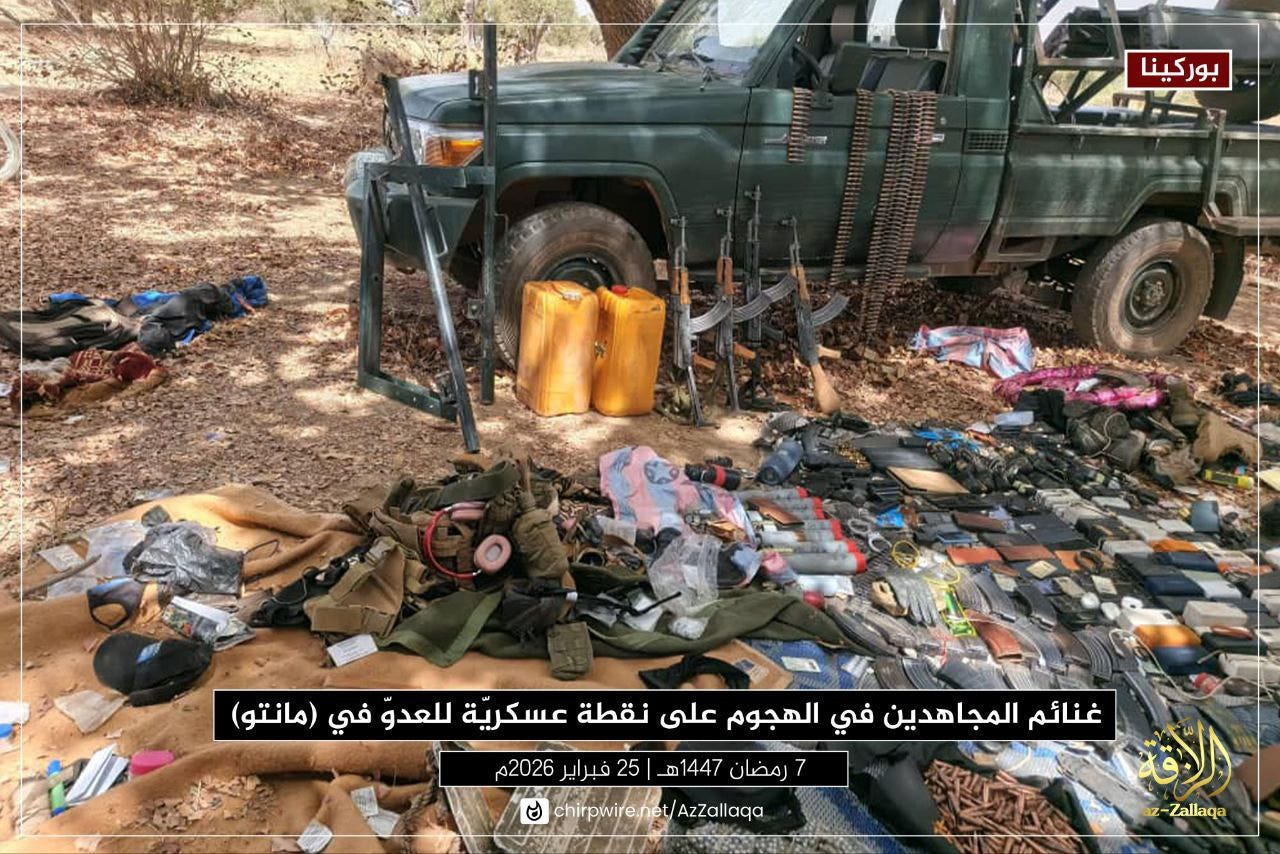
Az-Zallaqa Media, Jama’at Nasr al-Islam wal Muslimin (JNIM), issued 6 statements and 6 photos, claiming 9 attacks.
The targets of the attacks were the Malian Army and the Burkinabé Army.
The areas of the attacks were :
1) Mali = 1
Kayes region;
2) Burkina Faso = 8
Mouhoun province, Loroum province, and Gourma province.
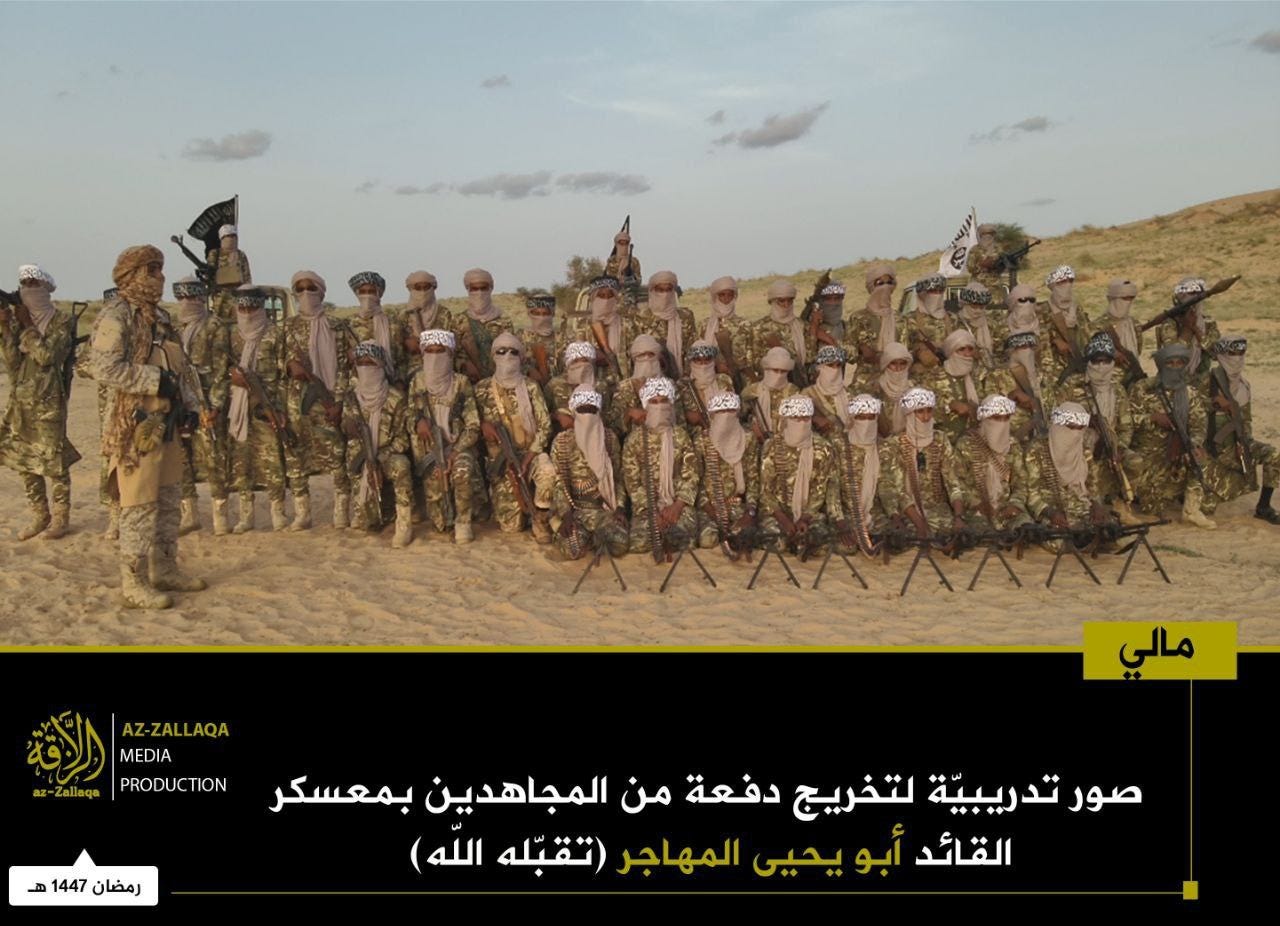
Az-Zallaqa Media, Jama’at Nasr al-Islam wal Muslimin (JNIM), published a photo report showing numerous militants in a training camp in Mali.
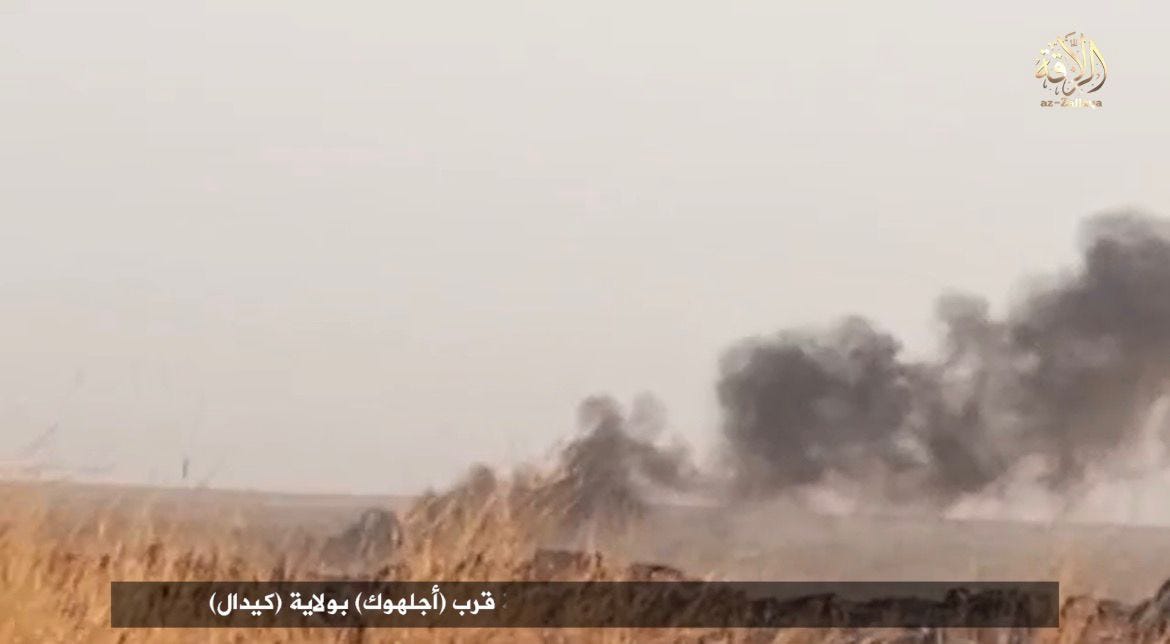
Az-Zallaqa Media, Jamat Nusrat al-Islam wal-Muslimin (JNIM) released a 1:02-minute video documenting the IED attack launched by its fighters against a Malian Army patrol in the Aguelhok area, Kidal region, in Mali.
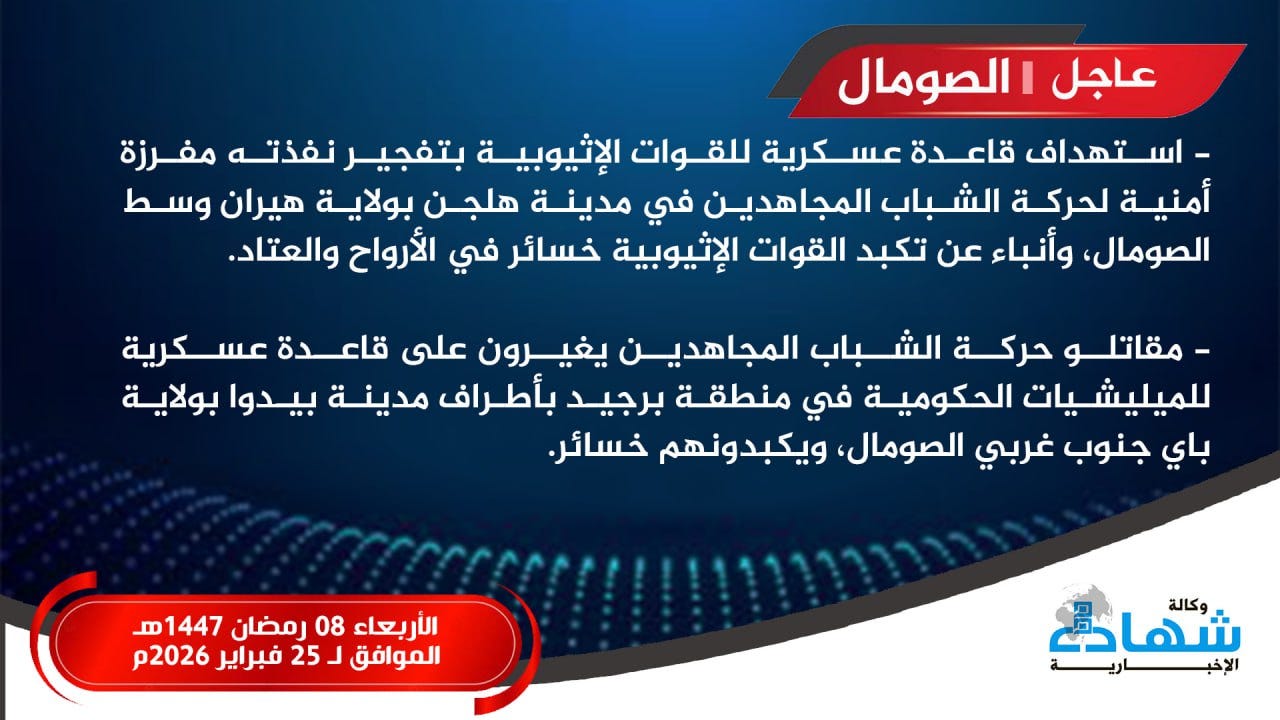
The Shahada News Agency, Harakat al-Shabaab al-Mujahidin (AS), released 7 statements claiming responsibility for 6 attacks.
The targets of the attacks were: the Somali army, pro-government Somali militias, Somali intelligence, Somali Special Forces, and the Ethiopian Army, Ugandan Army, and Kenyan Army.
The areas affected by the attacks were:
1) Somalia = 13
El Wak, Baardheere Gedo region; Jalalaqsi area, Hiran region; Janale area, Buulo Mareer area, Lower Shabelle region; Baidoa area, Bay region; Mogadishu area;
2) Kenya = 1
Fafi area, Garissa County.
Islamic State (IS)
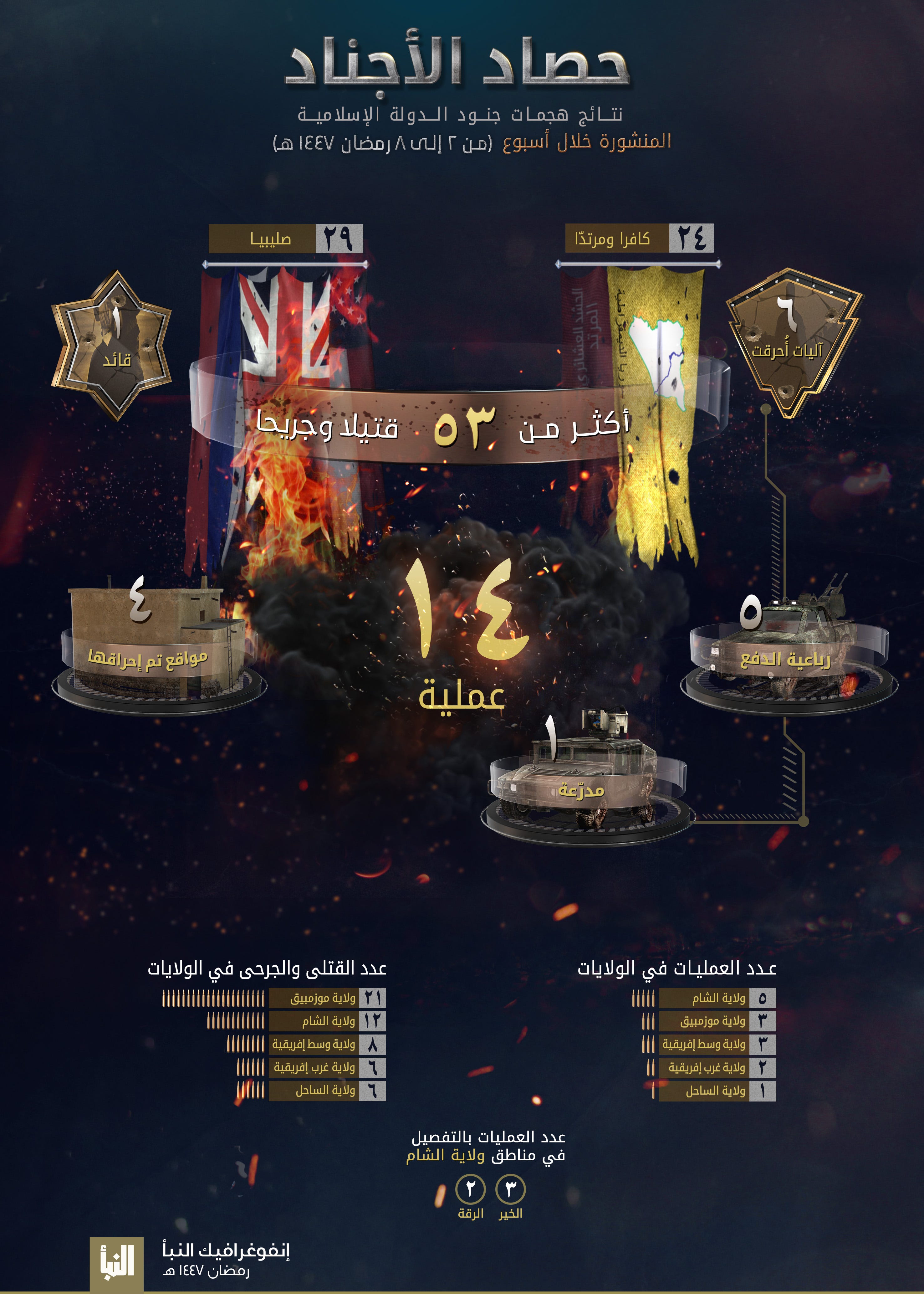
The official media of the Islamic State published an issue of the weekly al-Naba this week (536). Issue 536, twelve pages long, covers the week of 2 to 8 Ramadan1447, from 19 to 25 February 2026. The main infographic summarises the areas affected by military operations this week, including Nigeria, Niger, Syria, Mozambique, and the Democratic Republic of Congo.
IS claims to have conducted 14 operations in all the mentioned areas and to have caused 53 deaths and injuries.
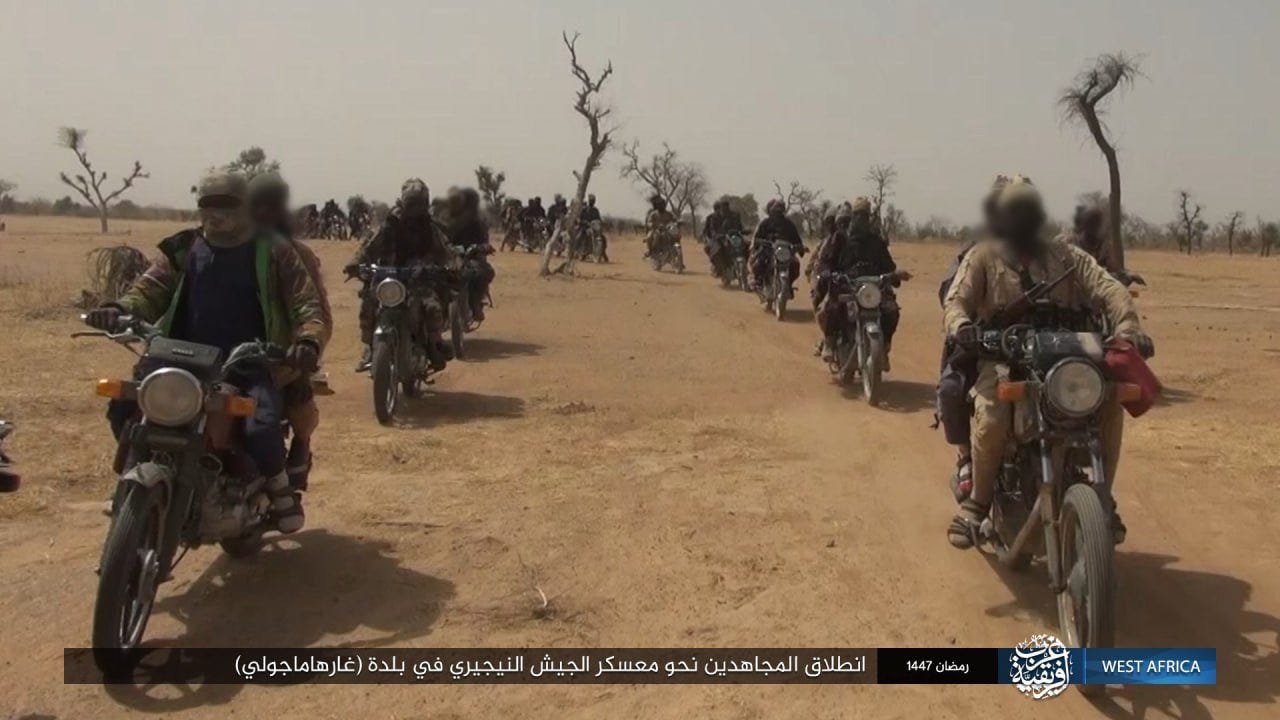
Official Islamic State media released a photo report showing militants from the West Africa Province (ISWAP) conducting an attack on a Nigerian Army camp in the Garha Mojoli area, in the Adamawa State. Nigeria.
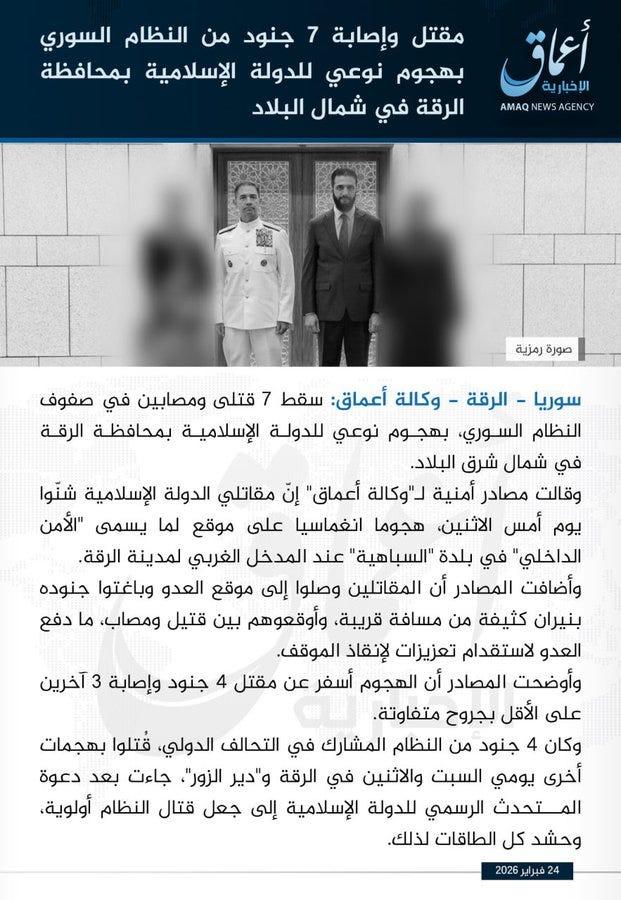
Amaq News Agency, the Islamic State’s official media, published a lengthy statement claiming an ambush on a Syrian government Army checkpoint in the area of Raqqa governorate. Syria
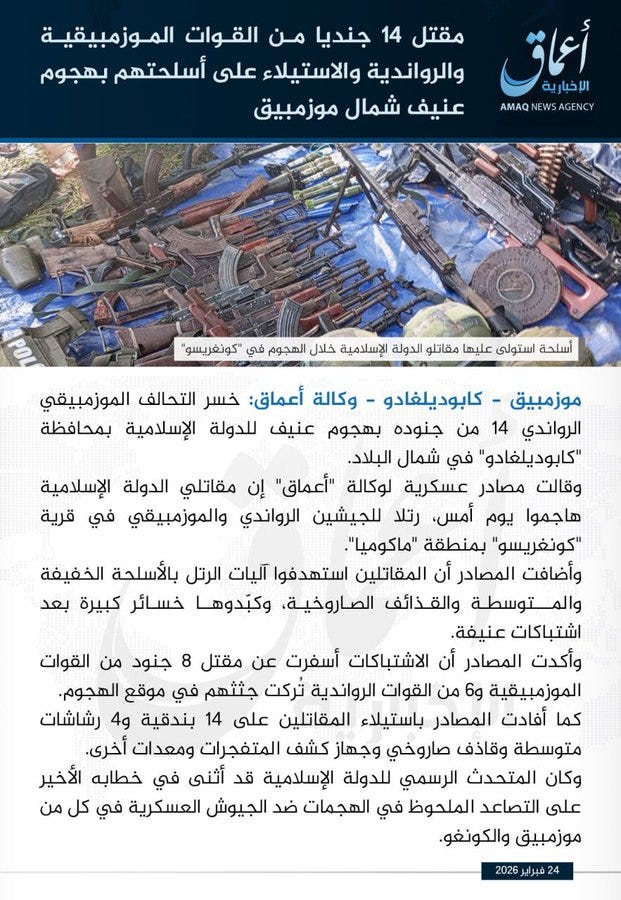
Amaq News Agency, the official media of the Islamic State, published a lengthy statement claiming a serious attack by militants in the province of Mozambique (ISM) against a joint convoy of the Mozambican and Rwandan armies in the area of the Macomia district in the province of Cabo Delgado.
Independent Jihadist Groups
Ittehad-ul-Mujahideen Pakistan (IMP), a Pakistani jihadist organisation comprising the Hafiz Gul Bahadur Group (HBG), Lashkar-e-Islam, and the Harkat Inqilab-e-Islami Pakistan (HIIP), released 9 statements, claiming 11 attacks (with IEDs, sniping, ambushes, direct assaults, mortars).
Target: Pakistan Army, Pakistani Police, Frontier Corps,
Area:
- Khyber district, Lakki Marwat district, South Waziristan district, Bannu district;
Khyber Pakhtunkhwa Province, Pakistan.
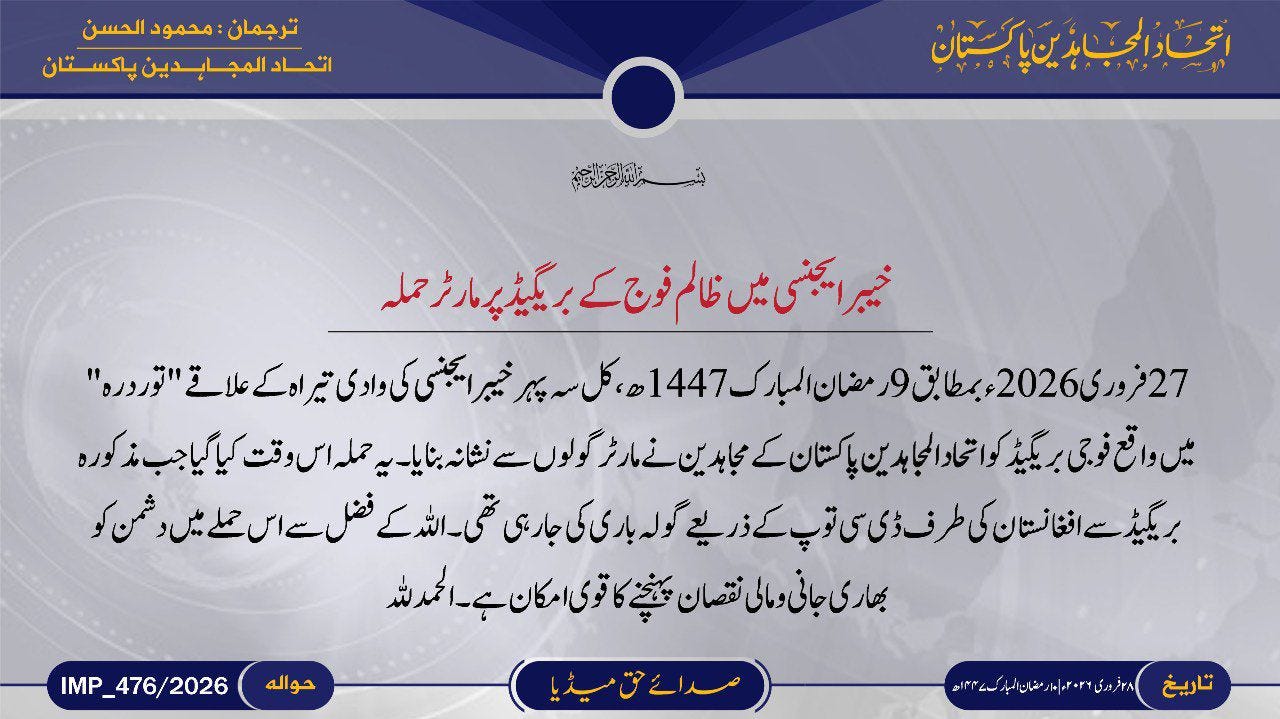
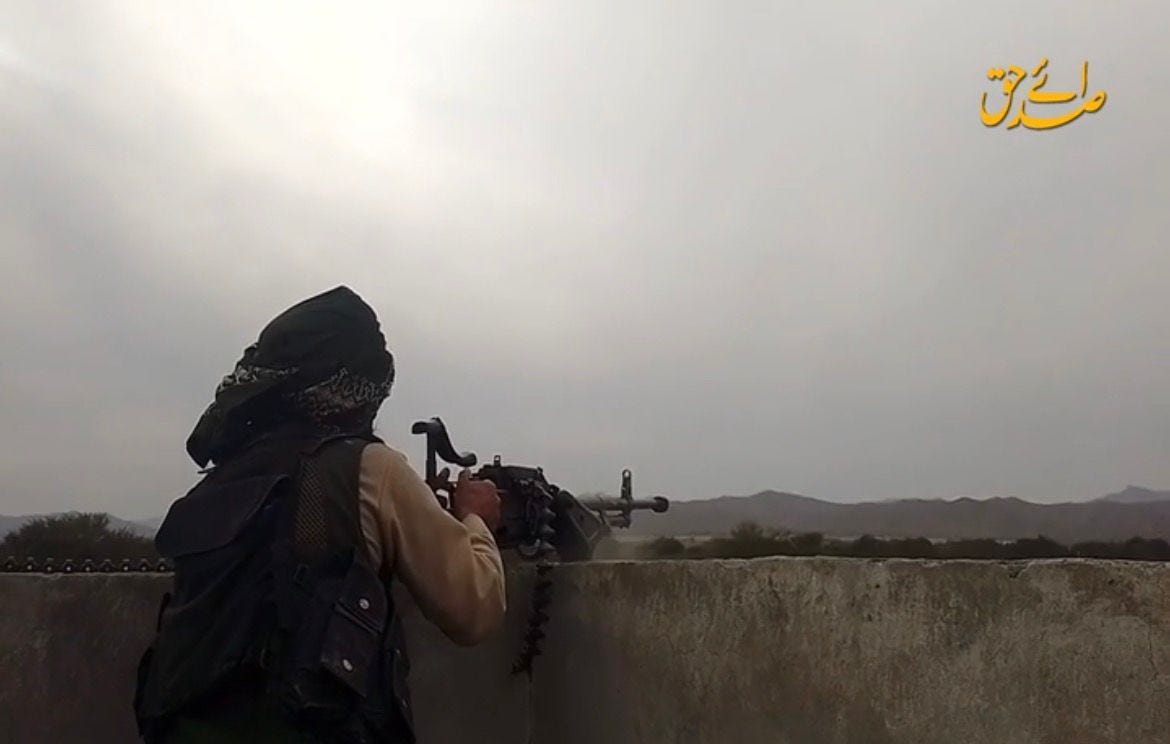
The Ittehad-ul-Mujahideen Pakistan (IMP), a Pakistani jihadist organisation comprising the Hafiz Gul Bahadur Group (HBG), Lashkar-e-Islam and the newly formed Harkat Inqilab-e-Islami Pakistan (HIIP), published a 2-minute, 29-second video showing the attacks on February 27 and 28 (direct assaults and ambushes), part of the new military campaign “In Defense of the Islamic Emirate in Afghanistan” against the Pakistani army, carried out in the district of Bannu, in the province of Khyber Pakhtunkhwa. Pakistan
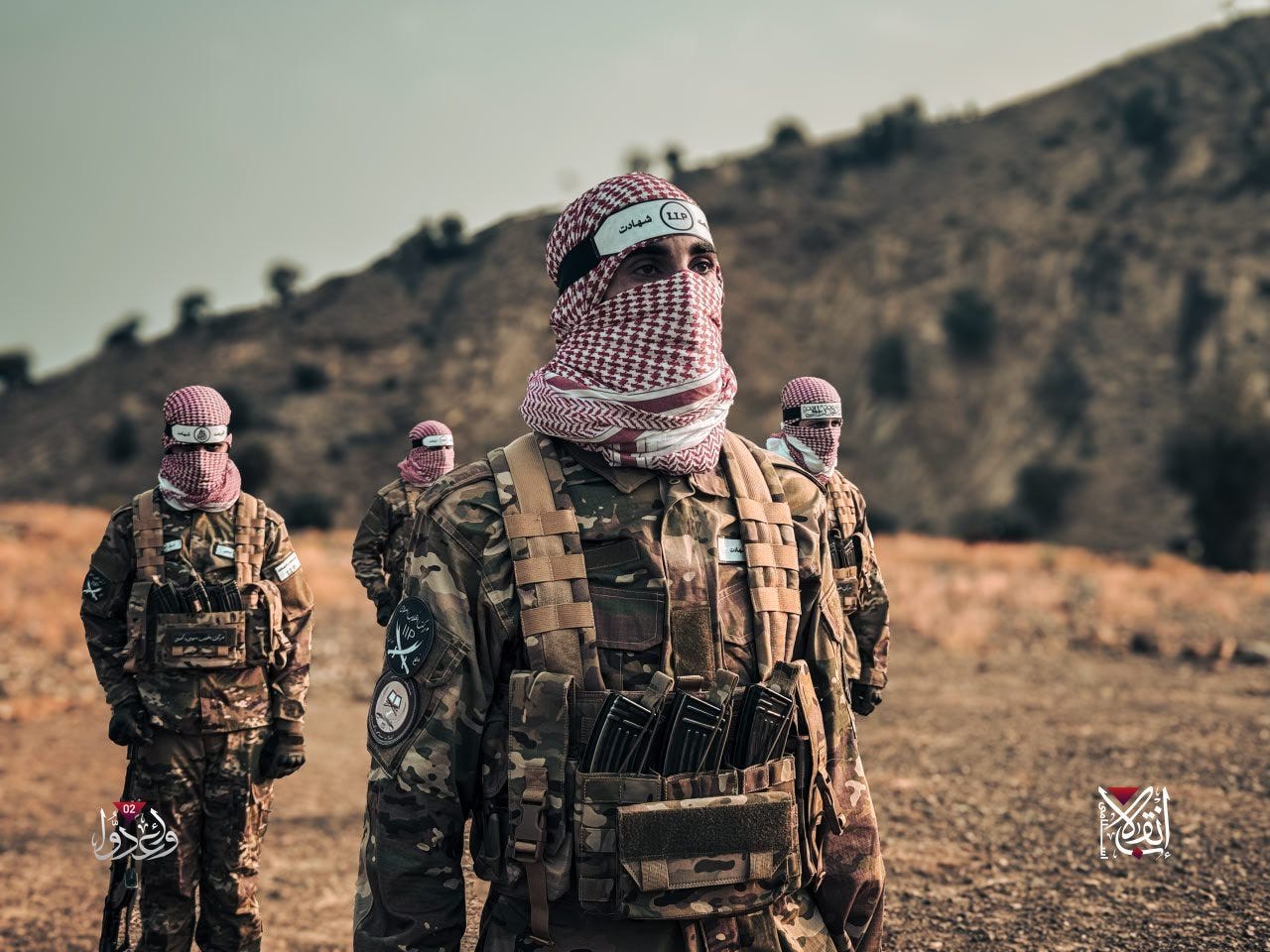
Inqilab-e-Islami Pakistan (IIP), a jihadist group that is part of the armed coalition Ittehad-ul-Mujahideen Pakistan (IMP), which also includes the Hafiz Gul Bahadur Group (HBG) and Lashkar-e-Islam, published a photo report showing its fighters engaged in military training in the Khyber Pakhtunkhwa area. Pakistan
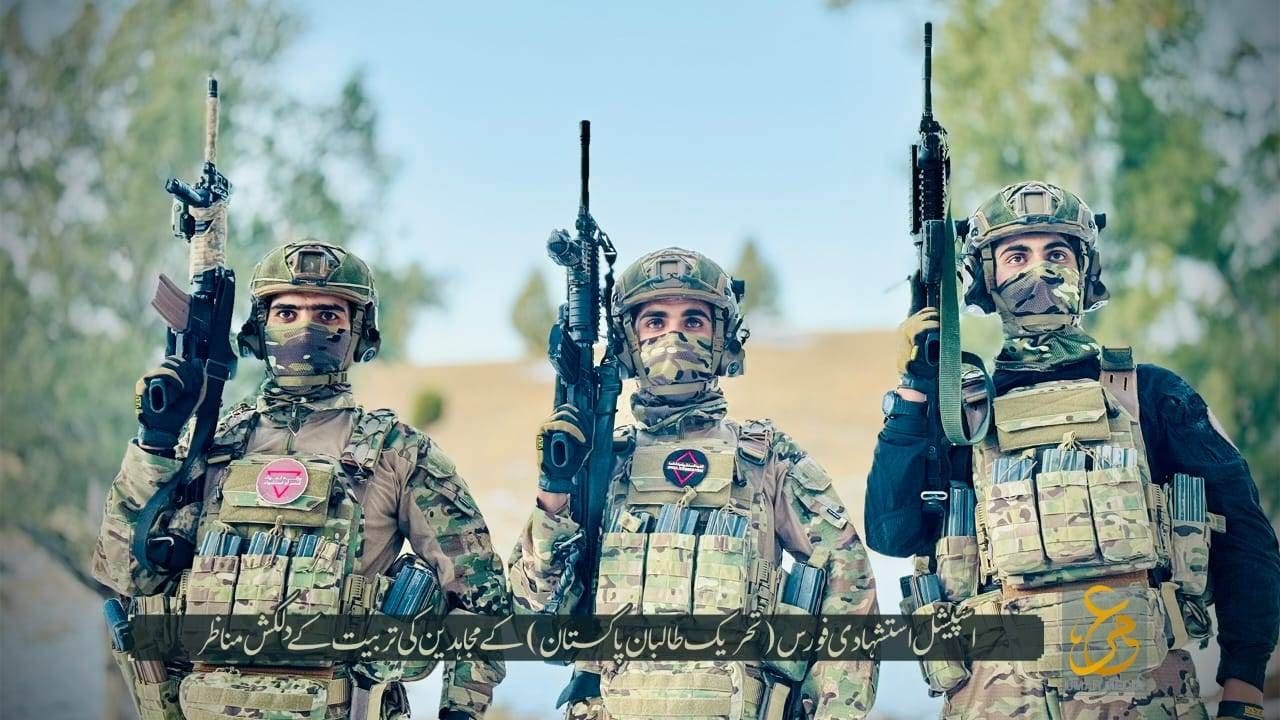
Umar Media, Tehreek-e-Taliban Pakistan (TTP), published an extensive photo report showing the training of its Special Suicide Forces militants. The photos are of high quality, and the fighters are professionally armed. Pakistan
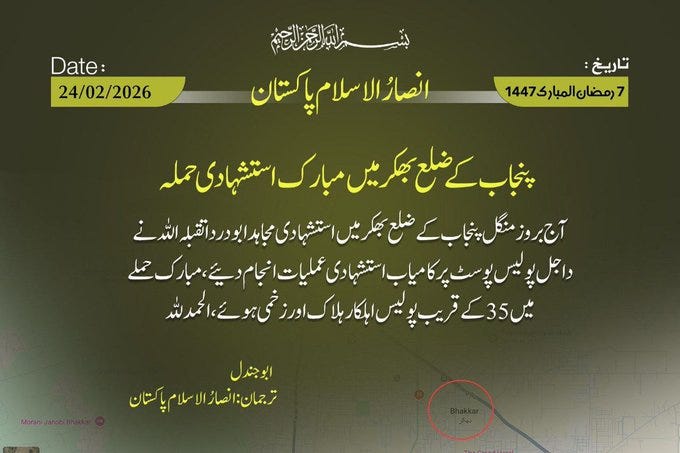
A new jihadist group emerges in Pakistan. In its first statement, Ansar al-Islam Pakistan, affiliated with Ittehadul Mujahidin (IMP), published a claim of responsibility for a suicide attack on a Pakistani police checkpoint in the Bhakkar district of Punjab province. Pakistan
🔹Weekly Monitoring Notes
During the reporting period 23–28 February, jihadist propaganda output showed a mixed profile, with a relative contraction in Al-Qaeda–linked operational reporting from the Sahel, a stable but moderate Islamic State media rhythm, and a notable increase in activity from Pakistan-based independent jihadist actors, including the emergence of a new branded entity tied to an existing coalition.
Al-Qaeda affiliates maintained visibility, but at a lower operational density than in earlier weeks in February. JNIM reduced the volume of claims and visual releases, concentrating reported activity primarily in Burkina Faso with limited spillover into Mali. Az-Zallaqa’s output combined routine statements and photos with a short video documenting an IED attack and an additional training-camp photo set, reinforcing continuity in force-generation and operational signalling rather than large-scale battlefield documentation. Al-Shabaab continued its established claims-based reporting cycle through Shahada News Agency, covering multiple attack claims across southern and central Somalia with limited cross-border referencing in Kenya. The week’s Somalia-focused output remained consistent in format, prioritising statements over extended visual packages.
Islamic State official media maintained a structured weekly cadence. Al-Naba issue 536 provided a standardised operational summary across a narrower set of theatres than in previous weeks, with an emphasis on Nigeria, Niger, Syria, Mozambique, and the Democratic Republic of the Congo. Supporting releases reinforced this geographic spread. Official IS photo material highlighted ISWAP activity in northeastern Nigeria. At the same time, Amaq statements focused on a checkpoint ambush in Raqqa governorate and an attack against a joint Mozambican-Rwandan convoy in Cabo Delgado. The overall IS media package remained coherent and methodologically consistent, relying on the familiar combination of infographic-led weekly reporting and theatre-specific communiqués.
Independent jihadist actor output increased sharply and became the most distinctive feature of the reporting period. Ittehad-ul-Mujahideen Pakistan issued a high number of statements claiming multiple attacks across several districts in Khyber Pakhtunkhwa. It released a short video framing recent assaults as part of a newly named campaign focused on Afghanistan-related messaging. This was supplemented by training imagery released by a coalition component, reinforcing a parallel line-of-force-generation visualisation. TTP released a high-quality photo set documenting specialised suicide unit training, continuing its emphasis on professionalised imagery. Most notably, a new branded group, Ansar al-Islam Pakistan, issued its first statement claiming a suicide attack in Punjab, explicitly affiliating itself with the broader coalition ecosystem. The appearance of a new label within an existing network suggests an expansion in branding and media differentiation, regardless of whether underlying organisational structures have substantively changed.
Across all organisations, distribution patterns remained stable across established encrypted and semi-encrypted platforms. No meaningful shifts in dissemination behaviour were observable during the reporting window.
Overall, Week 23–28 February is best characterised by a redistribution of propaganda momentum away from Sahel-centric Al-Qaeda affiliate output and toward Pakistan-based jihadist coalitions, with Islamic State maintaining a steady, standardised weekly reporting posture.
🔒 Executive Intelligence Cycle
This assessment is part of a broader analytical cycle.
Founding subscribers receive the Executive Intelligence Briefing, which integrates all threat assessments, cognitive domain analysis, and a rolling 30–90 day forecast into a single monthly strategic synthesis.
© Daniele Garofalo Monitoring - All rights reserved.
Daniele Garofalo is an independent researcher and analyst specialising in jihadist terrorism, Islamist insurgencies, and armed non-state actors.
His work focuses on continuous intelligence monitoring, threat assessment, and analysis of propaganda and cognitive/information dynamics, with an emphasis on decision-oriented outputs, early warning, and strategic trend evaluation.
ISSN (International Standard Serial Number): 3103-3520
NATO NCAGE: AX664 (NATO Commercial and Governmental Entity)
ORCID Code: 0009-0006-5289-2874