

Executive Intelligence Overview
This weekly intelligence brief documents and structures official jihadist propaganda output released between 1 and 7 April, providing structured situational awareness across multiple organizations and theatres.
This brief underscores the critical operational claims and targets, aiming to make analysts and policymakers recognize the ongoing threat and its relevance to their strategic priorities.
volume and distribution of official propaganda output,
organizational and geographic dispersion across theatres,
This focus on operational claims in West Africa, the Middle East, and South Asia aims to highlight active threat zones requiring strategic attention and planning.
The focus on organizational and media analysis, including new branding and campaign framing, aims to reassure analysts and policymakers that comprehensive monitoring and understanding of jihadist media strategies are in place.
The purpose of this product is to support systematic monitoring, structured comparison across reporting cycles, and longitudinal trend tracking. It provides an evidentiary baseline for subsequent analytical products and deeper theatre-specific assessments.
This publication does not include threat assessments, intent evaluation, or operational forecasting. Those components are addressed separately in dedicated analytical outputs.
🔹 Scope of Monitoring
This issue covers all identifiable official propaganda released by a predefined list of jihadist organizations and affiliated groups, selected for operational relevance and threat level, during the reporting period.
The focus is strictly on documentation, classification, and structured presentation of primary-source material, enabling analytical reuse and historical comparison over time.
🔹 Sources & Collection Methodology
The analysis is based exclusively on primary-source propaganda material, including official magazines, videos, photo sets, statements, claims of responsibility, and audio statements.
Official magazines,
Videos,
Photo sets,
Statements and claims of responsibility,
Audio statements.
Material is collected and categorized by organization, media outlet, and content type.
The study relies on OSINT, IMINT, SOCMINT, and Digital HUMINT collection streams.
No secondary reporting, media commentary, or interpretative overlay is applied.
🔹 Analytical Boundaries & Limitations
Fluctuations in volume, language, or format serve as signals of activity trends, helping analysts understand activity patterns without overestimating their significance.
They shouldn’t be considered in isolation as indicators of strategic shifts, operational escalation, or changes in intent and capability; instead, they should be analyzed within broader intelligence products.
Strategic shifts,
Operational escalation,
Intent or capability changes.
All higher-order analytical interpretation is conducted separately within:
Intelligence Briefs,
Strategic Threat Outlooks,
Cognitive and Information Domain Assessments.
🔹 Monitored Propaganda Output and Weekly Monitoring Notes
This issue includes all primary propaganda material released during the week by:
Al-Qaeda and affiliates
JNIM
Al-Shabaab
Islamic State
al-Naba Newspaper (weekly issue)
Official IS media channels.
Independent Jihadist Groups
Ittehad Mujahidin Pakistan
Tehrik-e-Taliban Pakistan
The conclusions are included in the Weekly Monitoring Notes.
Al-Qaeda (AQ)
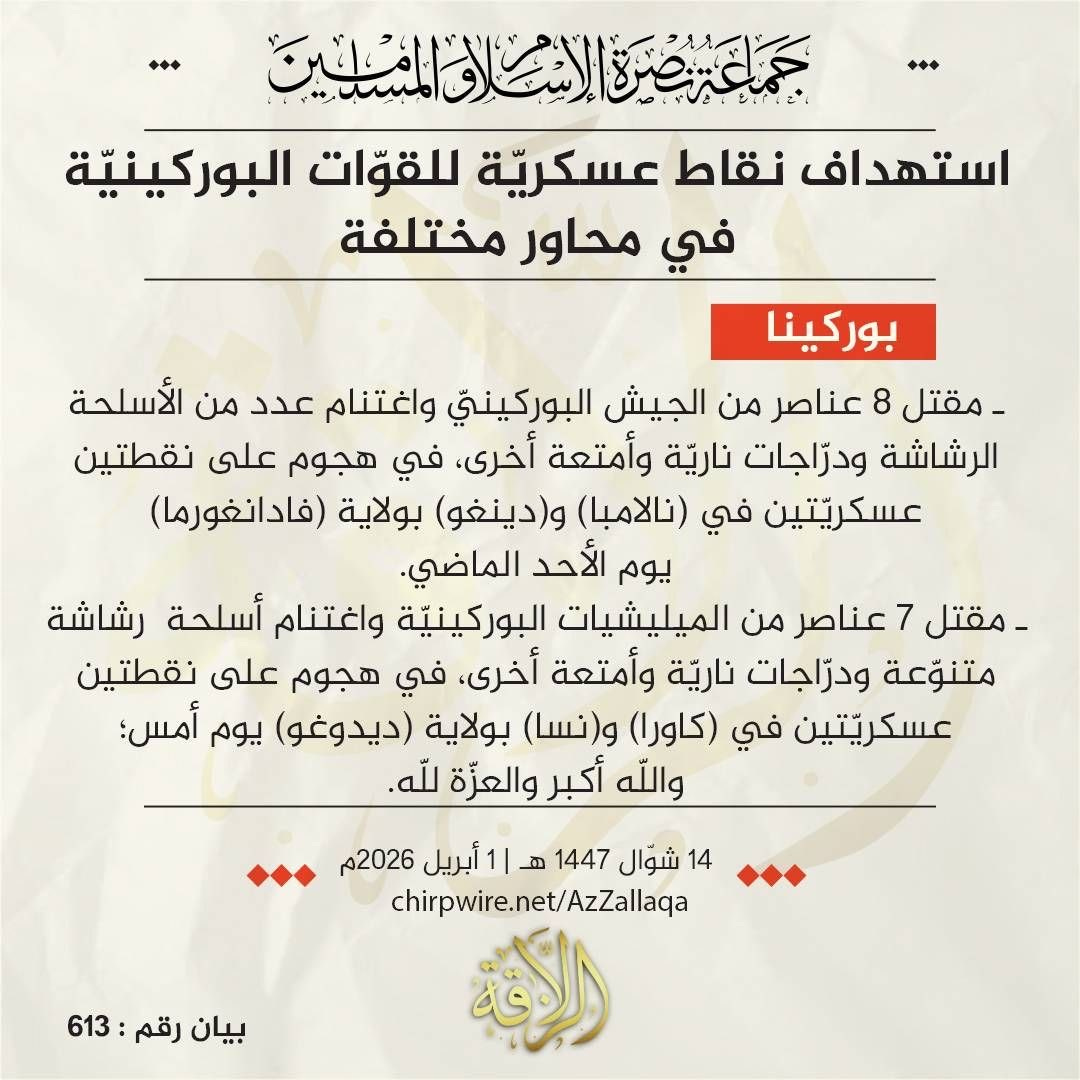
Az-Zallaqa Media, Jama’at Nasr al-Islam wal Muslimin (JNIM), issued 12 statements, 12 photos, claiming 18 attacks.
The targets of the attacks were: Malian Army, Russian PMC Africa Corps, Burkinabé Army, VDP militia, al-Qaeda militia.
The areas of the attacks were :
1) Burkina Faso = 14
- Yatenga province, Mouhoun province, Séno province, Gourma province.
2) Mali = 4
- Ségou region, Timbuktu region.
The Shahada News Agency, Harakat al-Shabaab al-Mujahidin (AS), released 12 statements claiming responsibility for 18 attacks.
The targets of the attacks were:
the pro-government Somali militias, the Ugandan Army, the Kenyan Army, the Ethiopian Army, and the Somali Army.
The areas affected by the attacks were:
1) Somalia = 15
- Bardhere area, Gedo region; Afgoye area, Qoriyoley area, Mubarak area, Afgoye area, Wanlaweyn area, Janale area, Lower Shabelle region; Bur Acaba area, Baidoa area, Bay region; Beledweyne area, Hiiran region.
2) Kenya = 3
- Fafi area, Garissa County; El Galo area, Mandera County.

Islamic State (IS)
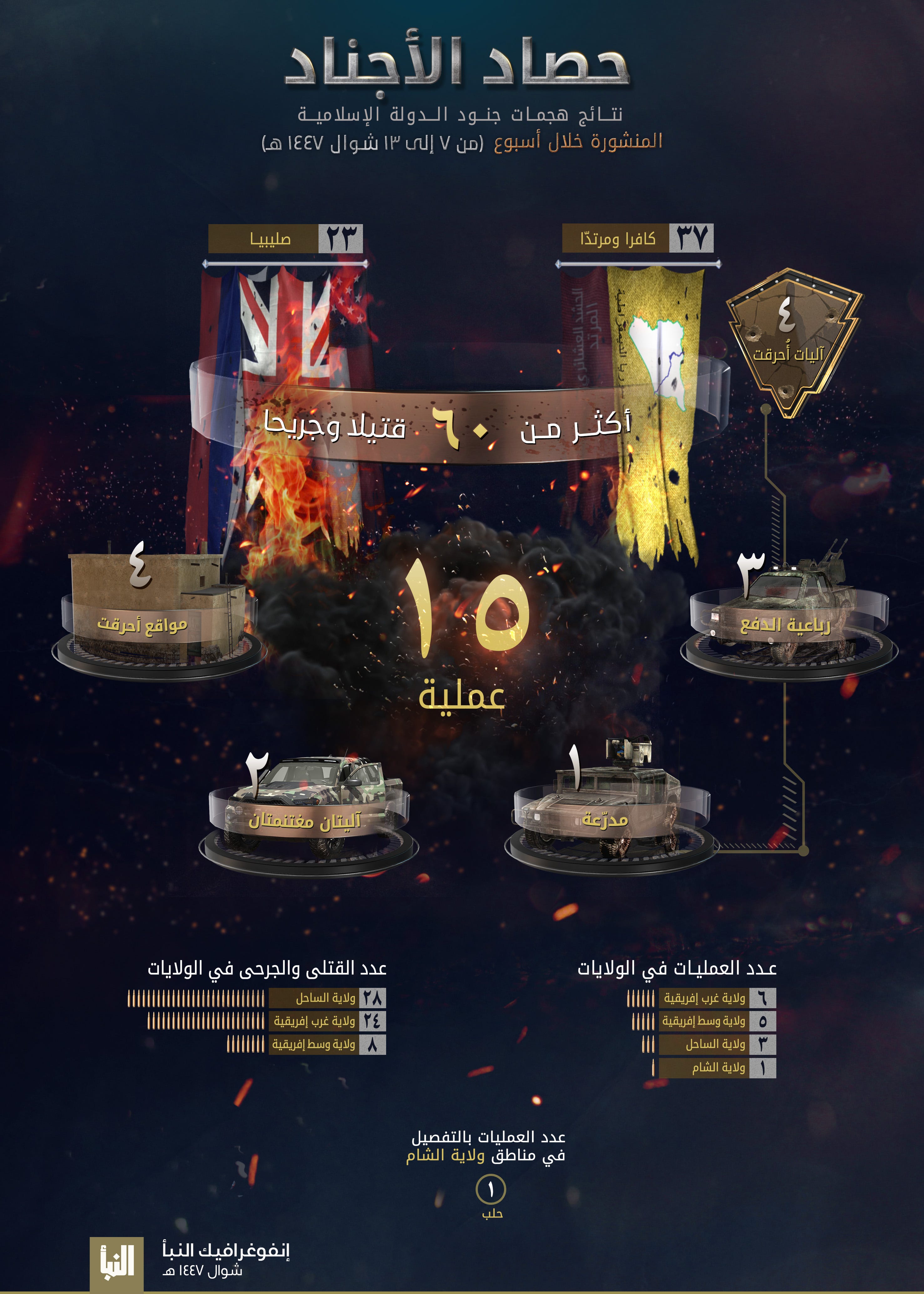
The official media of the Islamic State published an issue of the weekly al-Naba this week (541). Issue 541, eight pages long, covers the week of 7 to 13 Shawwal 1447, from 26 March to 1 April 2026. The main infographic summarises the areas affected by military operations this week, including Nigeria, Niger, Syria, Pakistan, and the Democratic Republic of Congo, highlighting key operational zones.
IS claims to have conducted 15 operations in all the mentioned areas and to have caused 60 deaths and injuries.
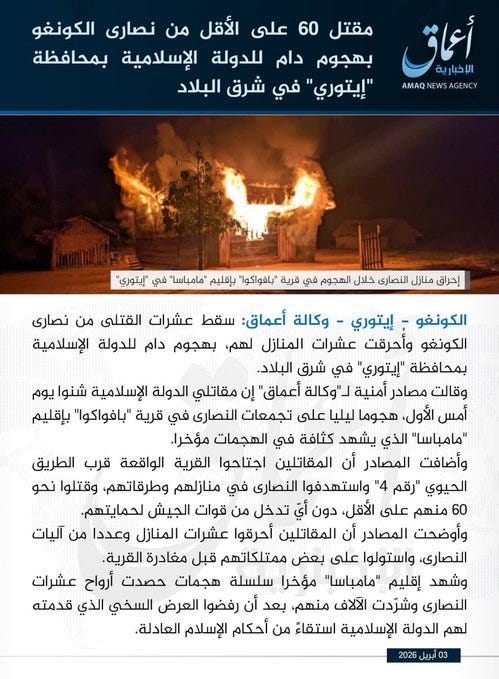
The Amaq news agency, the official media of the Islamic State, issued a lengthy statement claiming responsibility for numerous attacks carried out by ISCAP against Christian villages in the Mambasa area, in Ituri province, in the Democratic Republic of Congo.
The statement claims that ISCAP militants killed 60 Christian civilians.
Independent Jihadist Groups
Al-Mansur Media, Ittehad-ul-Mujahideen Pakistan (IMP), a Pakistani jihadist organization comprising the Hafiz Gul Bahadur (HBG) group, Lashkar-e-Islam, and Harkat Inqilab-e-Islami Pakistan (HIIP), has released a 1:45-minute video showing an attack against the Pakistani Army checkpoint in the districts of North Waziristan, in the province of Khyber Pakhtunkhwa, Pakistan.
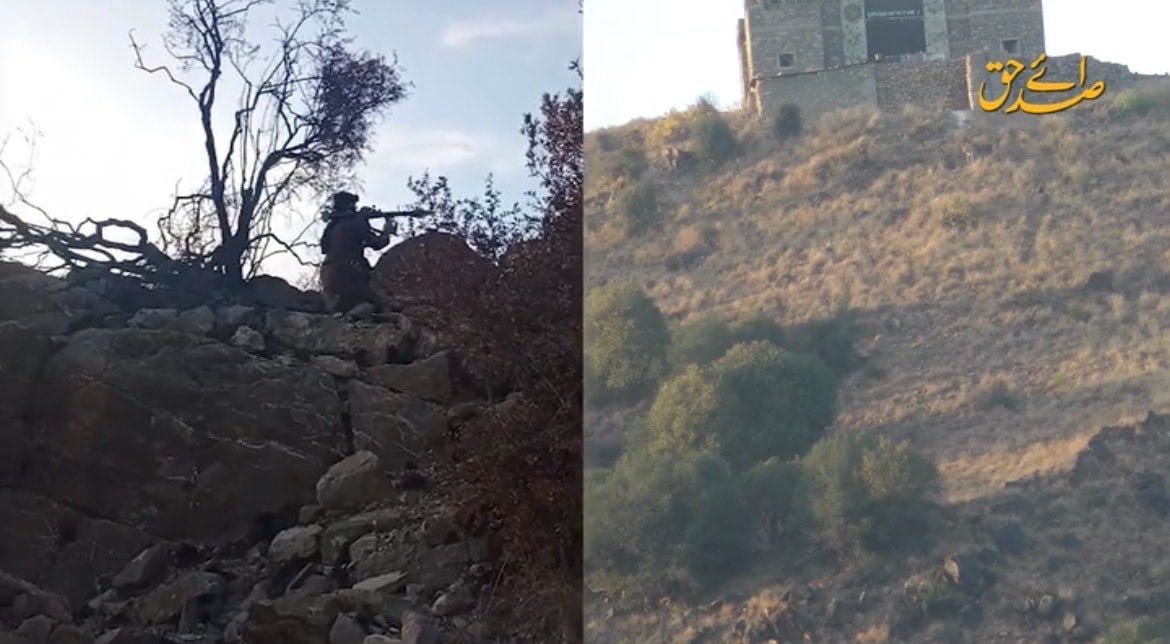
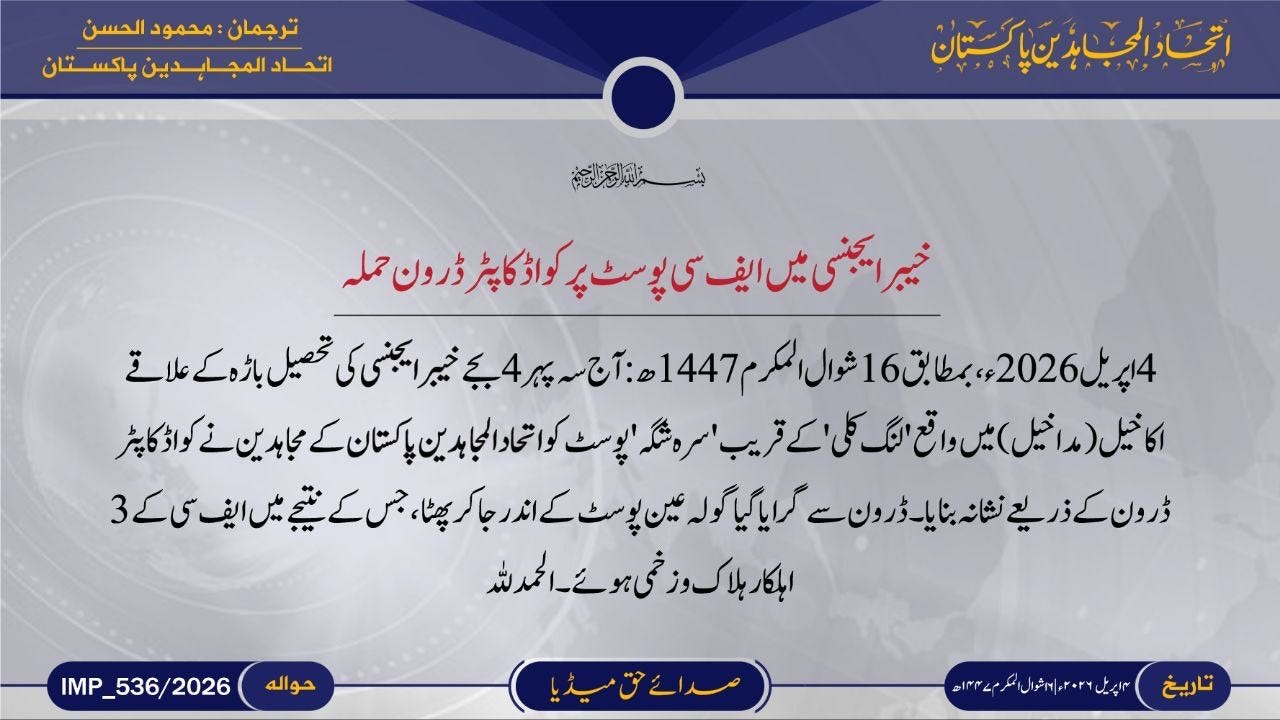
Ittehad-ul-Mujahideen Pakistan (IMP), a Pakistani jihadist organization comprising the Hafiz Gul Bahadur Group (HBG), Lashkar-e-Islam, and the Harkat Inqilab-e-Islami Pakistan (HIIP), released 9 statements, claiming 9 attacks.
Target: Pakistan Army, Frontier Corps,
Area:
- Khyber district, Kohistan district, North Waziristan district, Bannu district; Khyber Pakhtunkhwa Province. Pakistan.
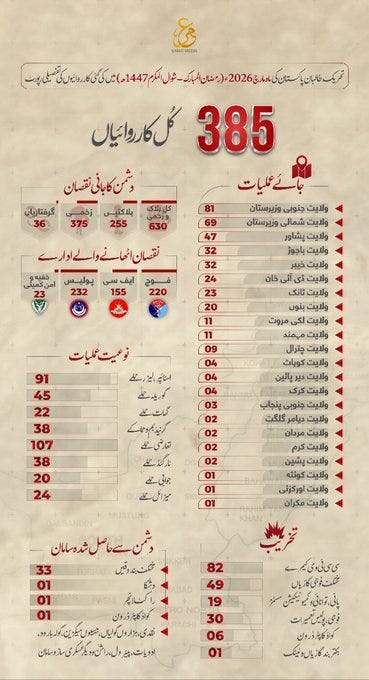
Umar Media, Tehrik-i-Taliban Pakistan (TTP), published its usual infographic summarising the attacks conducted in the previous month.
In March, the TTP claimed 385 attacks.
The attacks affected 22 different Pakistani districts. Pakistan
🔹Weekly Monitoring Notes
The reporting period confirms sustained operational and media continuity across the jihadist ecosystem, with a moderate increase in activity compared to the previous week, particularly within the al-Qaeda network in the Sahel and the Horn of Africa.
