

Executive Intelligence Overview
This weekly intelligence brief documents and structures official jihadist propaganda output released between 16 and 22 February, providing structured situational awareness across multiple organisations and theatres.
The reporting period is characterised by a high-density media cycle combining large-scale operational claims, multi-format battlefield documentation, and renewed senior-level messaging. Activity was particularly pronounced across the Sahel and West Africa, with sustained output from Somalia and continued cross-theatre coverage by Islamic State central media.
The brief focuses on:
volume and distribution of official propaganda output,
organisational and geographic dispersion across theatres,
continuity and variation in operational claims and visual documentation,
emergence of leadership-level or strategic messaging events.
The purpose of this product is to support systematic monitoring, structured comparison across reporting cycles, and longitudinal trend tracking. It is designed to provide an evidentiary baseline for subsequent analytical products.
This publication does not include threat assessments, intent analysis, or operational forecasting. Those components are addressed separately in dedicated analytical outputs.
🔹 Scope of Monitoring
This issue covers all identifiable official propaganda released by a predefined list of jihadist organisations and affiliated groups, selected based on operational relevance and threat level, during the reporting period.
The focus is strictly on documentation, classification, and structured presentation of primary-source material, enabling analytical reuse and historical comparison over time.
🔹 Sources & Collection Methodology
The analysis is based exclusively on primary-source propaganda material, including:
Official magazines,
Videos,
Photo sets,
Statements and claims of responsibility,
Audio statements.
Material is collected and categorised by organisation, media outlet, and content type.
The study relies on OSINT, IMINT, SOCMINT, and Digital HUMINT collection streams.
No secondary reporting, media commentary, or interpretative overlay is applied.
🔹 Analytical Boundaries & Limitations
Observed fluctuations in volume, language, or format should be interpreted as monitoring signals only, indicating activity trends, and not as definitive indicators of strategic or operational shifts, thereby helping analysts contextualize data correctly.
They should not be considered in isolation as indicators of strategic shifts, operational escalation, or changes in intent and capability, emphasizing the need for comprehensive analysis within broader intelligence products.
Strategic shifts,
Operational escalation,
Intent or capability changes.
All higher-order analytical interpretation is conducted separately within:
Intelligence Briefs,
Strategic Threat Outlooks,
Cognitive and Information Domain Assessments.
🔹 Monitored Propaganda Output and Weekly Monitoring Notes
This issue includes all primary propaganda material released during the week by:
Al-Qaeda and affiliates
AQAP
JNIM
Al-Shabaab
Islamic State
al-Naba’ (weekly issue)
Official IS media channels.
Independent Jihadist Groups
Ittehad Mujahidin Pakistan
Tehrik-e-Taliban Pakistan
The conclusions are included in the Weekly Monitoring Notes.
Al-Qaeda (AQ)
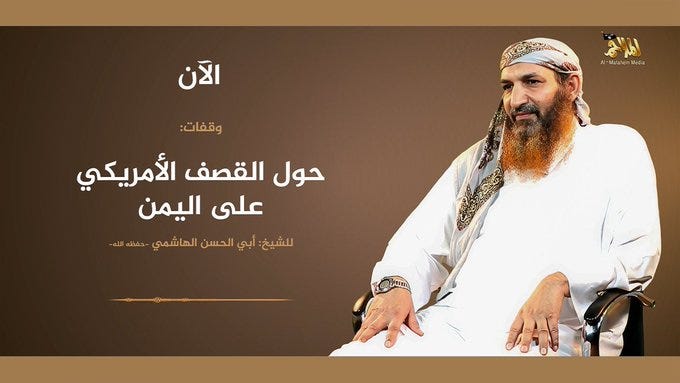
Al-Malahem Media, Al-Qaeda in the Arabian Peninsula (AQAP) broadcast a new audio message from veteran leader Ibrahim al-Banna (aka Abu al-Hasan al-Hashimi). Al-Banna began his speech by talking about the ongoing violations of the rights of Muslims in various regions, particularly the Uighurs by China and the Palestinians in Gaza.
Speaking about Yemen, he stated that the country has not been spared from American violations over the years, citing the killing of al-Qaeda leaders in American attacks, asserting that their deaths will not change the group’s orientation or discourage it from continuing its course of action. He also addressed a message to Yemeni youth, urging them to take an interest in learning and gaining experience in various fields, considering that the current phase requires scientific and professional preparation for the benefit of the jihadist cause, and stressing that the ongoing developments are a sign of an imminent turning point.
Al-Banna also referred to documents related to the Jeffrey Epstein case published by the US Department of Justice, considering them an indicator of the fall of “Western civilisation”. He concluded his speech by praising the Yemeni tribes, describing them as “tribes of victory and hospitality”, and appreciating their role in supporting AQAP.
Az-Zallaqa Media, Jama'at Nasr al-Islam wal Muslimin (JNIM), released a 5:39-minute video showing an attack on a Burkinabe Army base in the Komandougou area, Fada N'gourma area, in the province of Gourma, in the East region. Burkina Faso
The final part of the video shows numerous military corpses piled up in a trench and JNIM militants celebrating.
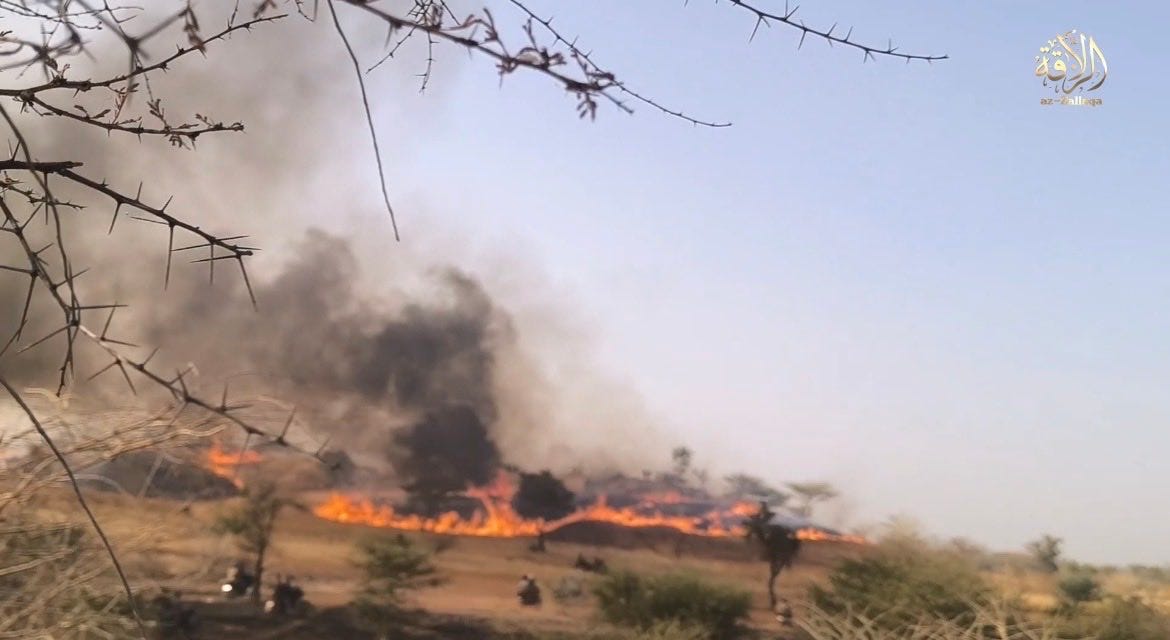
Az-Zallaqa Media, Jama’at Nasr al-Islam wal Muslimin (JNIM), released a 4:04-minute video showing an attack on VDP militia Headquarters in the Bargha area, Yatenga province. Burkina Faso
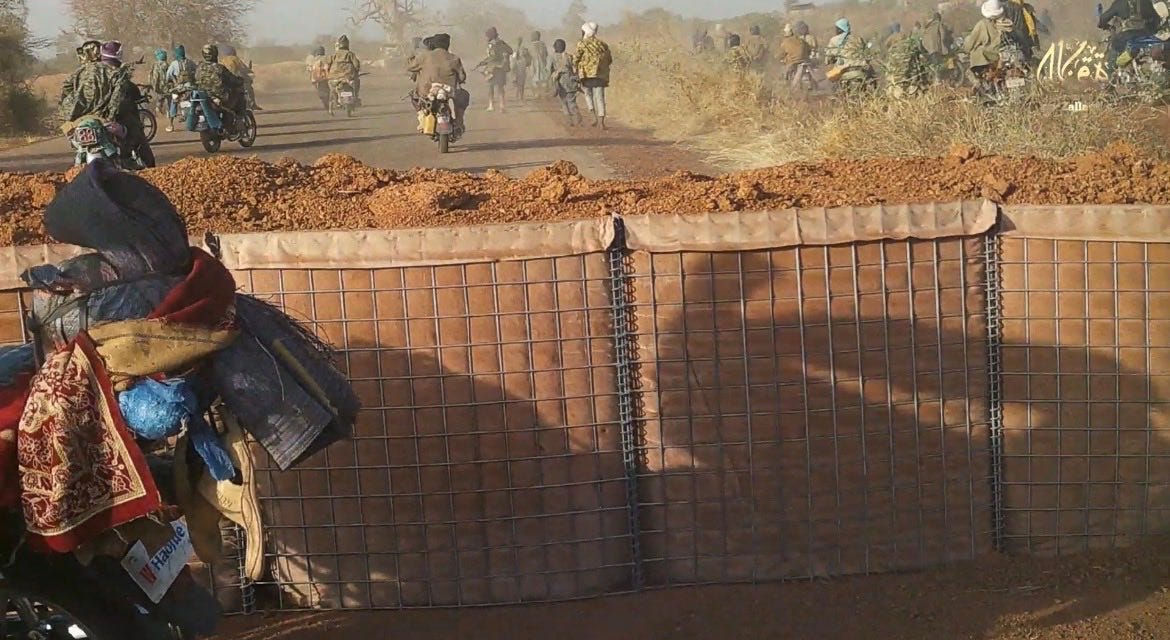
Az-Zallaqa Media, Jamat Nusrat al-Islam wal-Muslimin (JNIM), released a 3:07-minute video documenting an attack by its fighters against Malian Army checkpoints in the Djenne area of the Mopti region. Mali
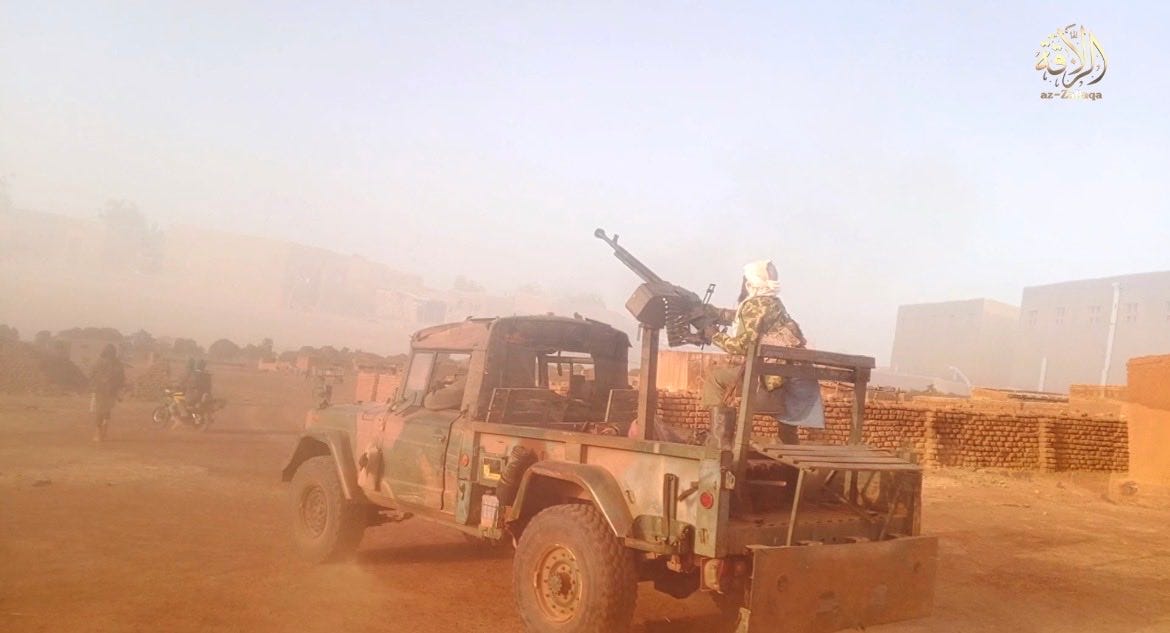
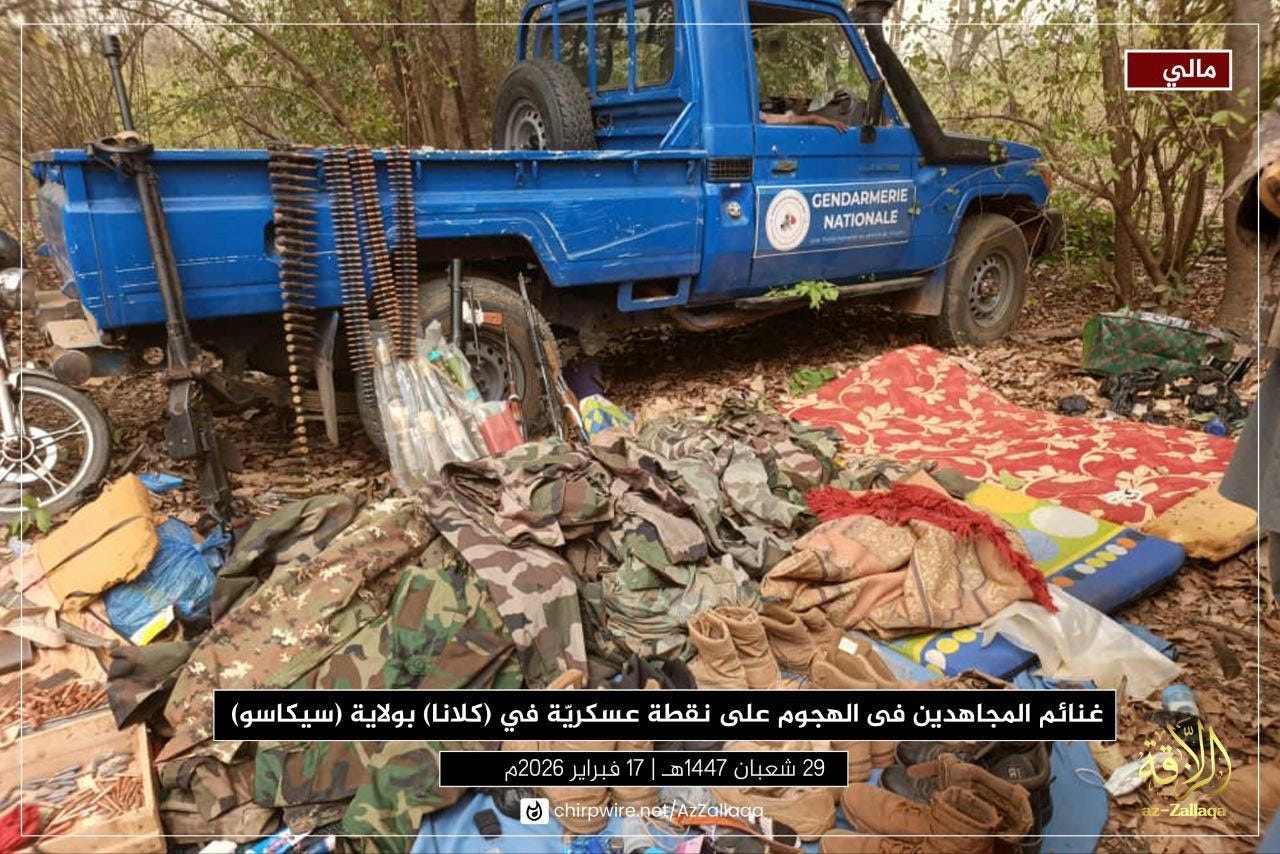
Az-Zallaqa Media, Jama’at Nasr al-Islam wal Muslimin (JNIM), issued 24 statements and 44 photos, claiming 32 attacks.
The targets of the attacks were: the Malian Army, the Malian National Gendarmerie, the Dozo militia, the Russian PMC Africa Corps, the Burkinabé Army, the VDP militia, and the Benin Army.
The areas of the attacks were :
1) Mali = 13
- Sikasso region, Mopti region, Kidal region, Ségou region, Kayes region;
2) Burkina Faso = 19
- Boulgou province, Soum province, Mouhoun province, Loroum province, Yatenga province, Gourma province, Sissili province;
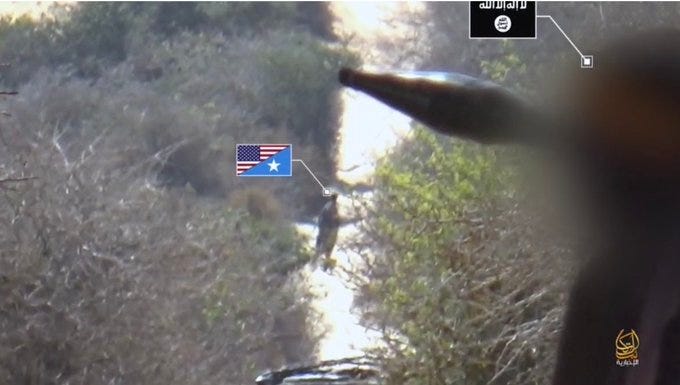
Al-Kataib Media, Harakat Al-Shabaab al-Mujahidin (AS), published a 2-minute video showing its militants’ attack on a Somali pro-government militia base in the Warsheikh area of Middle Shabelle. Somalia
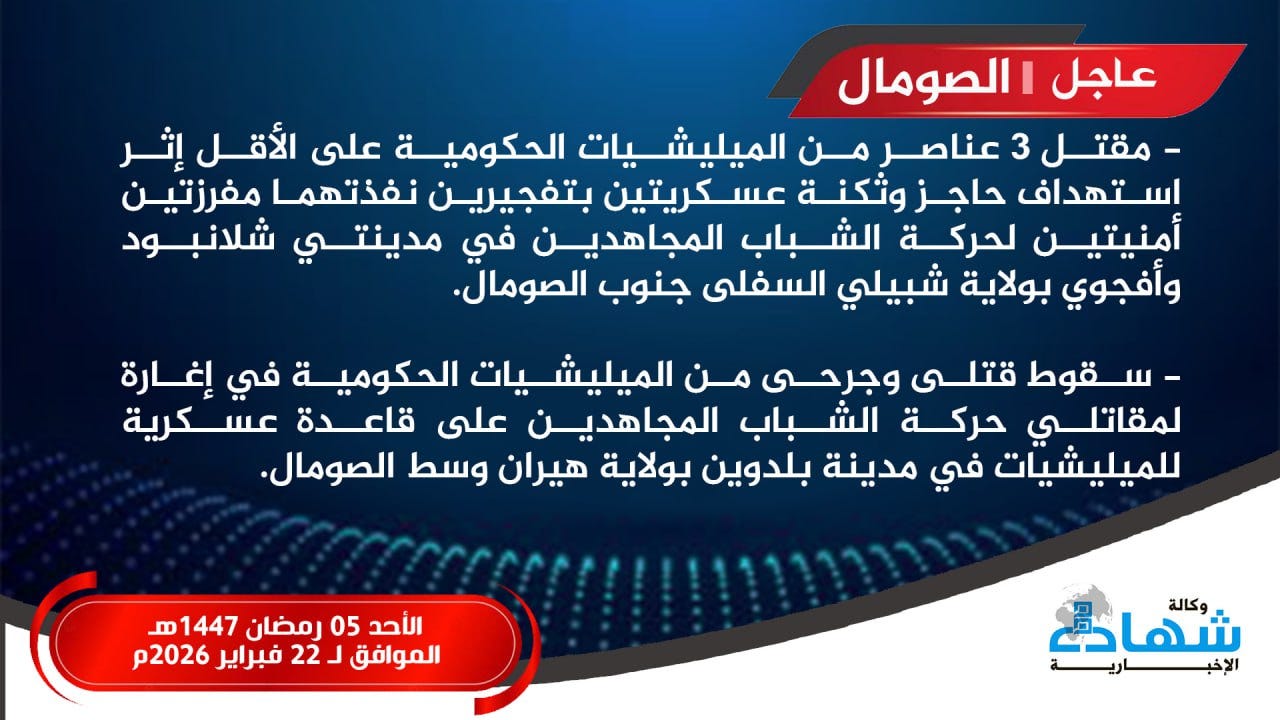
The Shahada News Agency, Harakat al-Shabaab al-Mujahidin (AS), released 10 statements claiming responsibility for 6 attacks.
The targets of the attacks were: the Somali army, pro-government Somali militias, Somali intelligence, Somali Special Forces, and the Ethiopian Army.
The areas affected by the attacks were:
1) Somalia = 10
- Beledweyne area, Buuloburde area, Hiran region; Afgooye area, Shalaambood area, Lower Shabelle region; Berdaale area, Baidoa area, Bay region; Mogadishu area;
Islamic State (IS)
The Islamic State has published its first official message from its leadership after about two years of media silence. The audio, released by the al-Furqan Foundation, from spokesman Abu Hudhayfa al-Ansari, does not announce a new strategic offensive. It is a message of survival.
1) Syria is the top priority.
The main focus is the fight against the new Syrian government, which is defined as apostate and integrated into the anti-IS coalition. The group reiterates that the jihad in Syria is not over but has entered a new phase. No expansive vision. Only continued conflict.
2) Implicit admission of weakness in Iraq and Syria.
The tone is defensive. There is talk of losses, infiltrations, the need for patience, and prolonged resistance. A phase of “siege” is evoked. It is the language of an organisation under pressure, not on the rise.
3) Africa as the new operational centre of gravity.
Somalia, the Sahel, Nigeria, the DRC, and Mozambique are presented as examples of success. Africa is described as the place where the “flame of the caliphate” continues to burn. This is a clear attempt to shift the brand’s symbolic and operational centre.
4) Appeal for hijra to the African wilayats.
The message encourages migration to African theatres, emphasising the presence of foreign fighters. This serves to demonstrate vitality and compensate for the stagnation in Syria and Iraq.
5) Incitement to attacks in the West.
The call to strike Christian and Jewish targets and maintain operational secrecy is renewed. It is a decentralised call to action, consistent with the model of inspired but not directed terrorism.
6) Internal problems and security.
The spokesperson calls for vigilance regarding tazkiya and warns of the risks of infiltration. This indicates internal friction and the penetration of information by the security apparatus.
7) No reference to Gaza or the broader Middle East context.
A significant absence. The group avoids inserting itself into the dominant frame of the Israeli-Palestinian conflict, a sign of strategic marginality or a deliberate choice not to overlap with other jihadist actors.

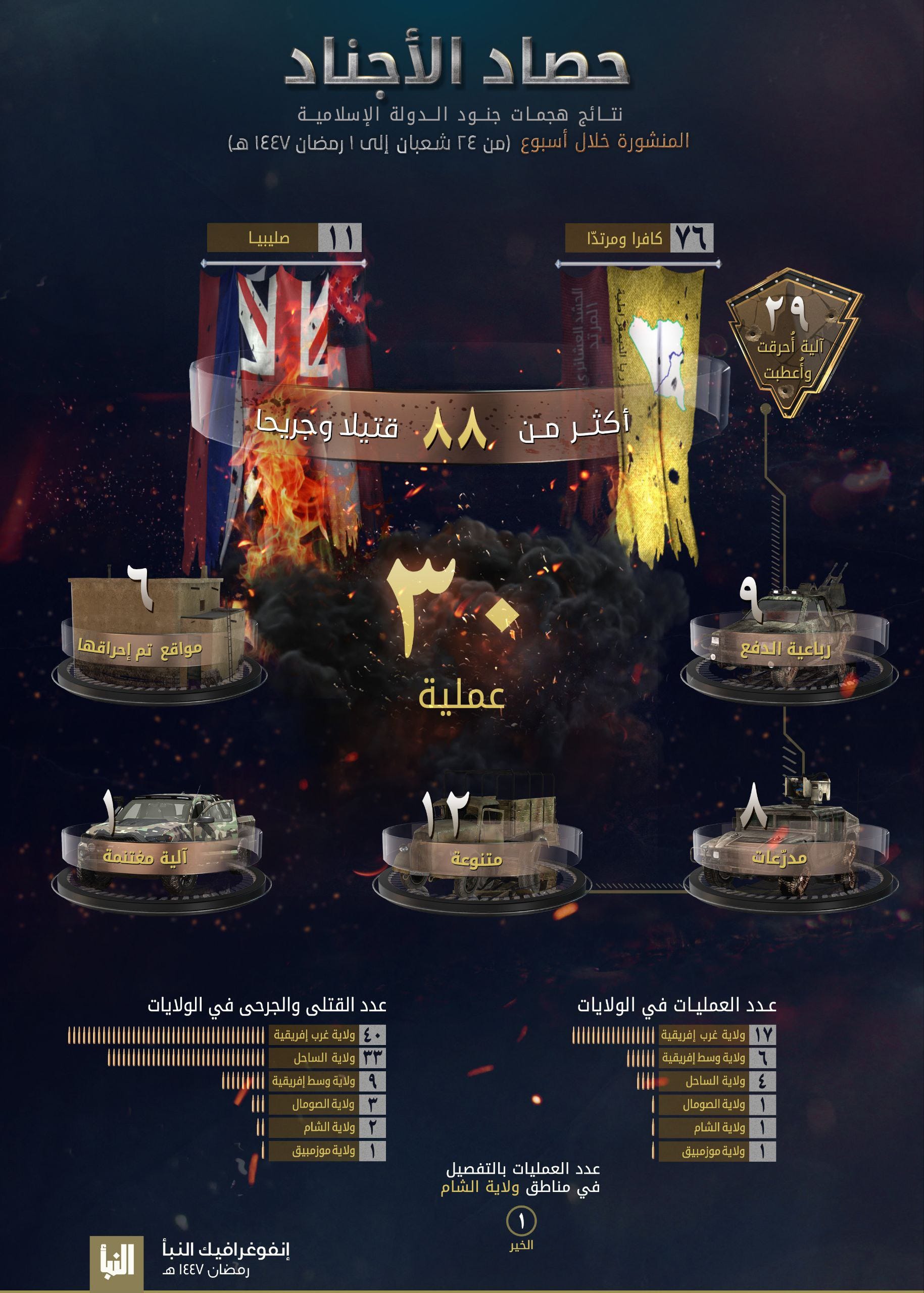
The official media of the Islamic State published an issue of the weekly al-Naba this week (535). Issue 535, eight pages long, covers the week of 24 Sha’ban to 1 Ramadan1447, from 12 to18 February 2026. The main infographic summarises the areas affected by military operations this week, including Nigeria, Niger, Mali, Burkina Faso, Somalia, Syria, Mozambique, and the Democratic Republic of Congo.
IS claims to have conducted 30 operations in all the mentioned areas and to have caused 88 deaths and injuries.
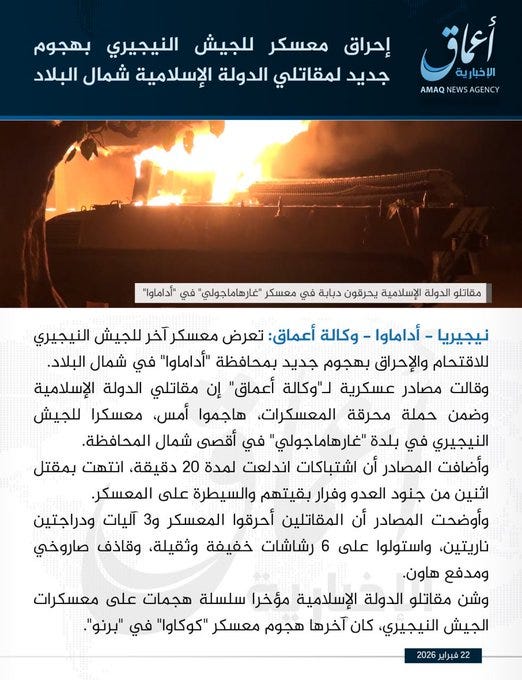
Amaq News Agency, the official media of the Islamic State, published a lengthy statement claiming a major attack by West African militants (ISWAP) against a Nigerian army camp in Adamawa state. Nigeria
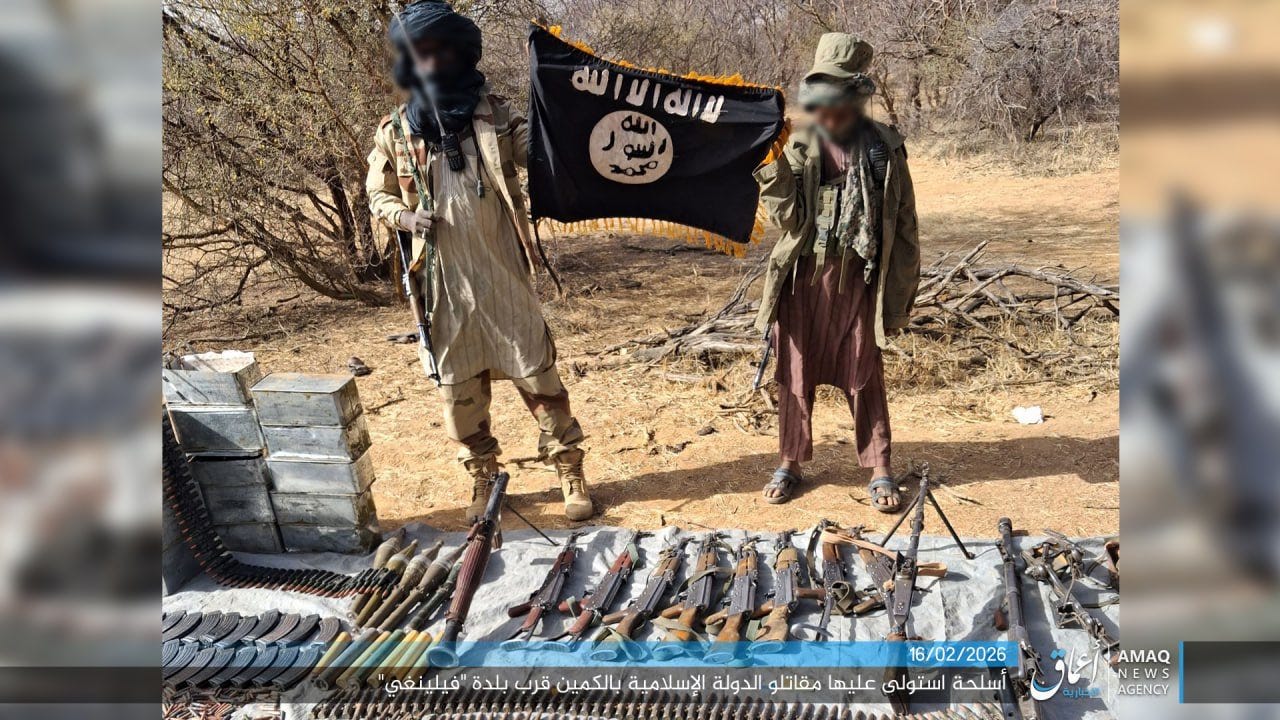
The Amaq News Agency, the official media of the Islamic State, released a lengthy statement claiming the attack by fighters from the Sahel province (IS-Sahel) on a Niger Army patrol in the Tillaberi region of Niger.
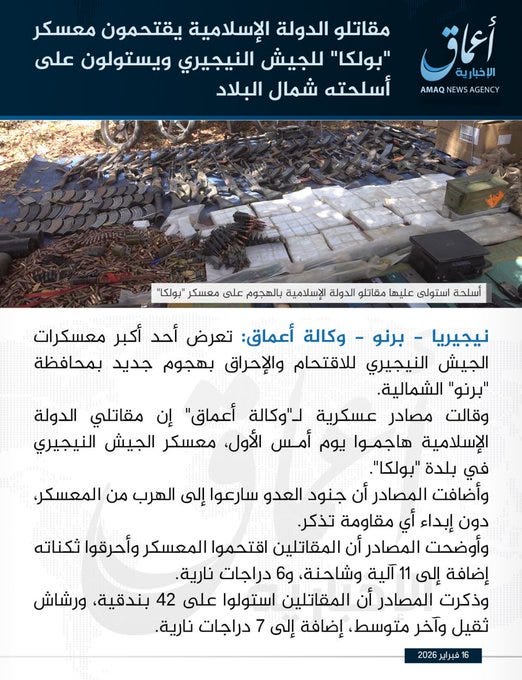
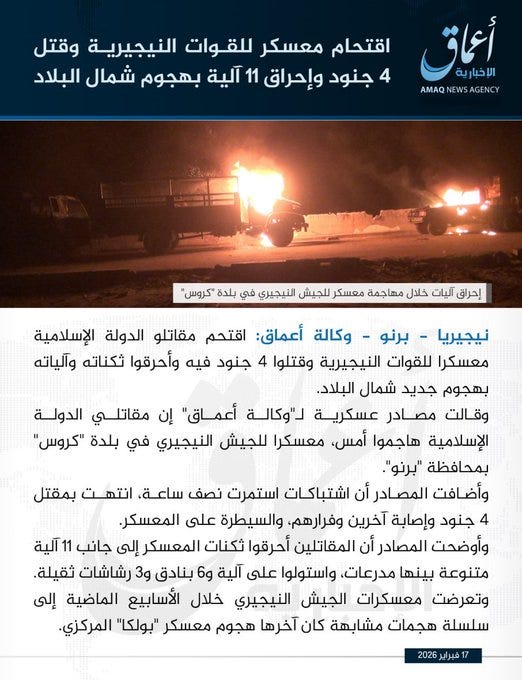
Amaq News Agency, the official media of the Islamic State, published a lengthy statement claiming a major attack by West African militants (ISWAP) against a Nigerian army camp in the Pulka area of Borno state. Nigeria
Amaq News Agency, the official media of the Islamic State, published a lengthy statement claiming a major attack by West African militants (ISWAP) against a Nigerian army camp in the Cross Kawua area of Borno state. Nigeria
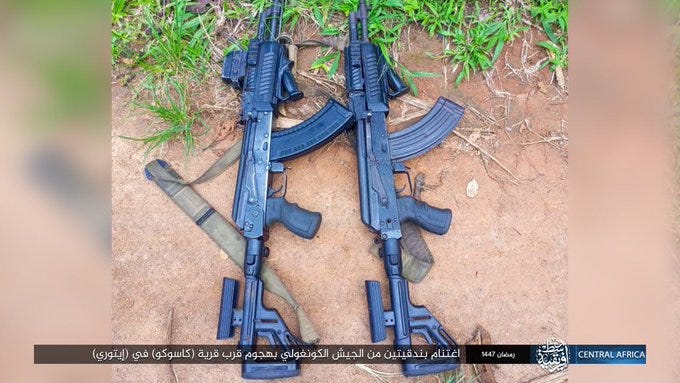
The official media of the Islamic State published a photo reportage from the Central Africa Province (ISCAP) to show the results of an ambush on a Congolese army patrol in the province of Ituri, Democratic Republic of Congo.
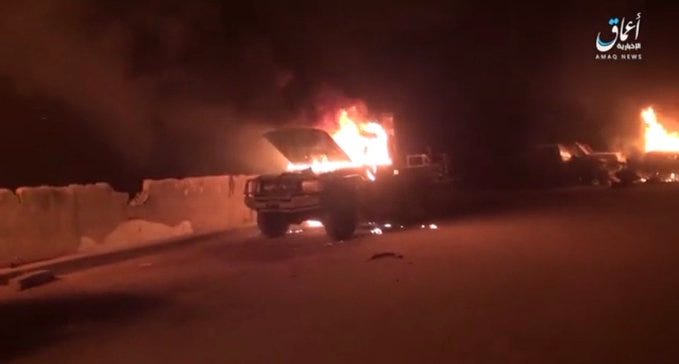
Amaq News Agency, the official media of the Islamic State, published a 0:58-minute video showing a major attack by West African militants (ISWAP) against a Nigerian army camp in the Cross Kawua area of Borno state. Nigeria
Independent Jihadist Groups
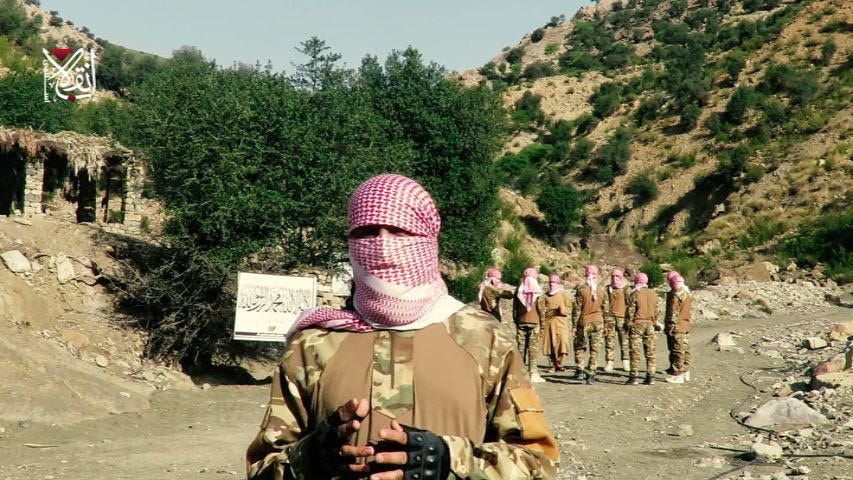
Ittehad-ul-Mujahideen Pakistan (IMP), a Pakistani jihadist organisation comprising the Hafiz Gul Bahadur Group (HBG), Lashkar-e-Islam, and Harkat Inqilab-e-Islami Pakistan (HIIP), published a photo report showing its fighters conducting different types of military training in the Khyber Pakhtunkhwa area. Pakistan
Umar Media, Tehreek-e-Taliban Pakistan (TTP) released a 3-minute, 11-second video showing its militants carrying out numerous attacks (IEDs, sniping, direct assaults, and ambushes) against the Pakistani army in the North Waziristan district of Khyber Pakhtunkhwa province in Pakistan.
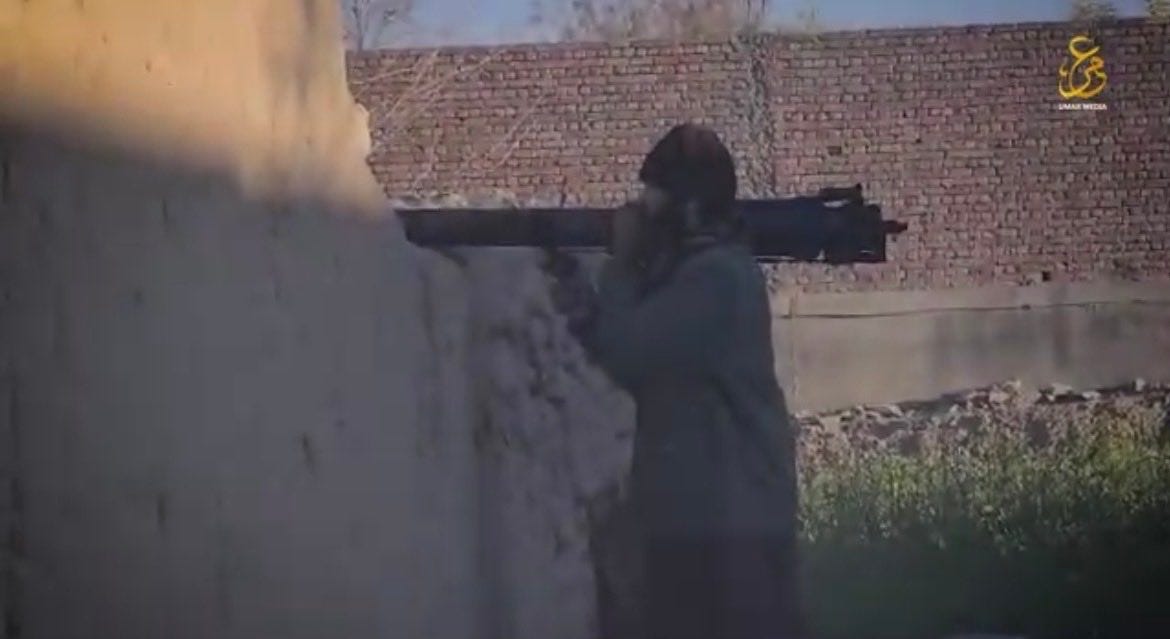
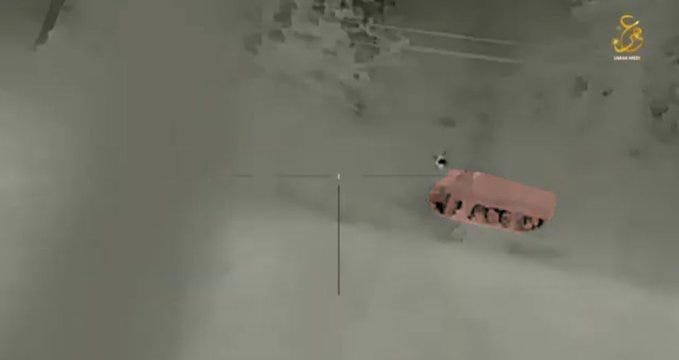
Umar Media, Tehreek-e-Taliban Pakistan (TTP) released a 1-minute and 29-second video showing its militants ambushing a Pakistani army patrol with IEDs in the Tank district of Khyber Pakhtunkhwa province in Pakistan.
🔹Weekly Monitoring Notes
The reporting period 16–22 February is characterised by a marked increase in propaganda density across both Al-Qaeda affiliates and Islamic State structures, with particular expansion in West Africa–related output. The week stands out for the convergence of high-volume operational claims, multi-format battlefield documentation, and the reactivation of senior-level messaging.
Al-Qaeda–linked media output registered a significant surge. JNIM demonstrated sustained operational tempo through an elevated number of statements and accompanying photo documentation across Mali and Burkina Faso, with visible geographic breadth extending from Sikasso and Mopti to Gourma and Yatenga. The volume of visual material released during the week indicates a deliberate emphasis on battlefield exposure and territorial messaging. Video products documenting attacks on Burkinabe and Malian targets reinforced this posture. The sequencing of releases followed a pattern of rapid claims followed by visual corroboration.
AQAP re-entered the information space with a long-form audio intervention by Ibrahim al-Banna. The message combined external grievance framing with internal mobilisation messaging. Particular emphasis was placed on Yemen, tribal alignment, and youth preparation, framed as technical and scientific readiness. The content reflects continuity in ideological positioning rather than operational signalling, but the reappearance of a veteran voice contributes to organisational continuity messaging.
Al-Shabaab maintained consistent claim frequency through the Shahada News Agency and supplementary video documentation. Activity remained geographically concentrated in central and southern Somalia, with continued focus on Somali security forces and allied actors. Output volume did not represent a structural shift but confirmed sustained operational visibility.
Islamic State output during the week combined routine operational reporting with a strategically relevant leadership communication. The release of the first official audio message in approximately two years represents the most significant development of the reporting period. The tone of the message was defensive and survival-oriented, emphasising endurance rather than expansion. Syria was framed as a continued conflict zone without reference to territorial recovery. Africa was presented as the principal theatre of vitality, with explicit encouragement to migrate to African wilayats. The absence of Gaza-related positioning is notable within the current broader jihadist information environment.
Al-Naba issue 535 maintained the established infographic-driven structure, with operational claims distributed across West Africa, the Sahel, Somalia, Syria, Mozambique, and the Democratic Republic of Congo. Amaq releases during the week were heavily concentrated in Nigeria and Niger, particularly around ISWAP and IS-Sahel operations. The density of claims in Borno and Adamawa states suggests sustained operational pressure in the Lake Chad Basin axis.
Independent jihadist groups remained active but did not display a structural expansion in media architecture. TTP output consisted of short operational videos focused on North Waziristan and Tank districts. IMP maintained visual training documentation. Output volume was steady but secondary in scale compared to that of Al-Qaeda affiliates and the Islamic State.
Distribution patterns remained stable across encrypted and semi-encrypted platforms. No observable migration in the dissemination infrastructure occurred during the reporting window.
Overall, Week 16–22 February reflects a high-output cycle dominated by JNIM battlefield reporting and the Islamic State’s strategic repositioning narrative centred on Africa. The propaganda ecosystem remains geographically diversified, structurally stable, and operationally synchronised across major theatres.
🔒 Executive Intelligence Cycle
This assessment is part of a broader analytical cycle.
Founding subscribers receive the Executive Intelligence Briefing, which integrates all threat assessments, cognitive domain analysis, and a rolling 30–90 day forecast into a single monthly strategic synthesis.
© Daniele Garofalo Monitoring - All rights reserved.
Daniele Garofalo is an independent researcher and analyst specialising in jihadist terrorism, Islamist insurgencies, and armed non-state actors.
His work focuses on continuous intelligence monitoring, threat assessment, and analysis of propaganda and cognitive/information dynamics, with an emphasis on decision-oriented outputs, early warning, and strategic trend evaluation.
ISSN (International Standard Serial Number): 3103-3520
NATO NCAGE: AX664 (NATO Commercial and Governmental Entity)
ORCID Code: 0009-0006-5289-2874