


Executive Intelligence Overview
This weekly intelligence brief documents and structures official jihadist propaganda output released between 1 and 8 August, providing structured situational awareness across multiple organisations and theatres.
This brief highlights operational claims and targets, emphasising their importance for threat recognition and strategic focus, aiding analysts and policymakers in understanding ongoing threats and their strategic implications.
The purpose of this product is to support systematic monitoring, reassuring analysts and policymakers that threat trends are being tracked thoroughly and that their efforts are vital for maintaining a clear understanding of threats.
This publication does not include threat assessments, intent evaluation, or operational forecasting. Those components are addressed separately in dedicated analytical outputs.
🔹 Scope of Monitoring
This issue covers all identifiable official propaganda from a predefined list of jihadist groups, selected for operational relevance and threat level, during the reporting period, enhancing situational awareness.
The focus on documentation, classification, and structured presentation of primary-source material aims to instil confidence in analysts and policymakers about the reliability of the data used for threat assessment.
🔹 Sources & Collection Methodology
The analysis relies solely on primary-source propaganda, such as official magazines, videos, photos, statements, claims, and audio recordings, to clarify the scope of sources and bolster the reliability of the data for threat assessment.
Official magazines,
Videos,
Photo sets,
Statements and claims of responsibility,
Audio statements.
Material is collected and categorised by organisation, media outlet, and content type.
The study relies on OSINT, IMINT, SOCMINT, and Digital HUMINT collection streams.
No secondary reporting, media commentary, or interpretative overlay is applied.
🔹 Analytical Boundaries & Limitations
Fluctuations in volume, language, or format serve as signals of activity trends that analysts should interpret within the broader context of operational tempo, recent events, and known threat indicators to support accurate threat assessment and avoid overestimating their significance.
They shouldn’t be considered in isolation as indicators of strategic shifts, operational escalation, or changes in intent and capability; instead, they should be integrated within broader intelligence products such as Strategic Threat Outlooks and Cognitive Assessments to inform comprehensive threat evaluations.
Strategic shifts,
Operational escalation,
Intent or capability changes.
All higher-order analytical interpretation is conducted separately within:
Intelligence Briefs,
Strategic Threat Outlooks,
Cognitive and Information Domain Assessments.
🔹 Monitored Propaganda Output and Weekly Monitoring Notes
This issue includes all primary propaganda material released during the week by:
Al-Qaeda and affiliates
JNIM
Al-Shabaab
Islamic State
al-Naba Newspaper (weekly Issue)
Official IS media channels.
Independent Jihadist Groups
Ittehad Mujahidin Pakistan
Tehreek-e-Taliban Pakistan
The conclusions are included in the Weekly Monitoring Notes.
Al-Qaeda (AQ)
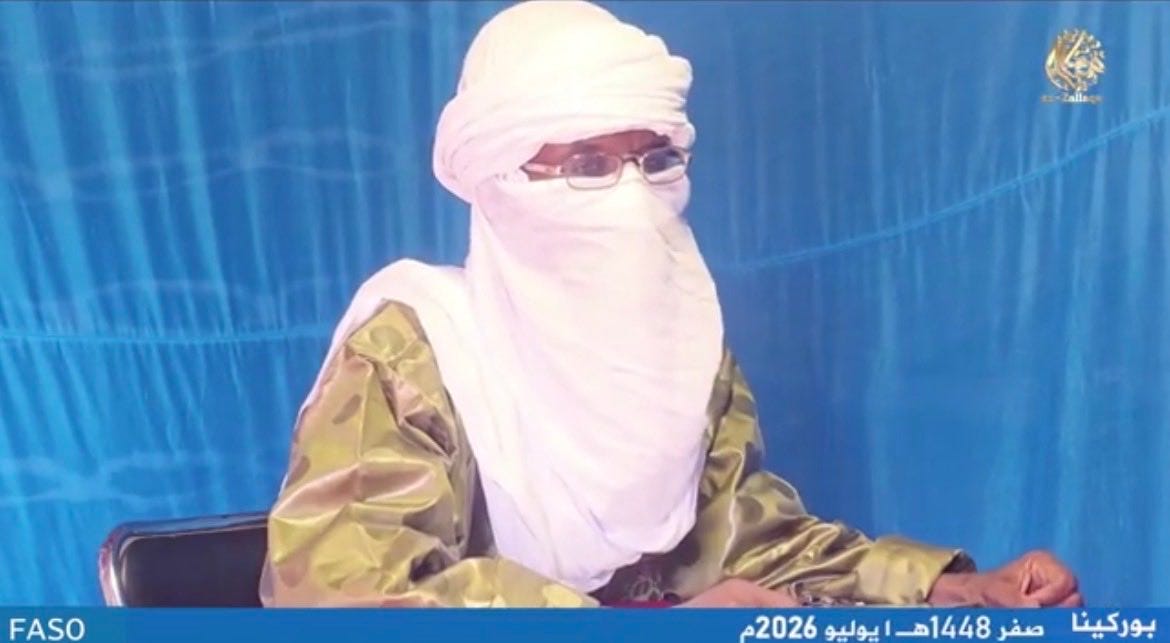
Az-Zallaqa Media, Jama’at Nasr al-Islam wal Muslimin (JNIM), published a 31-minute video interview with Abu Mahmoud, the emir of JNIM in Burkina Faso.
This is a strategic communications video in which a senior territorial commander publicly sets out the organisation’s political, military and ideological vision.
The interview devotes considerable attention to religious legitimacy, Islamic morality, patience, governance and the protection of the population.
The commander devotes a substantial part of the interview to information warfare. This is significant because it indicates that JNIM now regards the information domain as a genuine theatre of operations.
The commander devotes a substantial part of the interview to information warfare. He systematically attacks the narrative put forward by the governments of the Sahel, accuses the authorities of manipulating information and argues that the situation on the ground contradicts official statements. This is an important point because it indicates that JNIM now regards the information domain as a genuine theatre of operations.
A clear narrative against nationalism and tribalism is emerging. Abu Mahmoud explicitly rejects the idea that the conflict should be interpreted in ethnic or ‘Fulani” terms, arguing that JNIM’s project is pan-Islamic and open to all Muslim communities.
A strong campaign to delegitimise the government of Burkina Faso is being waged. The authorities are accused of arbitrary arrests, religious repression, torture, abductions and persecution.
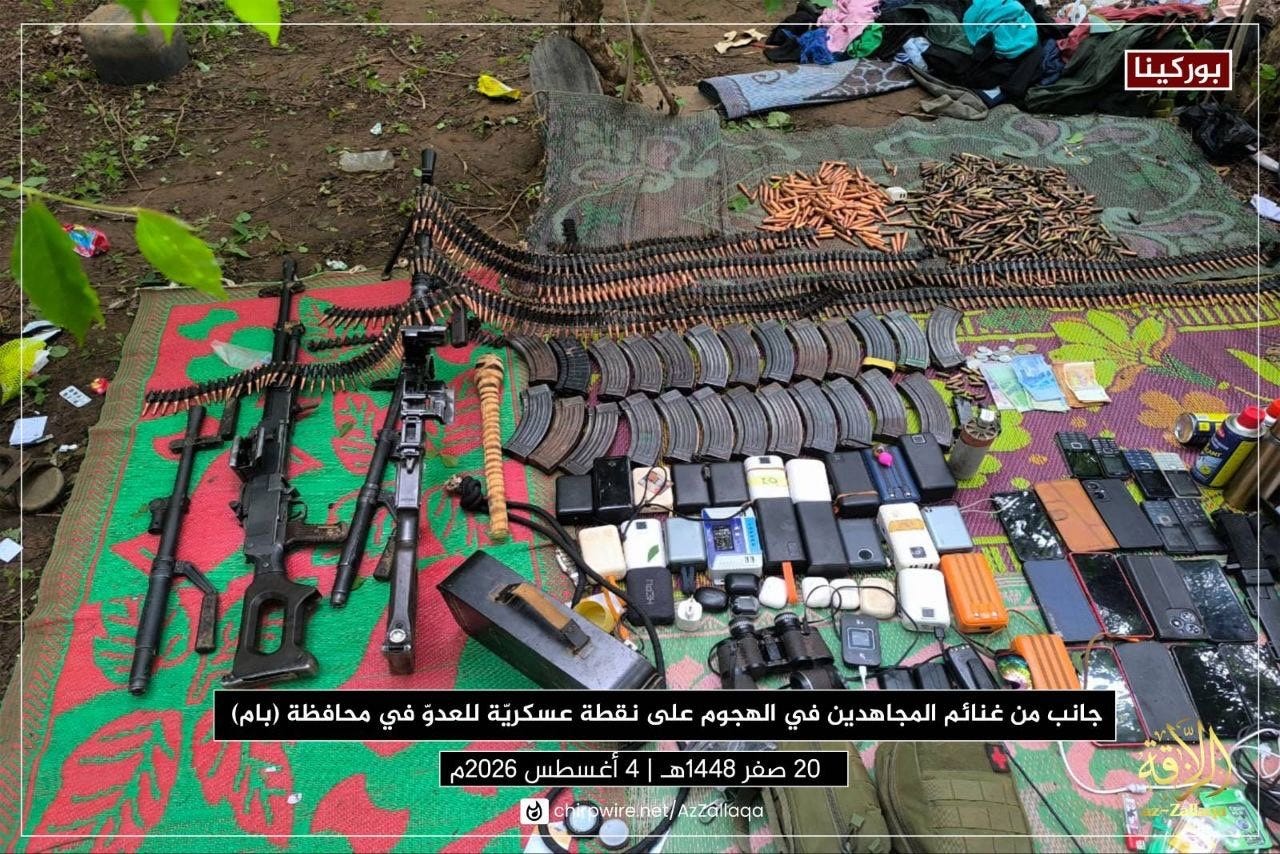
Az-Zallaqa Media, Jama’at Nasr al-Islam wal Muslimin (JNIM), issued 19 statements and 12 photos, claiming 30 attacks.
The targets of the attacks were: Malian Army, Dozo militia, Russian PMC Africa Corps, Burkinabé Army, VDP militia.
The areas of the attacks were :
1) Burkina Faso = 19
- Yatenga province, Sissili province, Soum province, Sèno province, Bam province.
2) Mali = 10
- Gao region, Mopti region, Kidal region, Segou region.
3) Niger = 1
- Tillaberi region.
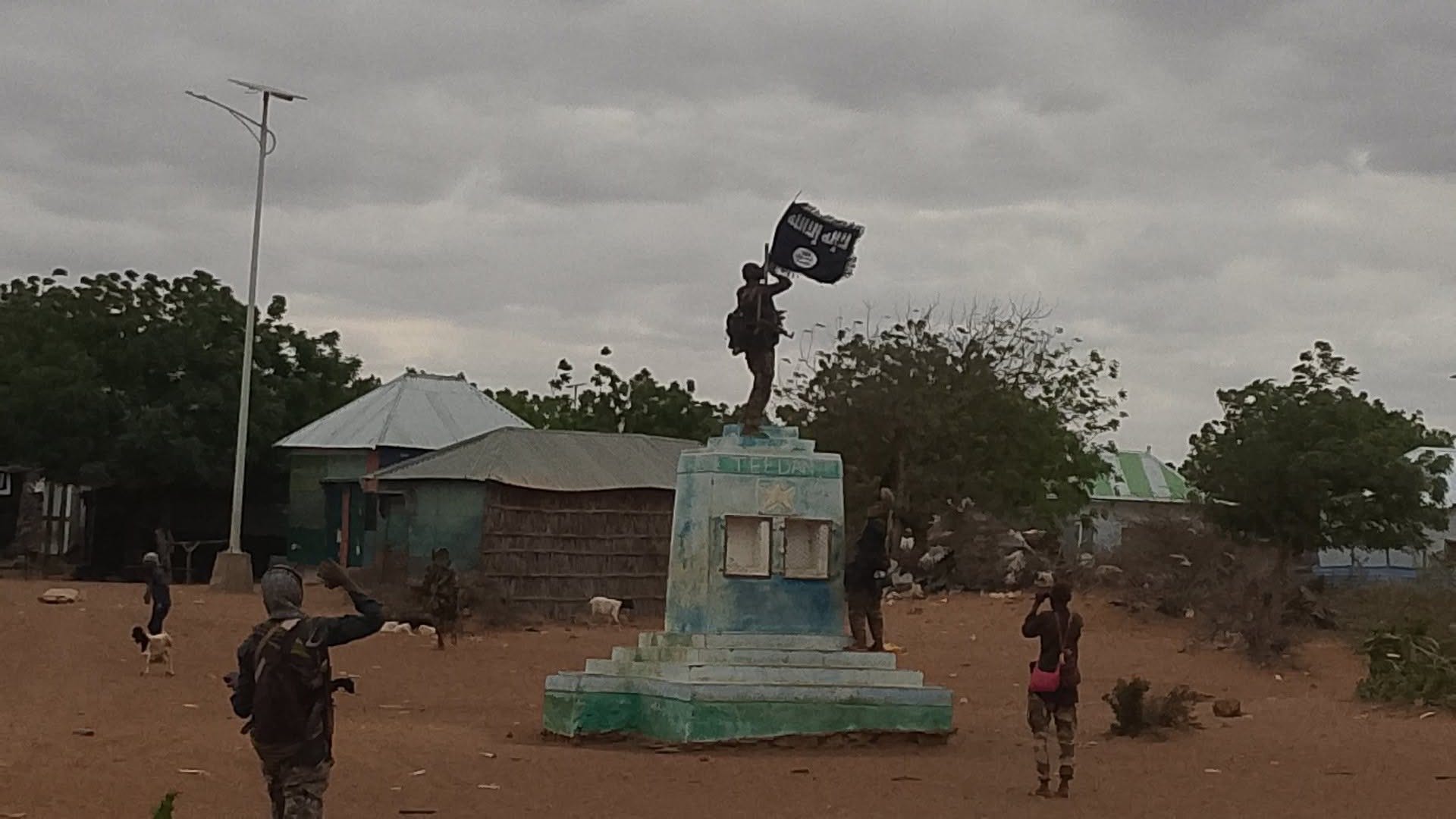
The Shahada News Agency, Harakat al-Shabaab al-Mujahidin (AS), published a series of photographs showing its militants taking control of the Teedan area, in the Hiraan region, after defeating the pro-government Somali militias, who have withdrawn. Somalia
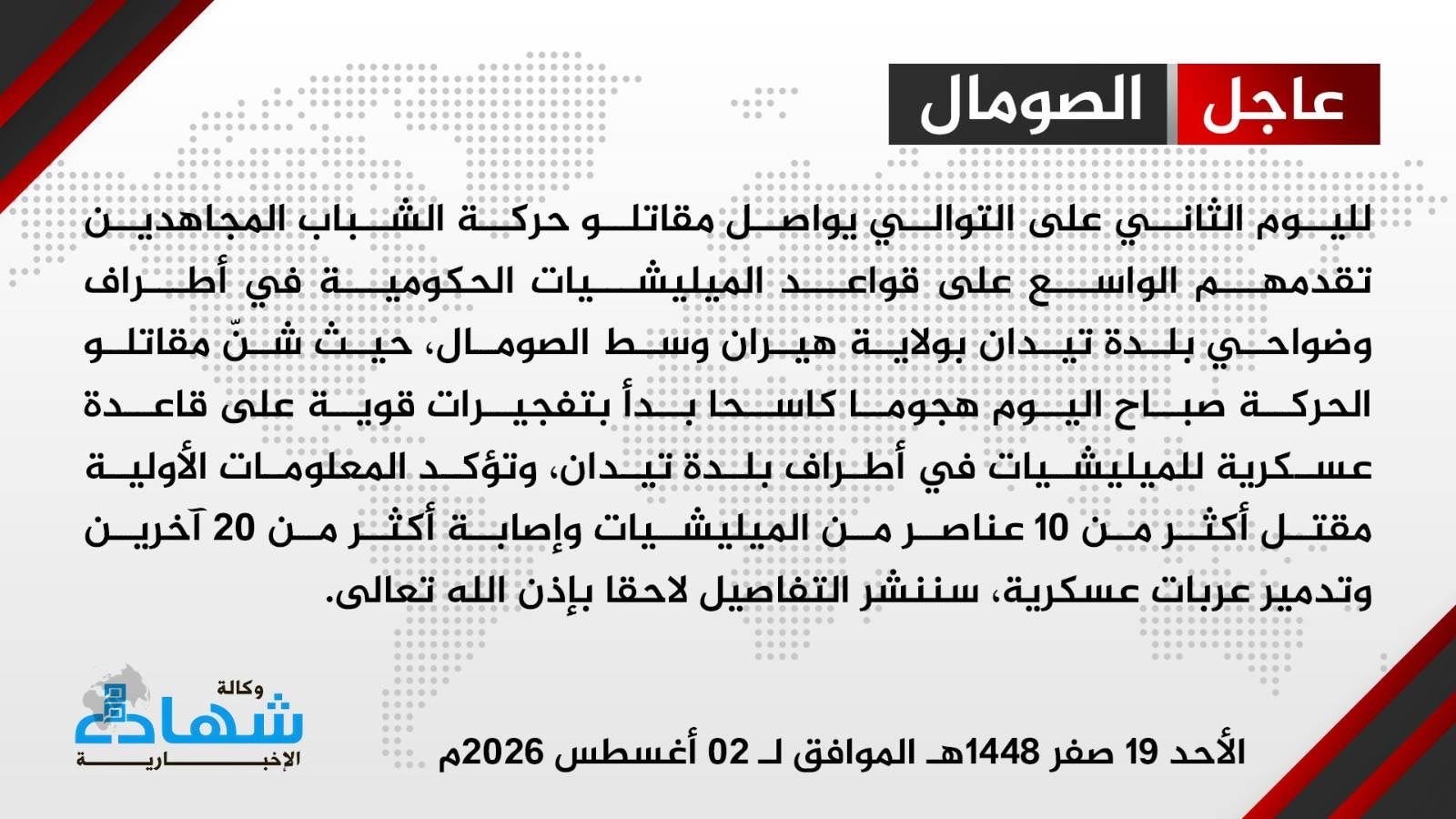
The Shahada News Agency, Harakat al-Shabaab al-Mujahidin (AS), released 22 statements claiming responsibility for 41 attacks.
The targets of the attacks were:
Somali Army, Somali Intelligence, Somali pro-government militia, Burundian Army, Ugandan Army, Kenyan Army.
The areas affected by the attacks were:
1) Somalia = 38
- Afgooye area, Shalanbud area, Bulunagi area, Janale area, Bulomerer area, Mubarak area, Qoryooley area, Lower Shabelle region;
- Afmadow area, Lower Juba;
- Baidoa area, Dinsor area, Bay region;
- Buloburde area, Tedan area, Hiiran region;
- Wajid area, Hudur area, Bakool region;
- Dolo area, Gedo region;
- Mahaday area, Jowhar area, Middle Shabelle region;
- Mogadishu area.
2) Kenya = 3
- Lafey area, Mandera County;
Islamic State (IS)
The Islamic State’s official media published 2 issues of the weekly al-Naba this week (559). Issue 559, eight pages long, covers the week of 16 to 22 Safar 1448, from 30 July to 5 August 2026. The main infographic summarises the areas affected by military operations this week, including: Nigeria, Niger Mozambique, Pakistan, and the Democratic Republic of Congo.
IS claims to have conducted 23 operations in all the mentioned areas and to have caused 90 deaths and injuries.
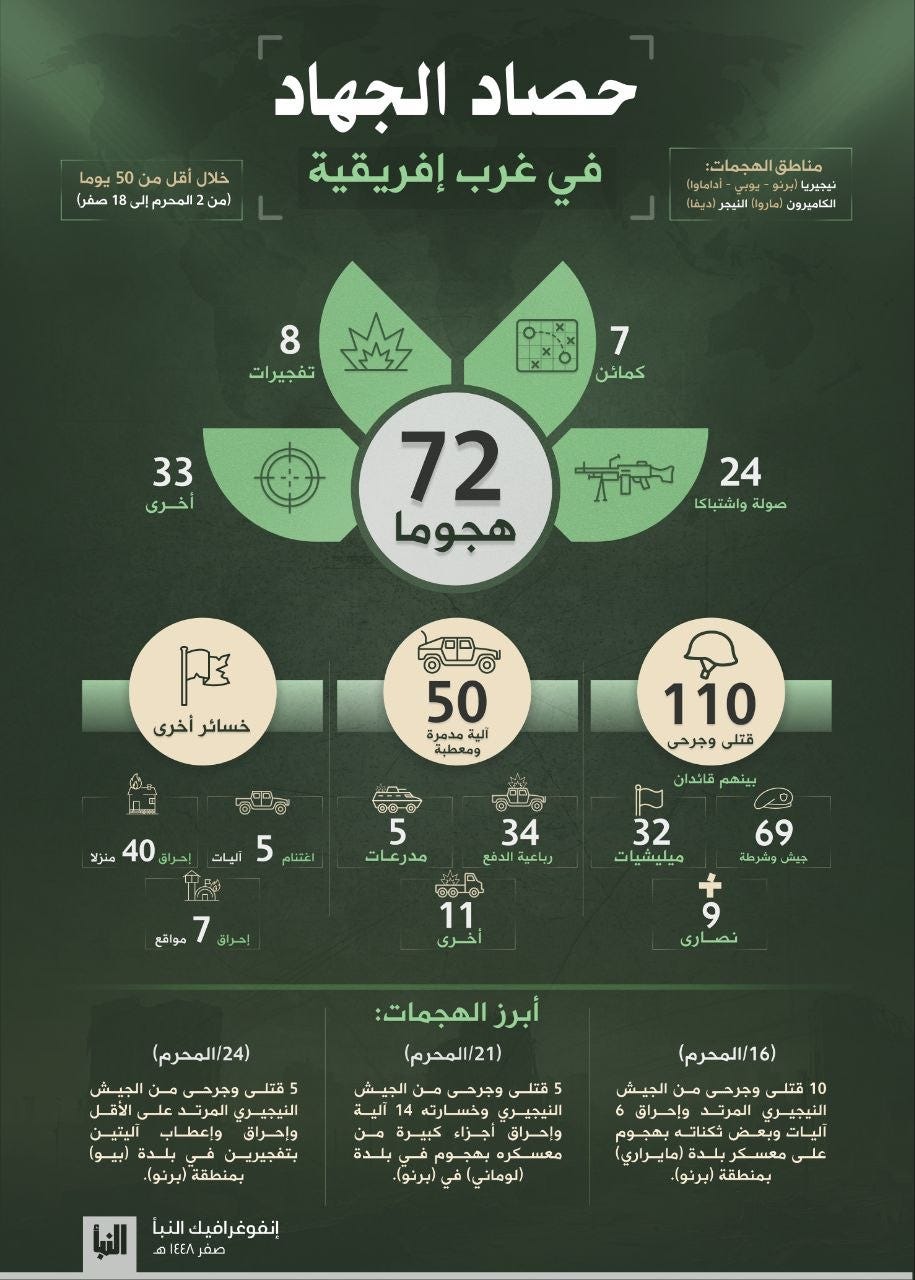
In this issue of the weekly magazine al-Naba, the Islamic State published an infographic showing ISWAP attacks over the past 50 days.
72 attacks were claimed, resulting in 110 deaths and injuries.
The areas affected by the attacks were: Nigeria (Borno, Yobe and Adamawa), Niger (Diffa), and Cameroon (Maroua).
Independent Jihadist Groups
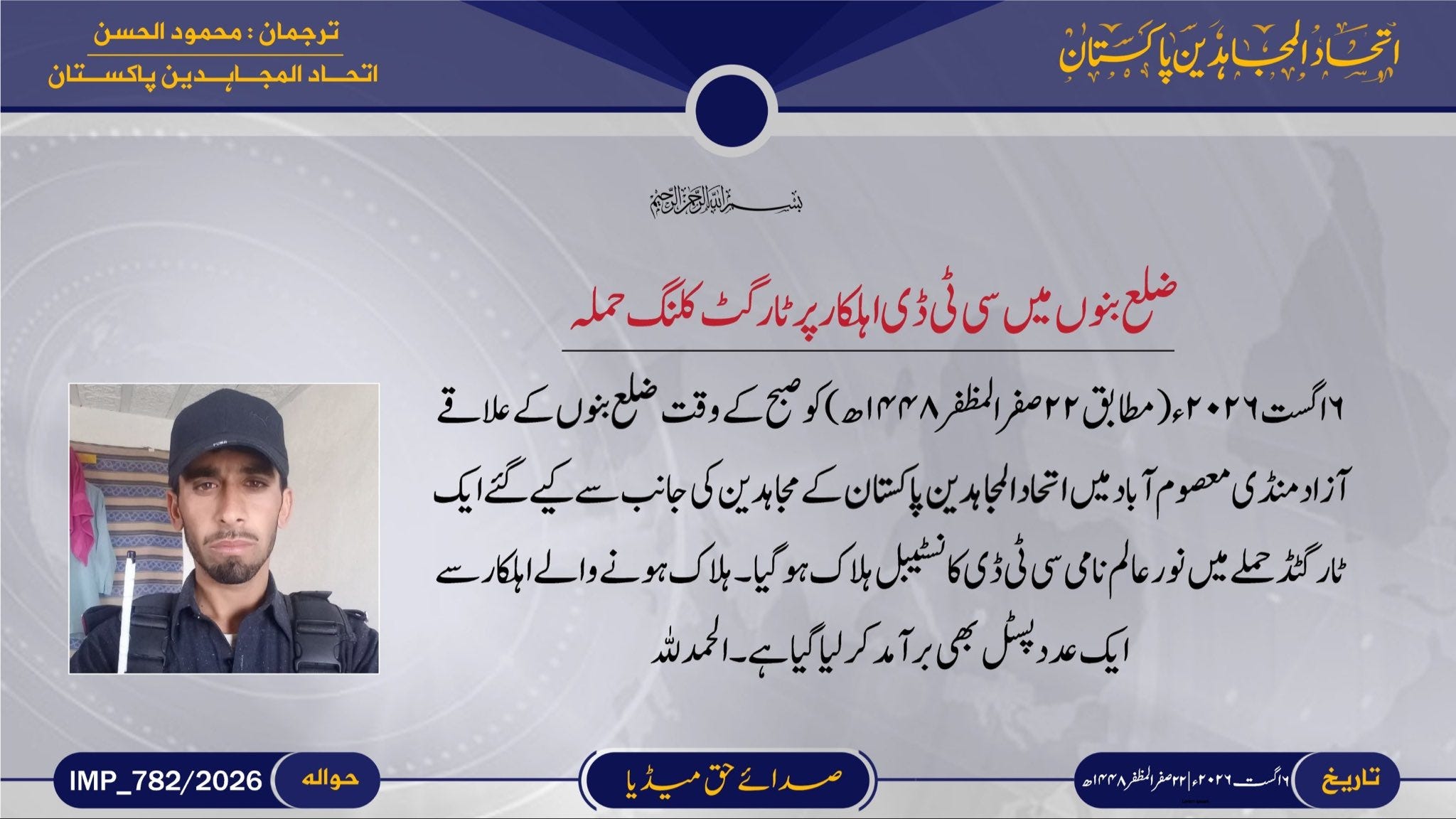
Ittehad-ul-Mujahideen Pakistan (IMP), a Pakistani jihadist organisation comprising the Hafiz Gul Bahadur Group (HBG), Lashkar-e-Islam and the Harkat Inqilab-e-Islami Pakistan (HIIP), released 16 statements, claiming 22 attacks.
Target: Pakistan Army, Pakistan Police, Counter Terrorism Department Police (CTD), Secret/Peace Committee.
Area:
- North Waziristan district, South Waziristan district, Orakzai district, Bannu district, Khyber district; in the
Khyber Pakhtunkhwa Province; Pakistan
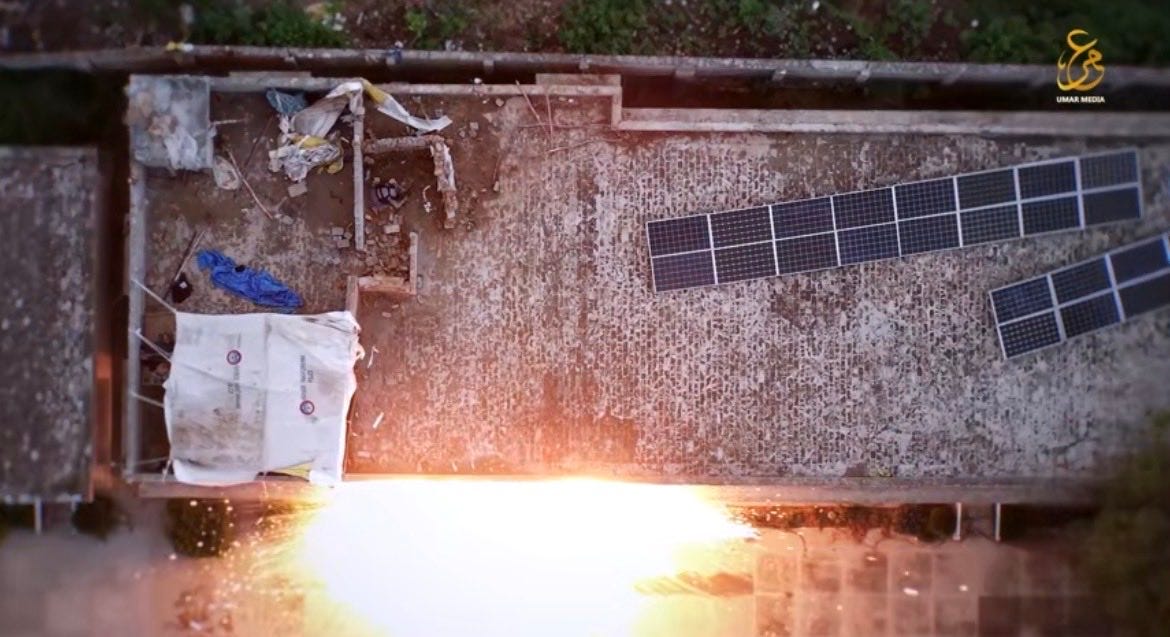
Umar Media, Tehrik-i-Taliban Pakistan (TTP), released a video lasting around 17 minutes to show the attacks carried out by its militants (using drones, snipers, IEDs, assaults and ambushes) against Pakistani police barracks, posts and patrols in the Orakzai and Hangu districts of Pakistan.
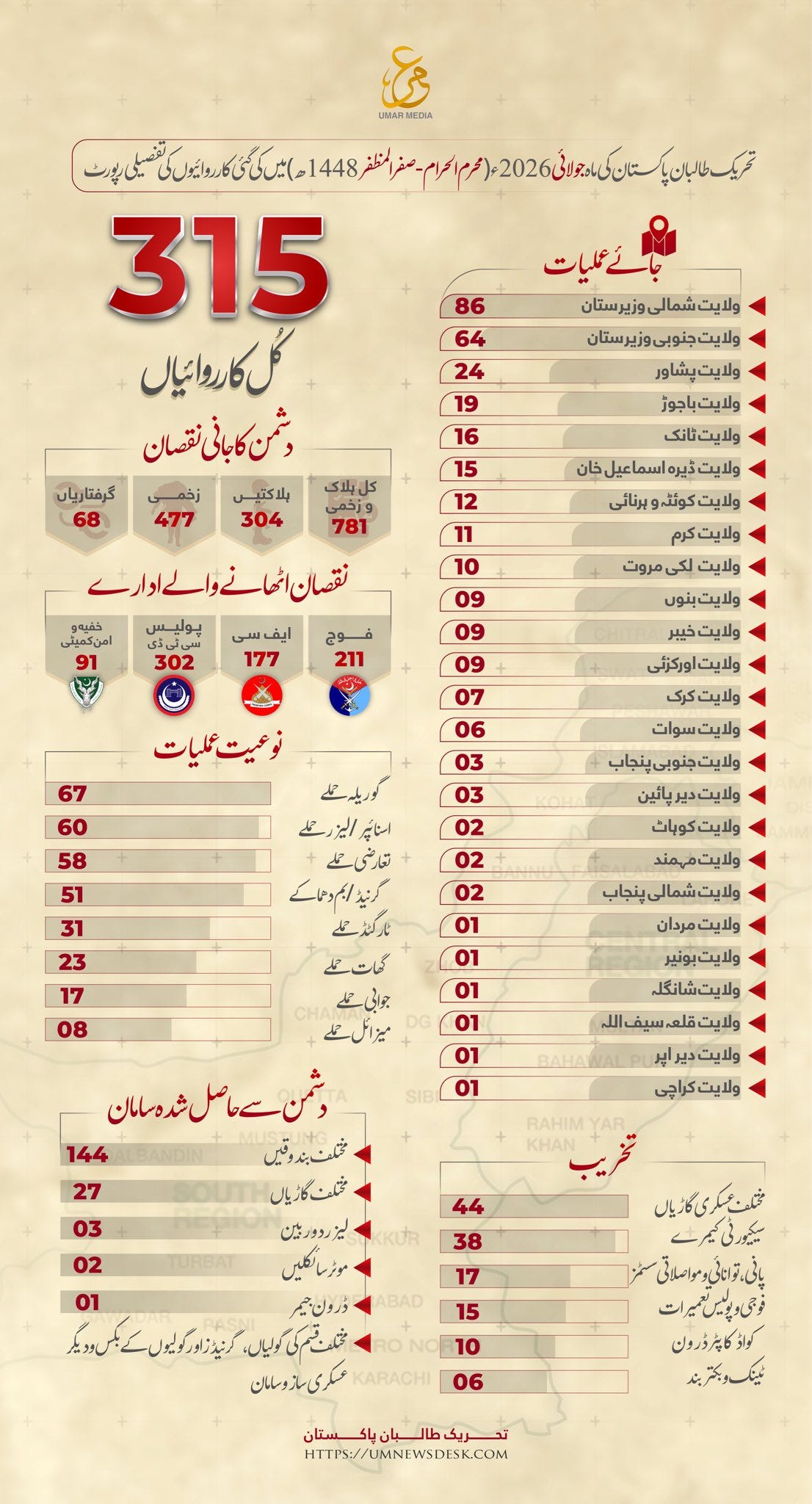
Umar Media, Tehrik-i-Taliban Pakistan (TTP), published its usual infographic summarising the attacks conducted in the previous month.
For July, the TTP claimed 315 attacks.
The attacks affected 25 different Pakistani districts. Pakistan
🔹Weekly Monitoring Notes
The reporting period from 1 to 8 August was characterised by a high-density propaganda cycle across the principal jihadist ecosystems, with a particularly significant shift in Al-Qaeda-linked output.
