


Executive Intelligence Overview
This weekly intelligence brief documents and structures official jihadist propaganda output released between 9 and 16 July, providing structured situational awareness across multiple organisations and theatres.
This brief highlights operational claims and targets, emphasising their importance for threat recognition and strategic focus, aiding analysts and policymakers in understanding ongoing threats and their strategic implications.
The purpose of this product is to support systematic monitoring, providing reassurance to analysts and policymakers that threat trends are being tracked thoroughly and that their efforts are crucial to understanding threats.
This publication does not include threat assessments, intent evaluation, or operational forecasting. Those components are addressed separately in dedicated analytical outputs.
🔹 Scope of Monitoring
This issue covers all identifiable official propaganda from a predefined list of jihadist groups, selected for operational relevance and threat level, during the reporting period, enhancing situational awareness.
The focus on documentation, classification, and structured presentation of primary-source material aims to instil confidence in analysts and policymakers about the reliability of the data used for threat assessment.
🔹 Sources & Collection Methodology
The analysis relies solely on primary-source propaganda, such as official magazines, videos, photos, statements, claims, and audio recordings, to clarify the scope of sources and bolster the reliability of the data for threat assessment.
Official magazines,
Videos,
Photo sets,
Statements and claims of responsibility,
Audio statements.
Material is collected and categorised by organisation, media outlet, and content type.
The study relies on OSINT, IMINT, SOCMINT, and Digital HUMINT collection streams.
No secondary reporting, media commentary, or interpretative overlay is applied.
🔹 Analytical Boundaries & Limitations
Fluctuations in volume, language, or format serve as signals of activity trends that analysts should interpret in a broader context to support accurate threat assessment and avoid overestimating their significance.
They shouldn’t be considered in isolation as indicators of strategic shifts, operational escalation, or changes in intent and capability; instead, they should be analysed within broader intelligence products.
Strategic shifts,
Operational escalation,
Intent or capability changes.
All higher-order analytical interpretation is conducted separately within:
Intelligence Briefs,
Strategic Threat Outlooks,
Cognitive and Information Domain Assessments.
🔹 Monitored Propaganda Output and Weekly Monitoring Notes
This issue includes all primary propaganda material released during the week by:
Al-Qaeda and affiliates
JNIM
Al-Shabaab
Pro-AQ media channels (Al-Bayan Newspaper - Weekly Issue)
Islamic State
al-Naba Newspaper (weekly Issue)
Official IS media channels.
Independent Jihadist Groups
Ittehad Mujahidin Pakistan
Tehreek-e-Taliban Pakistan
People’s Fighters Front
The conclusions are included in the Weekly Monitoring Notes.
Al-Qaeda (AQ)
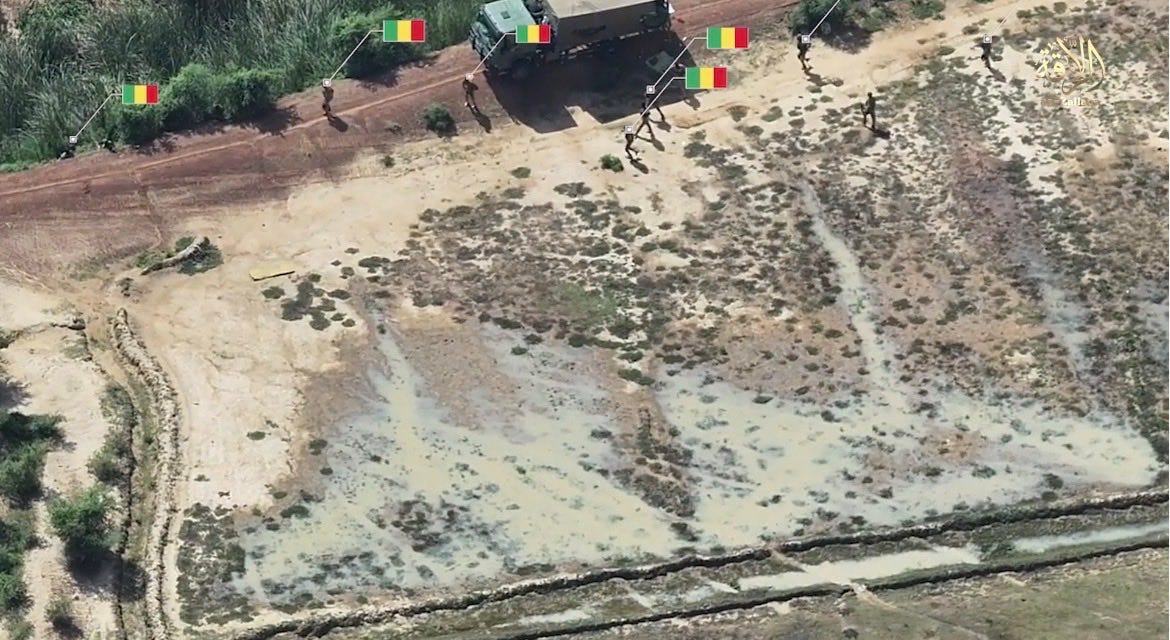
Az-Zallaqa Media, Jamat Nusrat al-Islam wal-Muslimin (JNIM), released a 5:07-minute video showing an ambush on a Malian Army convoy in the Ségou region of Mali.
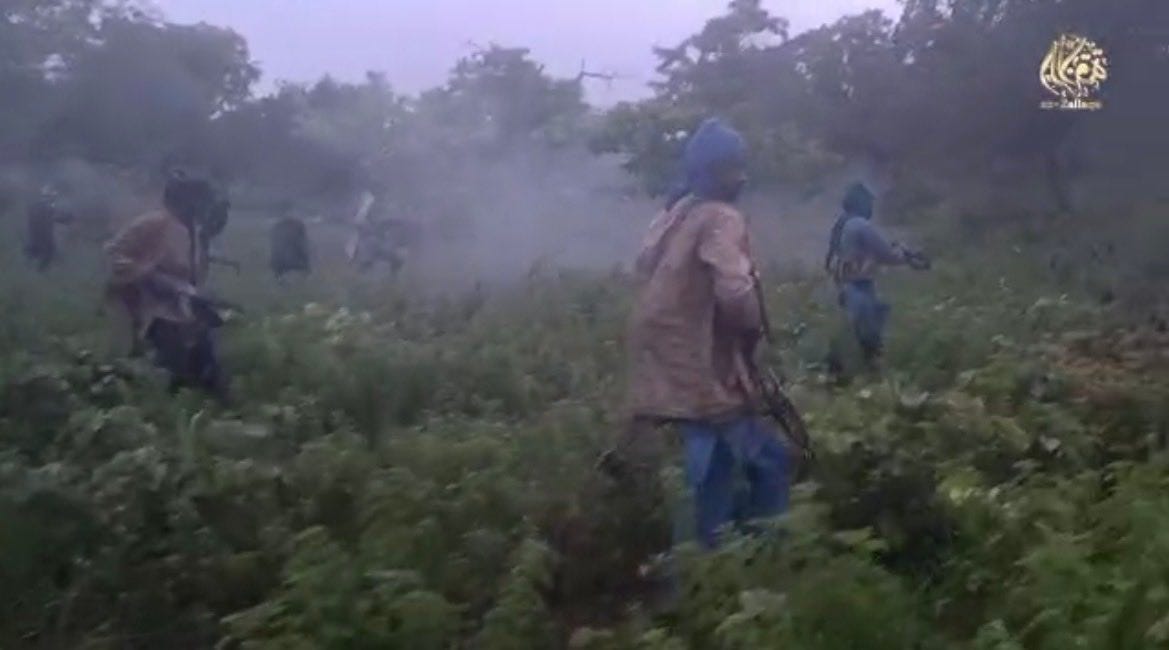
Az-Zallaqa Media, Jamaat Nusrat al-Islam wal-Muslimin (JNIM), has released a two-minute video showing an attack on the headquarters of pro-government militias in the Tiara area, in Houet province, Burkina Faso.
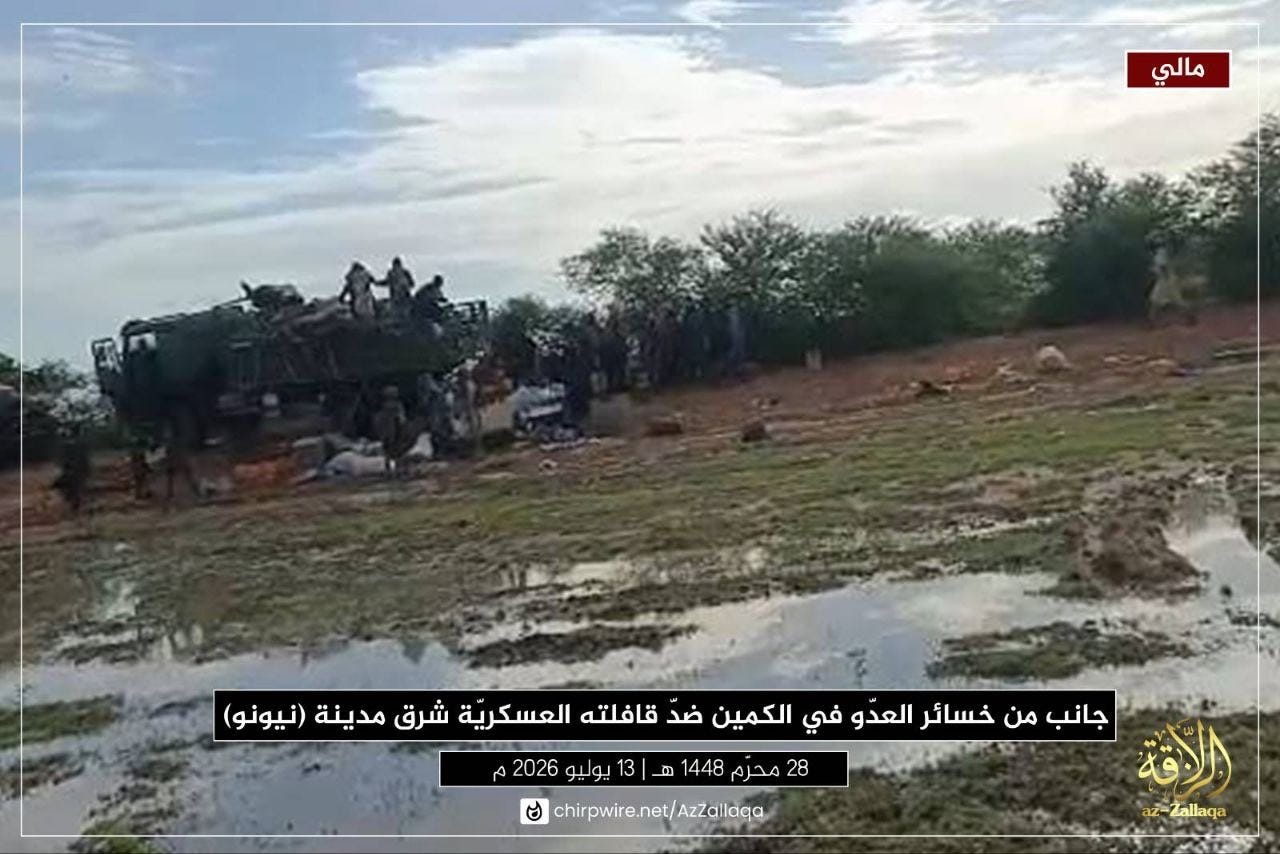
Az-Zallaqa Media, Jama’at Nasr al-Islam wal Muslimin (JNIM), issued 23 statements and 20 photos, claiming 51 attacks.
The targets of the attacks were: Malian Army, Dozo militia, Russian PMC Africa Corps, Burkinabé Army, VDP militia.
The areas of the attacks were :
1) Burkina Faso = 20
- Yatenga province, Séno province, Sourou province, Gourma province, Poni province, Mouhoun province, Banwa province, Passoré area, Namentenga province, Yagha province.
2) Mali = 29
- Kayes region, Koulikoro region, Mopti region, Tombouctou region, Segou region; Bamako area.
3) Niger = 2
- Tillaberi region.
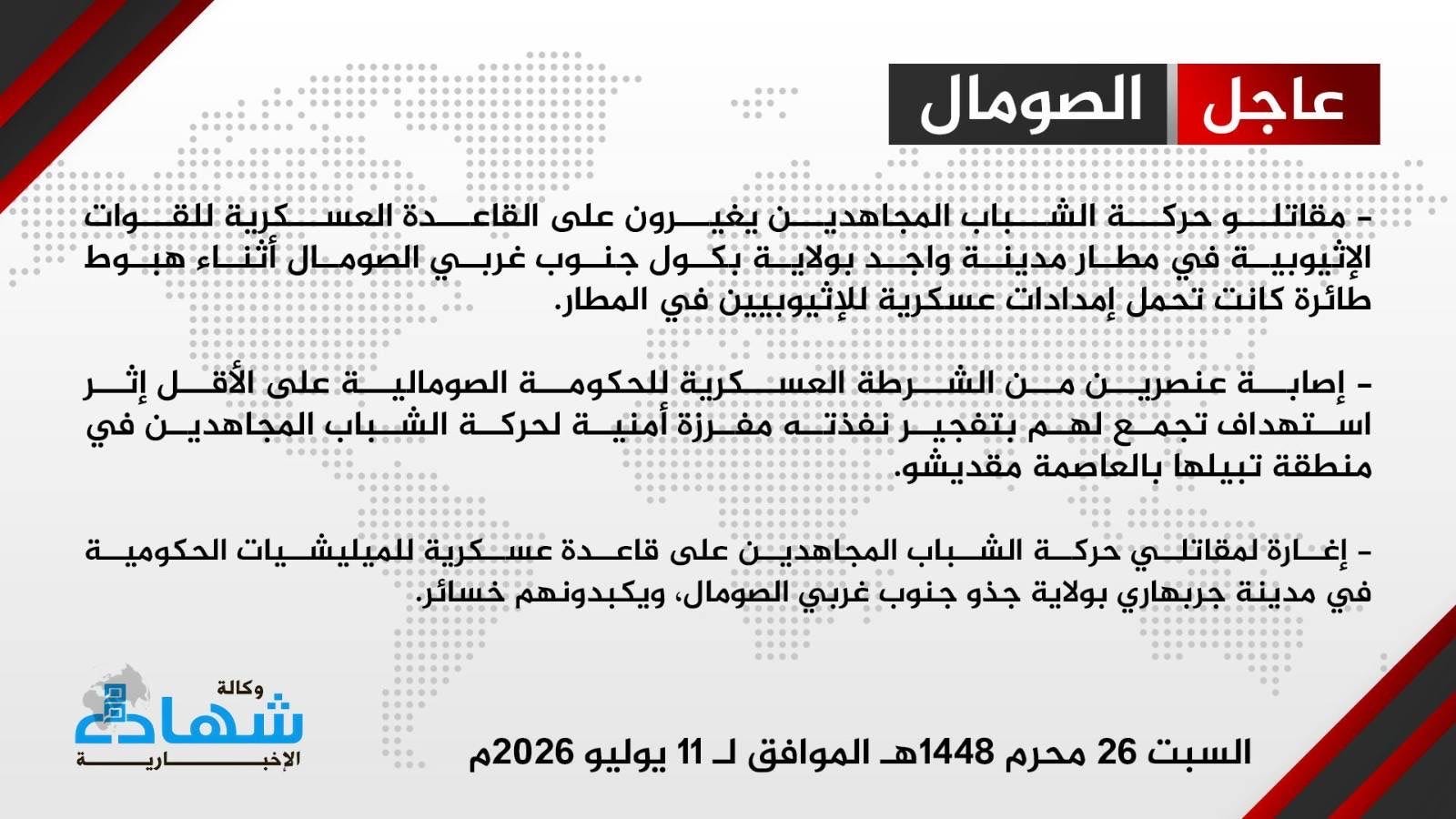
The Shahada News Agency, Harakat al-Shabaab al-Mujahidin (AS), released 10 statements claiming responsibility for 23 attacks.
The targets of the attacks were:
Somali Army, Somali Intelligence, Somali pro-government militia, Ethiopian Army, Ugandan Army.
The areas affected by the attacks were:
1) Somalia = 23
- Bulomarer area, Bulunagi area, Janale area, Mubarak area, Lower Shabelle region; Qansahdhere area, Bardale area, Bay region; Buloburde area, Beledweyne area, Tedan area, Hiiran region; Wajid area, Bakool region; El Wak area, Luuq area, Garbaharey area, Gedo region; Jowhar area, Middle Shabelle region; Masagaway area, Galguduud region, Mogadiscio area.
Islamic State (IS)
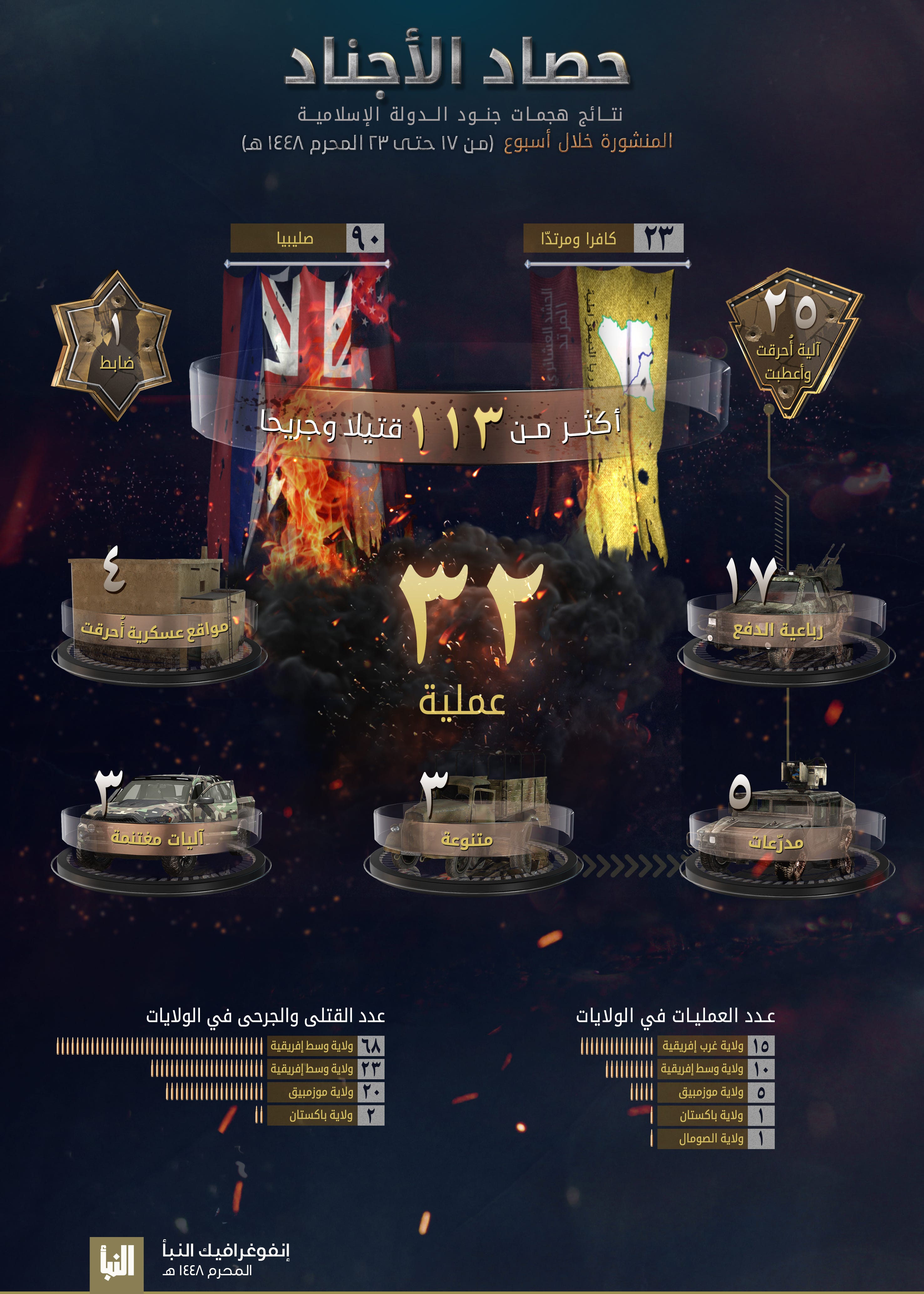
The official media of the Islamic State published an issue of the weekly al-Naba this week (555). Issue 555, eight pages long, covers the week of 17 to 23 Muharram 1448, from 2 Jul8 to 8 July 2026. The main infographic summarises the areas affected by military operations this week, including:
Nigeria, Niger, Mozambique, Pakistan, Somalia, and the Democratic Republic of Congo.
IS claims to have conducted 32 operations in all the mentioned areas and to have caused 113 deaths and injuries.
Independent Jihadist Groups
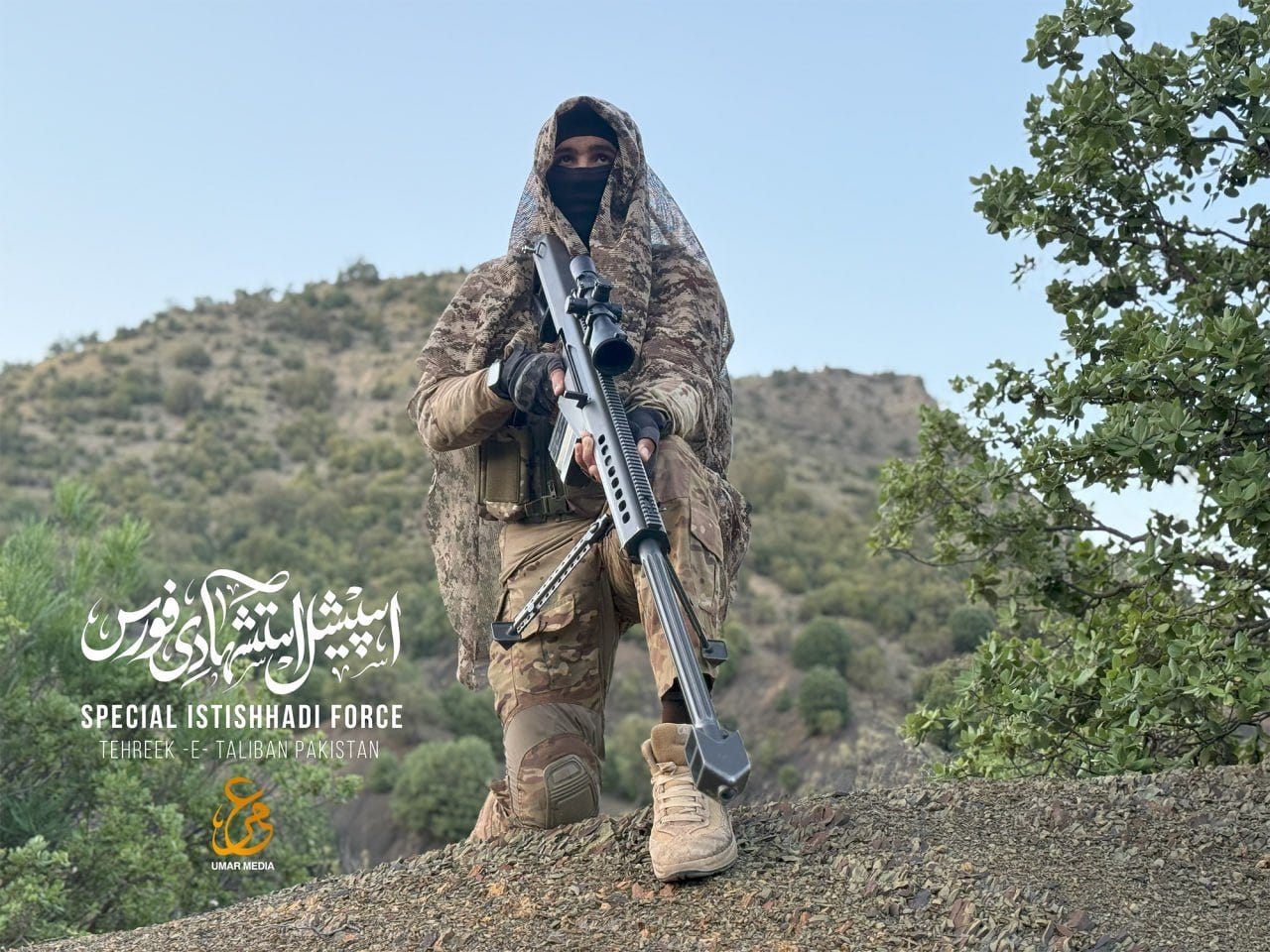
Ittehad-ul-Mujahideen Pakistan (IMP), a Pakistani jihadist organisation comprising the Hafiz Gul Bahadur Group (HBG), Lashkar-e-Islam and the Harkat Inqilab-e-Islami Pakistan (HIIP), released 13 statements, claiming 21 attacks.
The group continues to make extensive use of SVBIED, drones and suicide attacks.
Target: Pakistan Army, Pakistan Police, Counter Terrorism Department Police (CTD), Secret/Peace Committee.
Area:
- North Waziristan district, South Waziristan district, Khyber district, Bannu district, Orakzai district;
Khyber Pakhtunkhwa Province, Pakistan
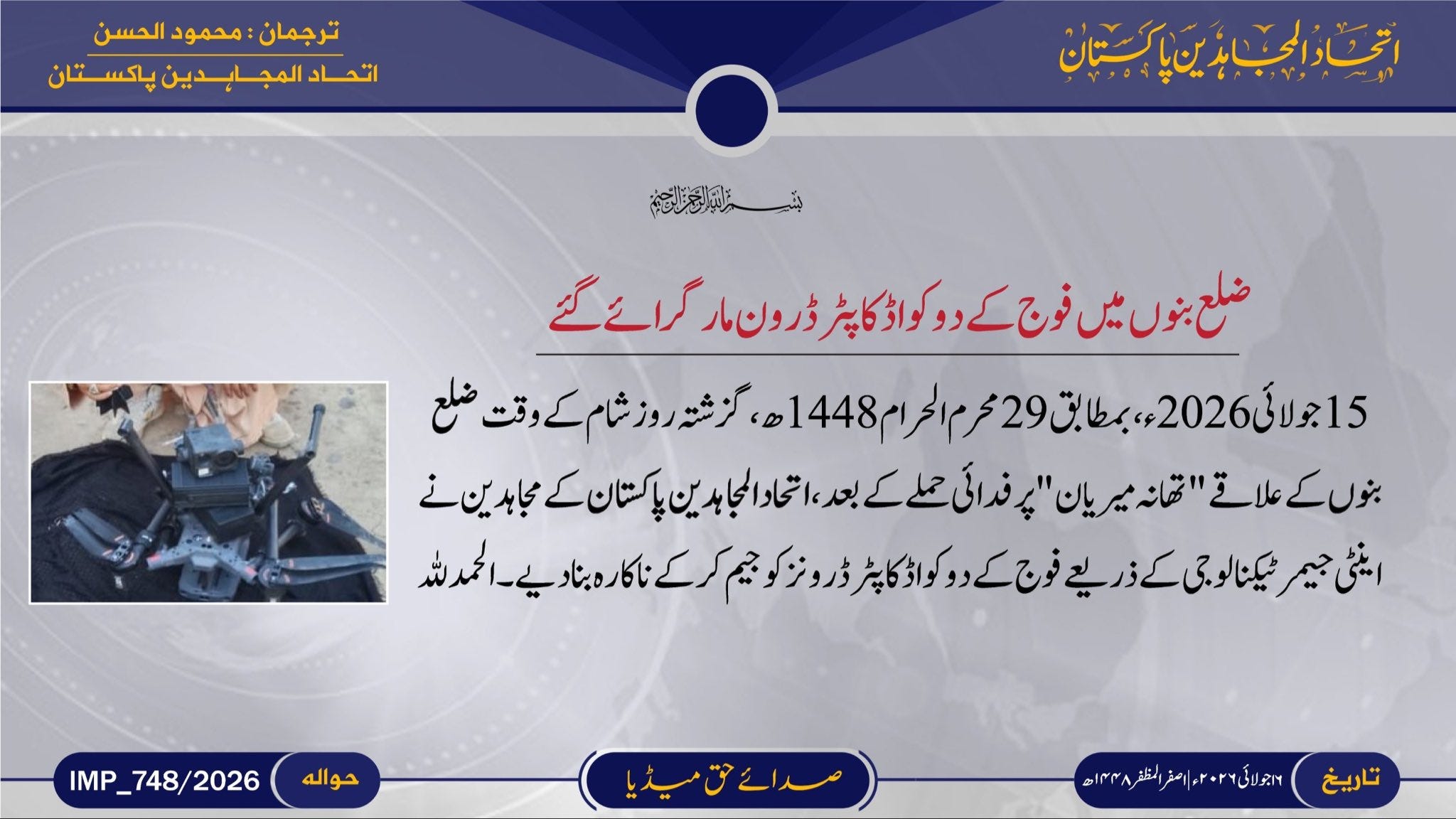
As-Saif Media, Ittehad-ul-Mujahideen Pakistan (IMP), a Pakistani jihadist organisation comprising Hafiz Gul Bahadur’s (HBG) group, Lashkar-e-Islam and Harkat Inqilab-e-Islami Pakistan (HIIP), has released a 12-minute video showing the training of its militants. Pakistan
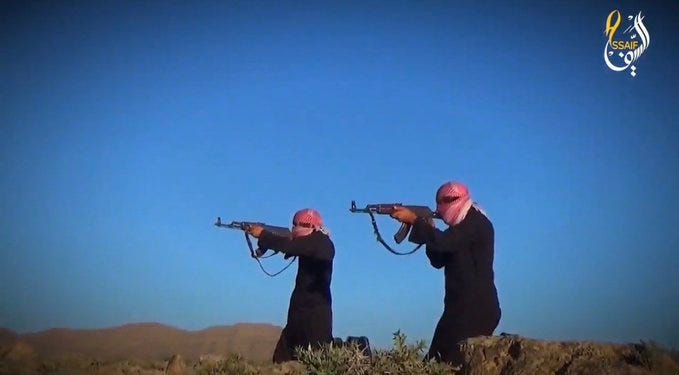
Umar Media, Tehrik-i-Taliban Pakistan (TTP), published a photo report showing the training of the Special Istishhadi Force. Pakistan
Umar Media, Tehrik-i-Taliban Pakistan (TTP), has released a 9-minute video showing attacks by its militants on Pakistani police posts in the Quetta area, in the province of Balochistan, Pakistan.
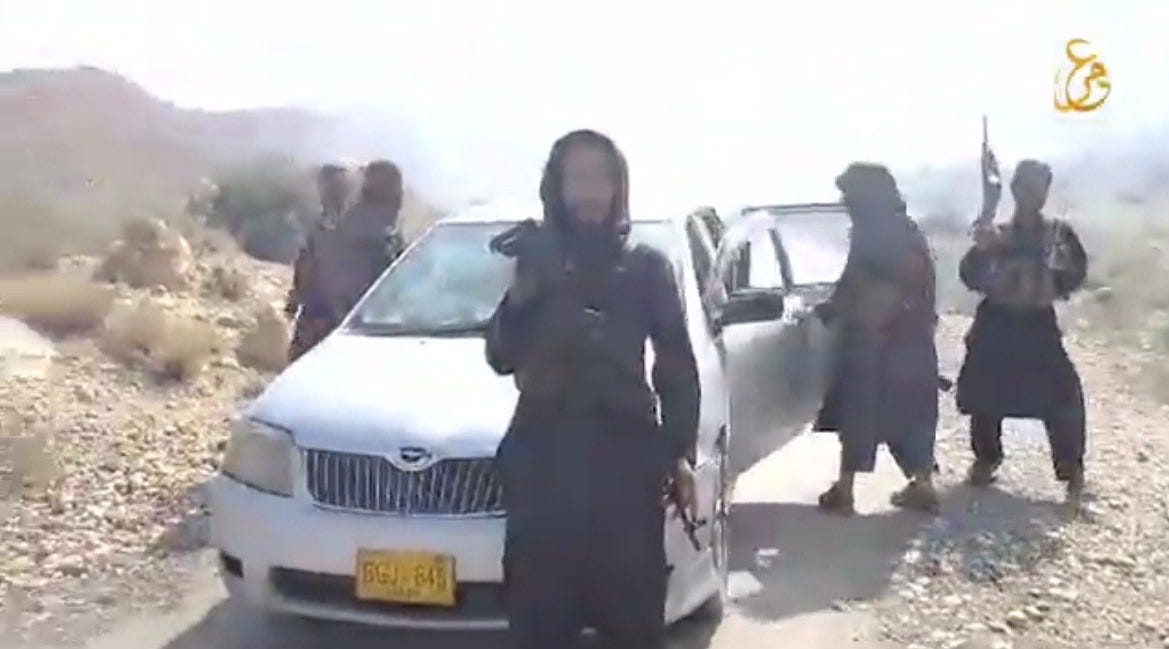
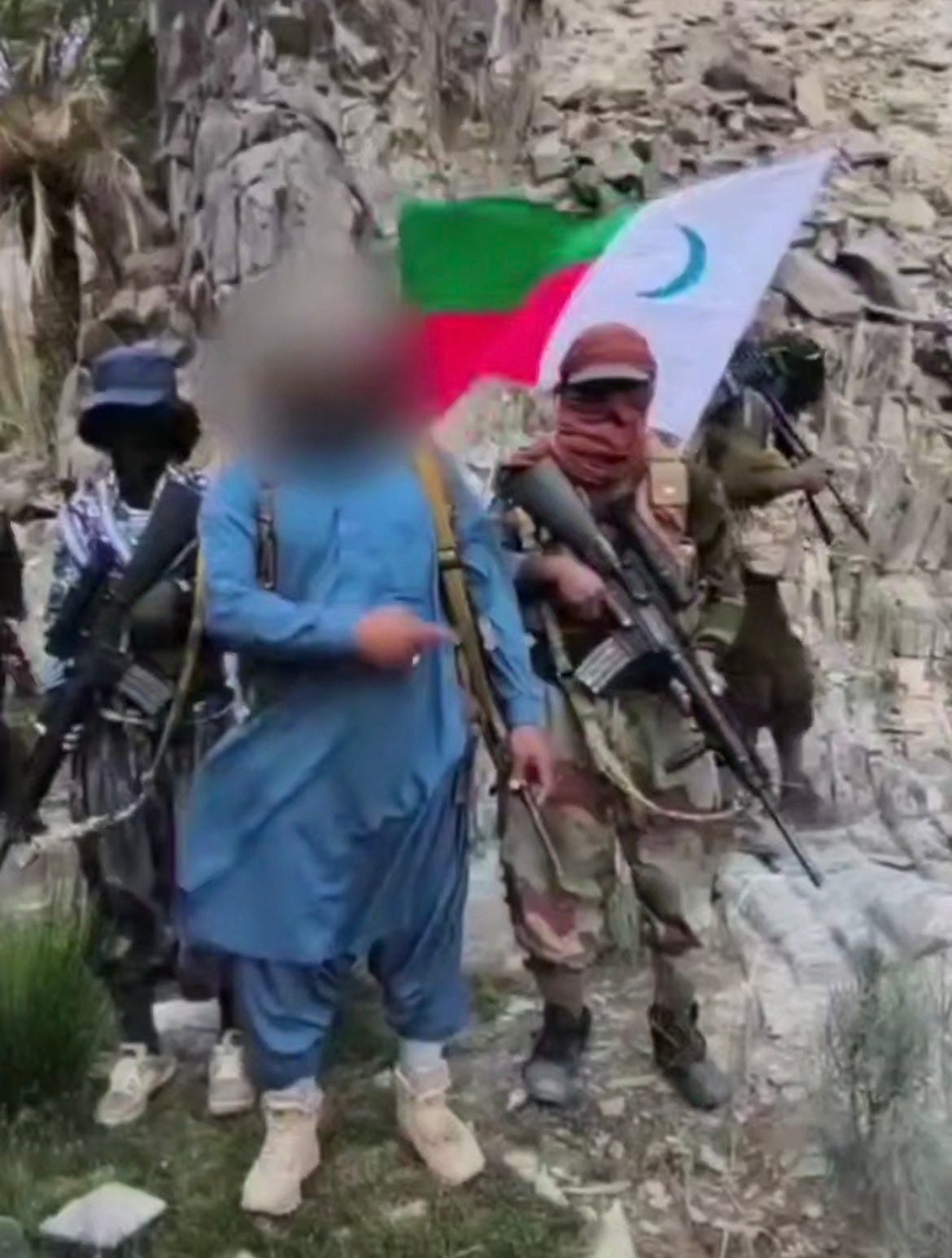
The jihadist organisation in Sistan and Baluchistan, the “People’s Fighters Front”, released a video threatening the Iranian regime and the IRGC with further attacks. Iran.
🔹Weekly Monitoring Notes
The reporting period from 9 to 16 July reflects a marked increase in propaganda output across nearly all major jihadist organisations. Compared with the previous week, both Al-Qaeda affiliates and the Islamic State expanded the volume of official operational reporting. At the same time, Pakistani jihadist groups continued to consolidate a sophisticated media strategy centred on military professionalism, force generation and technological adaptation. Overall, the reporting cycle was characterised by a high operational tempo, particularly across the Sahel, Somalia and Pakistan, accompanied by sustained visual documentation of battlefield activity.
Within the Al-Qaeda ecosystem, Jama’at Nusrat al-Islam wal-Muslimin (JNIM) recorded one of its most active weeks of the year. Az-Zallaqa Media released 23 statements, 20 photo reports and two operational videos, documenting 51 attacks across Mali, Burkina Faso and Niger. Nearly sixty per cent of the claimed operations occurred in Mali, with activity extending from the Kayes and Koulikoro regions through central Mali to the Bamako area. At the same time, Burkina Faso continued to experience persistent pressure across eleven provinces. The operational distribution illustrates JNIM’s ability to sustain simultaneous offensive activity across multiple theatres while maintaining pressure on Malian forces, Russian PMC Africa Corps elements, Burkinabé forces and local militias. The accompanying videos continue to prioritise IED attacks and mobile ambushes, reinforcing JNIM’s emphasis on asymmetric warfare and tactical mobility rather than positional engagements.
Al-Shabaab maintained a comparable operational rhythm. Through ten official communiqués, Shahada News Agency claimed responsibility for twenty-three attacks targeting Somali security forces, intelligence services, pro-government militias and regional military contingents from Ethiopia and Uganda. Operations were dispersed across nearly every major insurgency theatre in southern and central Somalia, including Lower Shabelle, Bay, Hiiran, Gedo, Bakool, Middle Shabelle, Galguduud and Mogadishu. The breadth of geographic coverage confirms the group’s continued ability to generate persistent military pressure while sustaining a stable propaganda cycle that closely mirrors battlefield activity.
The wider Al-Qaeda media ecosystem remained comparatively stable. While no major strategic communiqués were released, the continuation of regular battlefield documentation through Az-Zallaqa, Shahada and associated media channels demonstrates a mature information architecture that prioritises operational credibility, frequent reporting and visual evidence over ideological innovation. This reinforces the long-term trend whereby Al-Qaeda’s propaganda increasingly serves as an extension of military campaigning rather than as a platform for strategic doctrinal messaging.
Islamic State also increased its operational reporting compared with the previous week. Al-Naba issue 555 claimed thirty-two operations resulting in 113 deaths and injuries across Nigeria, Niger, Mozambique, Pakistan, Somalia and the Democratic Republic of the Congo. Unlike recent editions that concentrated primarily on individual provinces, this reporting cycle reflected a broader geographic dispersion of operational claims. Nevertheless, Africa remained the organisation’s principal propaganda focus, confirming the continued shift of Islamic State’s operational centre of gravity away from Iraq and Syria. Although no major leadership messages or strategic editorials accompanied this issue, the increase in claimed operations suggests renewed operational momentum across several African wilayat.
Independent jihadist organisations in Pakistan continued to display a high level of organisational maturity. Ittehad-ul-Mujahideen Pakistan claimed twenty-one attacks while simultaneously releasing a twelve-minute training video highlighting the preparation of its fighters. The organisation continues to emphasise the integration of suicide operations, SVBIEDs, drones and conventional assaults, reflecting an increasingly diversified tactical repertoire. Rather than focusing exclusively on individual attacks, the media strategy increasingly projects institutional resilience, force generation and sustained military capability.
Tehreek-e-Taliban Pakistan complemented this trend by releasing a detailed video documenting attacks against Pakistani police positions in Balochistan alongside new imagery of its Special Istishhadi Force. The continued visibility of dedicated suicide units reinforces the central role assigned to specialised assault capabilities within the organisation’s military doctrine while simultaneously serving recruitment and deterrence objectives.
Outside the principal theatres, the People’s Fighters Front in Iran continued its gradual media evolution through the publication of a new video threatening the Iranian regime and the Islamic Revolutionary Guard Corps. Although its operational footprint remains limited compared with larger jihadist organisations, the group’s increasingly structured propaganda output indicates a deliberate effort to strengthen organisational identity and maintain visibility within the broader militant ecosystem of Sistan and Baluchistan.
Overall, the reporting period demonstrates a significant increase in propaganda intensity across the global jihadist landscape. JNIM emerged as the dominant media actor of the week, reflecting both expanding operational activity and an increasingly sophisticated reporting cycle. Islamic State maintained broad geographic coverage while continuing to prioritise African theatres, whereas Pakistani organisations further consolidated their emphasis on military professionalism, training and technological adaptation. Collectively, these trends indicate that official propaganda continues to function primarily as an operational instrument, designed to reinforce perceptions of organisational resilience, territorial persistence and sustained offensive capability across multiple theatres simultaneously.
Distribution patterns remained stable across established encrypted and semi-encrypted platforms (Element, Telegram, Rocket Chat, Chirpwire, Signal, UpScrolled), with no observable shifts in dissemination channels or media architecture.
🔒 Executive Intelligence Cycle
This assessment is part of a broader analytical cycle.
Founding subscribers receive the Executive Intelligence Briefing, which integrates all threat assessments, cognitive domain analysis, and a rolling 30–90-day forecast into a single monthly strategic synthesis.
© Daniele Garofalo Monitoring - All rights reserved.
Daniele Garofalo is an independent researcher and analyst specialising in jihadist terrorism, Islamist insurgencies, and armed non-state actors.
His work focuses on continuous intelligence monitoring, threat assessment, and analysis of propaganda and cognitive/information dynamics, with an emphasis on decision-oriented outputs, early warning, and strategic trend evaluation.
ISSN (International Standard Serial Number): 3103-3520
NATO NCAGE: AX664 (NATO Commercial and Governmental Entity)
UNITED NATIONS Global Marketplace ID: 1210727
ORCID Code: 0009-0006-5289-2874