


Executive Intelligence Summary
The Islamic State’s weekly magazine, al-Naba, remains a critical source for assessing the organisation’s operational tempo, geographic dispersion, and signalling posture across theatres.
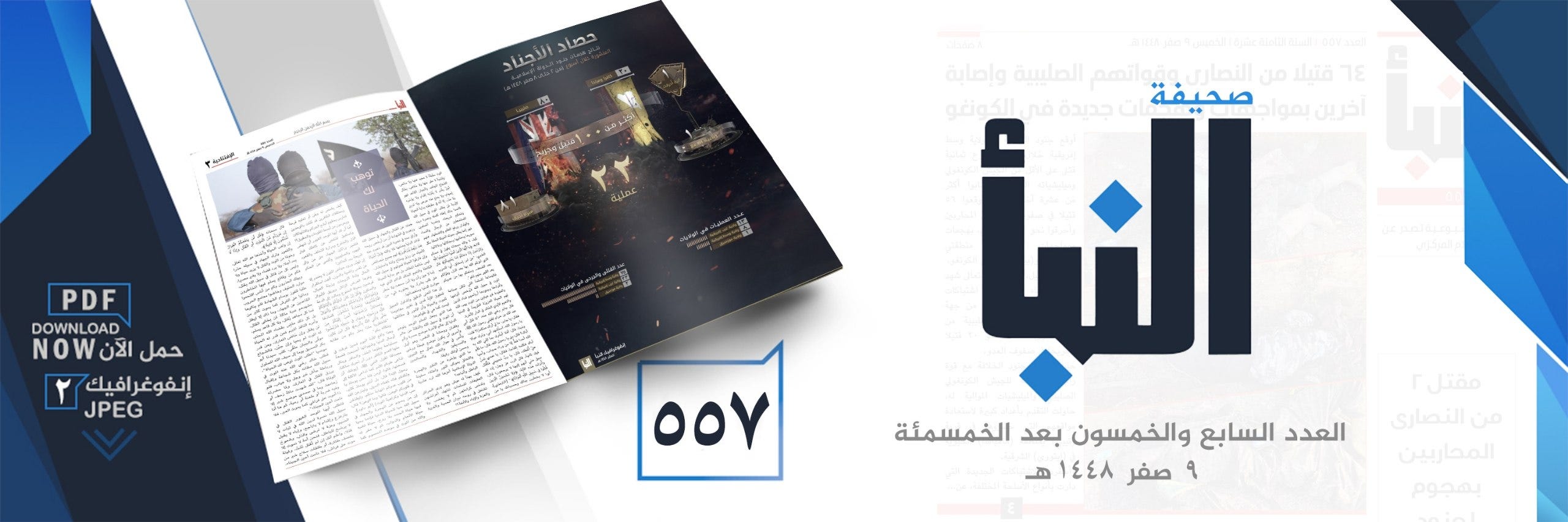
The weekly newsletter reached number 557 last Thursday.
The weekly newsletter’s increased focus on West Africa aims to underscore its critical role, encouraging the audience to recognize the region’s strategic significance and feel motivated to prioritize region-specific countermeasures.
Time horizon: 30–90 days
The confidence level is assessed as Medium, reflecting the reliability of sources and verification methods used, which informs the assessment’s credibility and helps decision-makers understand its limitations.
Source Basis & Methodology
This assessment is based on a direct analysis of primary propaganda material from al-Naba Issue No. 557, supplemented by OSINT, IMINT, and SOCMINT, which collectively provide a comprehensive and corroborated view of current operations, supporting informed decision-making.
The analysis integrates:
OSINT
IMINT
SOCMINT
to contextualise reported attacks and assess credibility and operational relevance.
Limitations & Analytical Notes
Reported casualty and damage figures may be exaggerated.
Some attacks are presented without independent verification.
The claims published in al-Naba are generally reliable regarding the occurrence of attacks; however, casualty and damage figures may be inflated for propaganda purposes, a fact that should be considered when assessing operational impact.
Claims published in al-Naba are assessed as generally reliable regarding the occurrence of attacks, while casualty figures and material damage are likely to be inflated for propaganda purposes. Analytical judgments in this assessment prioritise event verification and pattern analysis over reported impact.
Historically, Islamic State attack claims in al-Naba have mainly proven accurate in terms of occurrence, with inflation primarily affecting reported impact rather than event existence.
📌 Inside this Assessment
Activity and Operations Analysis
Number, Targets, and Areas of Attacks
Charts and Statistics
Strategic Impact and Operational Implications
Implications for Policy and Counterterrorism: Counterterrorism efforts should prioritise intelligence, rural security, and stabilisation, empowering the audience to take targeted action.
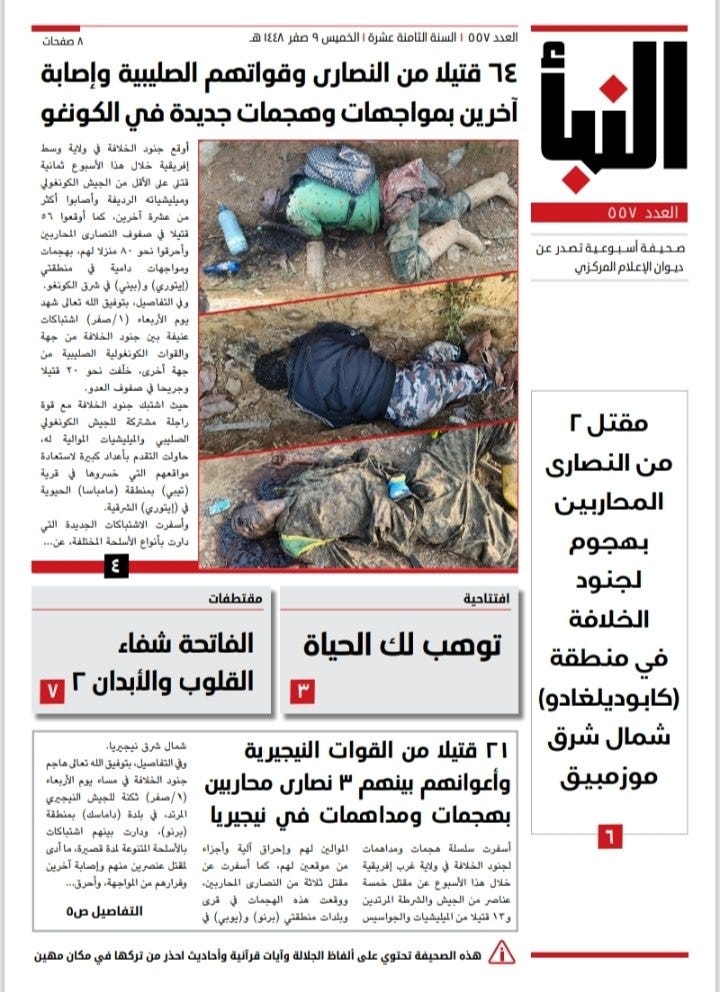
Issue 557, eight pages long, covers the week of 2 to 8 Safar 1448, from 16 to 22 July 2026.
Al-Naba generally includes most of the statements and photos published daily over the past week on its official channels, although often with new elements or additional details, both written and photographic. However, al-Naba won’t include unpublished statements or messages.
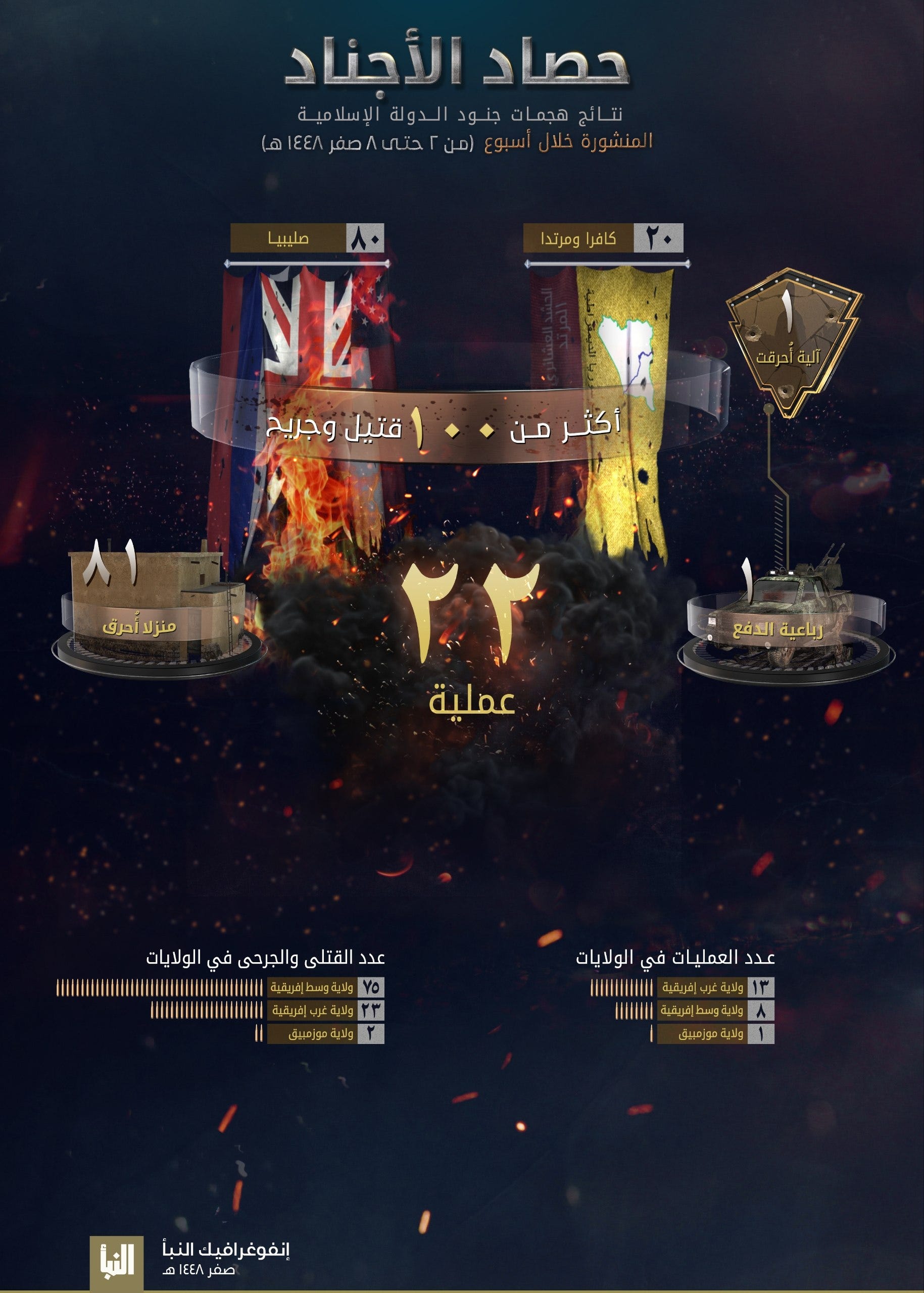
The main infographic summarises the areas affected by military operations this week, including:
Nigeria, Mozambique, and the Democratic Republic of Congo.
IS claims to have conducted 22 operations in all the mentioned areas and to have caused 100 deaths and injuries.
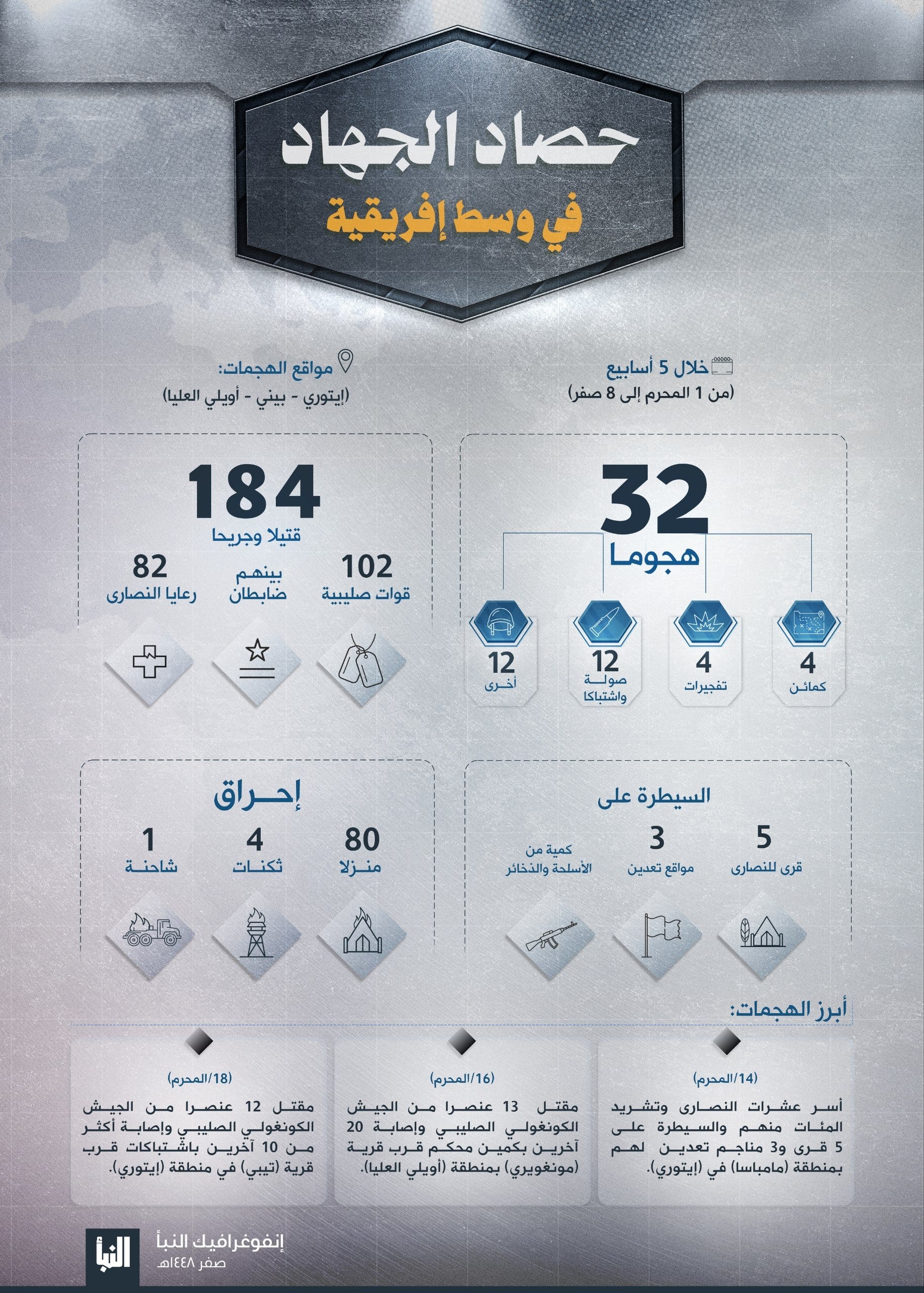
In this issue, the Islamic State published an infographic regarding its province in Central Africa. ISCAP reportedly carried out 32 attacks, resulting in 184 deaths and injuries, over the past 5 weeks.
Among the targets, in addition to the Congolese army, pro-government militias, and Christian villages, ISCAP claims to have attacked and taken control of three mining sites (thus in line with its economic warfare strategy). The affected areas are the provinces of Haute Uele, North Kivu, and Ituri. DR Congo
On the fourth page, the weekly magazine goes into detail about the types of attacks, operations, and targets of Islamic State fighters, who follow two main strategies: “war of attrition” and “economic warfare”, as well as other methods aimed at targeting Christians and Shiites. Since 20 March 2025, the Islamic State has embarked on a new military campaign, particularly in Africa (in the areas of Nigeria, Niger, Cameroon, and Mozambique), called “Burning Camps”.
Below is a detailed account of the attacks by province/area:
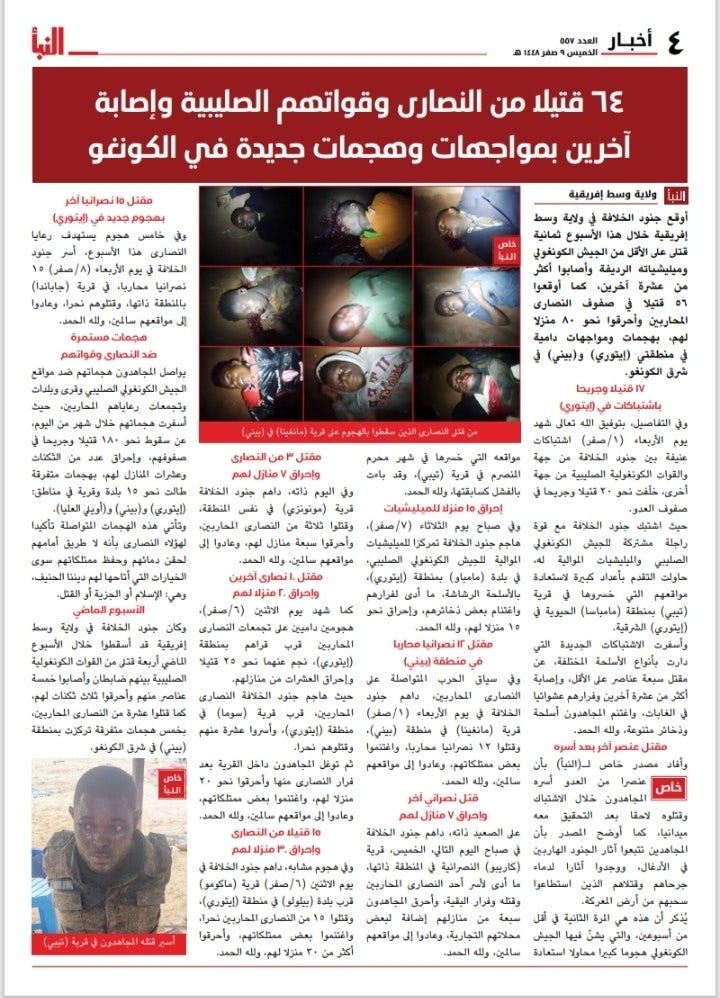
1) Central Africa Province: The weekly al-Naba reports that ISCAP militants carried out 8 attacks against Congolese army patrols and barracks, pro-government militias, and Christian villages in the provinces of Ituri and North Kivu in the Democratic Republic of the Congo.
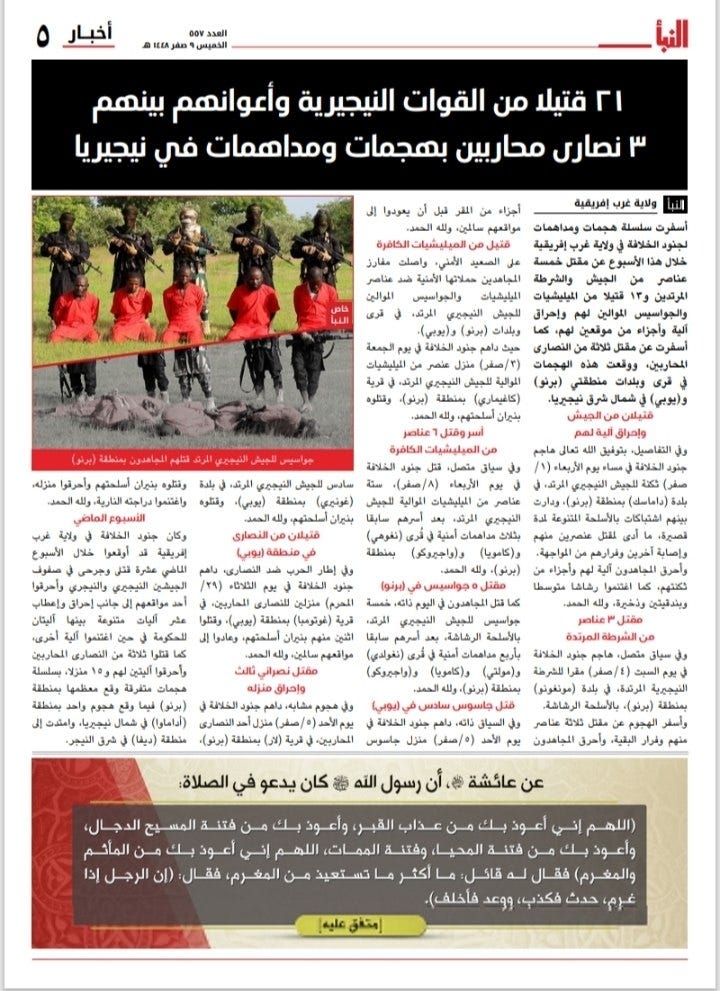
2) West Africa Province: The weekly al-Naba reports 13 attacks carried out by ISWAP militants against checkpoints, convoys, patrols, and camps belonging to the Nigerian Army, the Nigerian Police, and pro-government militias in the states of Borno and Yobe, Nigeria.
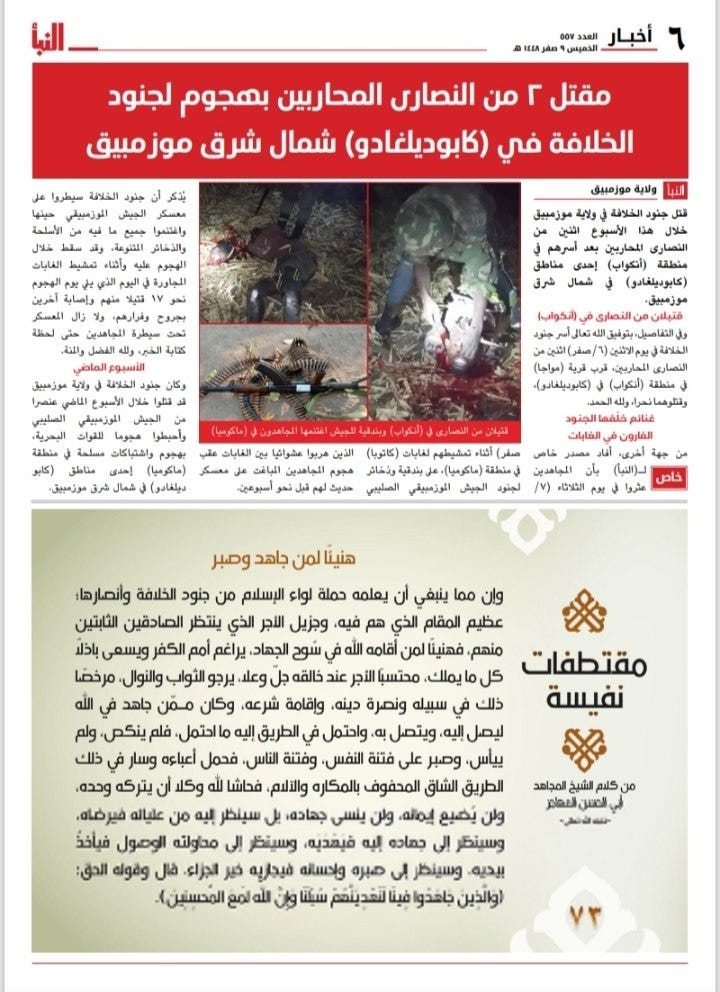
3) Mozambique Province: The weekly al-Naba reports on 1 operation carried out by ISM militants who captured and killed two Christian fighters from pro-government militias in the Ancuabe district of Cabo Delgado province, Mozambique.
CONCLUSION 1 — Strategic Impact and Operational Implications
Issue 557 confirms that the Islamic State’s operational centre of gravity remains concentrated in Africa, with 22 claimed operations and 100 reported deaths and injuries across Nigeria, the Democratic Republic of Congo, and Mozambique. The weekly pattern does not indicate a broad strategic escalation, but it does show sustained pressure in the organisation’s most resilient theatres.
ISCAP represents the most significant development. Eight attacks during the reporting week, combined with the five-week total of 32 operations and 184 reported casualties, indicate a sustained campaign rather than episodic violence. The claimed seizure of three mining sites is particularly relevant. It suggests an effort to translate military access into economic leverage, local taxation, resource capture, and coercive influence over commercial activity. This development is consistent with the Islamic State’s economic warfare doctrine and may provide ISCAP with additional funding, logistical depth, and bargaining power over local communities.
The expansion of activity across Ituri, North Kivu, and Haute Uele also demonstrates that ISCAP retains mobility across a broad and fragmented security environment. Its simultaneous targeting of the Congolese military, local militias, Christian villages, and mining infrastructure reflects a multidimensional insurgent strategy combining attrition, population intimidation, territorial penetration, and resource exploitation.
ISWAP remained the most active affiliate numerically, with 13 attacks against military and police positions across Borno and Yobe. The targeting pattern remains consistent with a campaign designed to degrade mobility, disrupt forward deployments, and exhaust local security forces through repeated pressure on checkpoints, convoys, patrols, and camps. The absence of major tactical innovation does not reduce the strategic significance of this tempo, which continues to impose cumulative operational costs.
Mozambique remained a lower volume theatre, but the capture and execution of pro government militia members illustrates the continued use of selective violence to intimidate local auxiliaries and weaken community based security structures.
Overall, Issue 557 indicates sustained African insurgent resilience, with ISCAP showing the clearest signs of broadening from military attrition into local economic control.
CONCLUSION 2 — Implications for Policy and Counterterrorism
The most immediate policy concern is the reported ISCAP penetration of mining areas. Counterterrorism planning in eastern Congo should now treat extractive sites, transport corridors, commercial convoys, and local revenue networks as integral components of the operational battlespace. Failure to protect these assets could allow the group to develop more durable financing structures and deeper influence over surrounding communities.
Security responses should prioritise persistent surveillance around mining zones, improved protection of commercial routes, financial intelligence on illicit mineral flows, and closer coordination between military units, local authorities, and private operators. Operations focused exclusively on militant concentrations will remain insufficient if ISCAP retains access to economic resources and coercive taxation mechanisms.
In Nigeria, the continued ISWAP tempo reinforces the need to improve convoy security, checkpoint survivability, intelligence protection, and rapid reinforcement capacity. Repeated tactical losses at isolated positions are not isolated incidents, but part of a deliberate attritional strategy aimed at reducing state reach across contested rural areas.
Civilian protection also remains central. Attacks against Christian villages and local militias create displacement, weaken intelligence cooperation, and facilitate insurgent penetration. Stabilisation measures should therefore accompany kinetic operations, particularly in eastern Congo and Cabo Delgado.
For NATO, EU, UN, and regional intelligence stakeholders, Issue 557 underscores a broader analytical point: the Islamic State threat in Africa is evolving beyond attack frequency alone. The critical indicators are increasingly control over resources, influence over commercial routes, coercion of local populations, and the ability to convert tactical presence into durable territorial and economic leverage.
🔒 Executive Intelligence Cycle
This assessment is part of a broader analytical cycle.
Founding subscribers receive the Executive Intelligence Briefing, which integrates all threat assessments, cognitive domain analysis, and a rolling 30–90-day forecast into a single monthly strategic synthesis.
© Daniele Garofalo Monitoring - All rights reserved.
Daniele Garofalo is an independent researcher and analyst specialising in jihadist terrorism, Islamist insurgencies, and armed non-state actors.
His work focuses on continuous intelligence monitoring, threat assessment, and analysis of propaganda and cognitive/information dynamics, with an emphasis on decision-oriented outputs, early warning, and strategic trend evaluation.
ISSN (International Standard Serial Number): 3103-3520
NATO NCAGE: AX664 (NATO Commercial and Governmental Entity)
UNITED NATIONS Global Marketplace ID: 1210727
ORCID Code: 0009-0006-5289-2874