


Executive Intelligence Summary
Africa remains the primary theatre for the Islamic State’s global operational activity, increasingly surpassing the Middle East in attack volume, geographic dispersion, and organisational durability. The Islamic State continues to sustain at least five active provinces on the continent, operating through a decentralised but functionally coherent architecture that enables simultaneous pressure in non-contiguous theatres without requiring a single, unified escalation campaign.
Operational activity remains concentrated in core nodes, with Nigeria and the Lake Chad Basin retaining centre-of-gravity status, followed by the Democratic Republic of the Congo as a stable high-violence theatre. Mozambique and Somalia, particularly Puntland, continue to demonstrate durable, if variable, operational capability. At the same time, Niger, Mali, Burkina Faso, and Cameroon underline the organisation’s ability to maintain peripheral pressure and exploit governance gaps, multi-actor conflict ecosystems, and porous borders. Targeting patterns remain consistent with a strategic blend of war of attrition against state security forces and pro-government militias, selective competition with rival armed actors, and high-impact violence against civilians, including Christian communities, designed to amplify fear, displacement, and political delegitimisation.
No continent-wide surge is observed as a single coordinated escalation. However, the cumulative pattern confirms an enduring structural threat characterised by resilient core theatres, adaptive local strategies, and expansion potential through episodic spikes and regional spillover, particularly across Sahelian and transborder environments.
Threat level: High
Trend: ↑ / → (stable with expansion potential)
Primary risk areas: Lake Chad Basin, Central Africa, Sahel, Somalia (Puntland), Mozambique (Cabo Delgado)
Time horizon: 3–6 months
Confidence level: Medium–High
Scope and Methodology
This Strategic Threat Outlook is based on:
systematic monitoring of Islamic State propaganda (videos, photos, statements, claims);
reporting from sources in the field;
Integration of OSINT, SOCMINT, IMINT, and Digital HUMINT.
Sources include primary Islamic State media channels, open-source reporting, official statements, and local sources across affected regions.
Limitations
Incomplete or delayed reporting from conflict zones;
exaggeration or omission in group claims;
Propaganda bias and potential disinformation.
Where verification is not possible, this is explicitly noted.
Provincial Snapshots
Islamic State West Africa Province (ISWAP)
Islamic State Sahel Province
Islamic State Central Africa Province (ISCAP)
Islamic State Somalia Province
Islamic State Mozambique Province (ISM).
Overview – Islamic State in Africa
The Islamic State (IS) maintains a structured, resilient, and adaptive presence on the African continent, despite pressure from national and international counterterrorism operations. Africa remains the Islamic State’s main global theatre of operations, both in terms of frequency of attacks and capacity for territorial expansion, recruitment, and propaganda production, underscoring the persistent threat.
In Africa, IS affiliates demonstrate high operational continuity, executing attacks with diverse tactics like assaults, ambushes, kidnappings, and terror campaigns, especially against Christian communities, in recent months.
The epicentre of this dynamic remains sub-Saharan and central-eastern Africa, with particularly worrying developments in the Democratic Republic of Congo and Mozambique, where IS affiliates have demonstrated not only a capacity for sustained violence, but also a growing level of coordination, intermittent territorial control, and integration with local criminal economies. In such contexts, violence is not episodic but part of a strategy of progressive erosion of state authority, exploiting structural fragility, socio-economic marginalisation, inter-community conflicts, and governance vacuums.
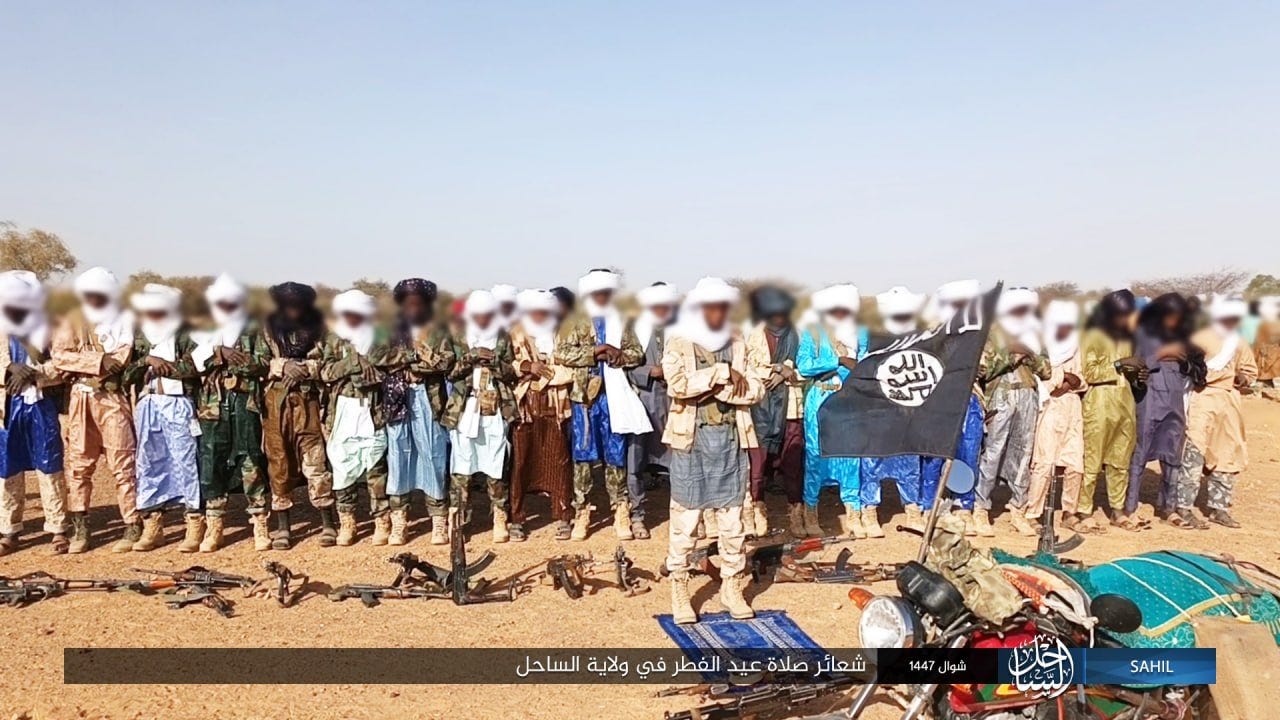
On March 20, 2025, the Islamic State officially announced the launch of a new military campaign, called “Burning Camps,” with a stated focus primarily on Africa. The areas of reference include Nigeria, Niger, Cameroon, and Mozambique. Still, the narrative and timing of the attacks suggest a broader campaign, conceived as a tool for simultaneous pressure on multiple theatres. The campaign is characterised by the systematic destruction of villages, farmland, and subsistence infrastructure to destabilise the social fabric, causing forced displacement and amplifying discontent toward central governments.
