

Executive Intelligence Summary
Ittehad-ul-Mujahidin Pakistan (IMP) represents a low-visibility but potentially destabilising jihadist actor within Pakistan’s militant landscape, operating at the intersection of ideological fragmentation, rivalry with established groups, and external influence.
Scope and Methodology
Although current patterns indicate a stable-to-increasing threat trajectory, the TTP’s demonstrated adaptability and cross-border ties suggest a potential for tactical escalation or diversification beyond the present operational profile, which warrants ongoing monitoring.
This Strategic Threat Outlook is based on:
systematic monitoring of jihadist propaganda (videos, photos, statements, claims);
reporting from sources in the field;
Integration of OSINT, IMINT, SOCMINT, and Digital HUMINT.
Sources include primary material from TTP-affiliated channels, open-source reporting, official statements, and local sources. However, limitations such as potential propaganda bias, disinformation, and incomplete reporting from remote areas must be considered when evaluating the reliability of intelligence. Clarifying how these limitations impact operational decisions will help stakeholders interpret the data appropriately and avoid misjudgments.
Limitations
Incomplete or delayed reporting from remote or contested areas;
exaggeration or omission in group claims;
Potential propaganda bias and disinformation.
Where attacks or claims cannot be independently corroborated, this is explicitly indicated in the assessment.
📌 Inside this Assessment
Overview and Security Threat Assessment
Activity and Operations Analysis — April 2026
Number, Targets, and Areas of Attacks in April 2026
Charts and Statistics
Analytical and Intelligence Assessments
Implications for Decision Makers
Early Warning Indicators
Threat Forecast, 30 to 90 Days
Executive Intelligence Conclusion and Risk and Threat Overview
Scope and Methodology
This Strategic Threat Outlook is based on:
monitoring of jihadist propaganda (videos, photos, statements, claims);
reporting from sources in the field;
integration of OSINT, IMINT, SOCMINT, and Digital HUMINT.
Sources include primary material disseminated through IMP-affiliated channels, open-source reporting, official statements, and local sources.
Limitations
Limited availability of independently verifiable data;
potential exaggeration or omission in group claims;
propaganda bias and disinformation risks;
uncertainty regarding organisational cohesion and external support.
These limitations are central to the assessment and are explicitly reflected in confidence levels and scenarios.
Overview and Security Threat Assessment
In early April 2025, the formation of a new jihadist militant alliance in Pakistan—Ittehad-ul-Mujahidin Pakistan (IMP), was publicly announced, marking a significant development within the country’s fragmented militant landscape. The alliance represents the formal unification of three established Pakistani jihadist factions: Hafiz Gul Bahadur Group (HGB), Lashkar-e-Islam (LeI), and Harkat Inqilab-e-Islami Pakistan (HIIP).

The announcement, disseminated simultaneously on 11 April 2025 through the official media channels of all three constituent groups, framed the creation of the IMP as a unified jihadist front aimed at “raising the word of Allah, supporting the oppressed, and conducting armed struggle under a shared ideological and organisational structure.” The founding communiqué designated Mahmood ul-Hasan as the official spokesperson of the alliance and introduced Sada-e-Ghazwat-ul-Hind as its centralised media wing. From this point onward, attack claims, communiqués, and propaganda outputs from the constituent factions were issued exclusively under the IMP brand, indicating a deliberate effort to subsume pre-existing identities into a single operational and narrative framework.
From an operational perspective, the IMP rapidly demonstrated a degree of tactical ambition and technological adaptability that exceeded the recent baseline of its predecessor groups. The execution of multiple high-profile attacks—some employing emerging technologies such as commercially adapted unmanned aerial systems (UAS) combined with multilingual propaganda releases in Urdu, Pashto, and English, suggests a calculated attempt to project operational sophistication, ideological coherence, and transregional relevance. This communication strategy mirrors broader jihadist trends aimed at signalling maturity, deterrence capacity, and alignment with global jihadist narratives rather than purely local insurgency dynamics.
Ideological Contestation and Rivalry with Tehreek-e-Taliban Pakistan (TTP)
The emergence of the IMP triggered a rapid and discernible ideological response from Tehreek-e-Taliban Pakistan (TTP), which has long positioned itself as the primary, and arguably exclusive, representative of jihadist militancy within Pakistan. While avoiding explicit reference to the IMP, the TTP disseminated a series of doctrinal messages through its official daily publication, Bunyanum Marsoos. Central among these was a written version of a speech by TTP emir Mufti Noor Wali Mehsud, emphasising the necessity of unity under a single leadership, a single banner, and a centralised command structure.
The speech invoked the Afghan Taliban’s success as a model rooted in discipline, hierarchical authority, and organisational cohesion, while warning that fragmentation and parallel jihadist projects had historically produced strategic failure. Although couched in doctrinal rather than overtly confrontational terms, the subtext was unambiguous: the TTP perceives the IMP as a rival pole threatening its narrative primacy, recruitment base, and territorial influence. The resulting ideological contest between the two actors revolves not only around legitimacy and doctrinal authority, but also around control over militant ecosystems in Pakistan’s northwestern regions.
Al-Qaeda Linkages and Internal Militant Fracturing
In the weeks following the IMP’s formation, pro-TTP writers and activists intensified their criticism of the alliance, explicitly attributing its creation to Al-Qaeda in the Indian Subcontinent (AQIS). These narratives accused AQIS of orchestrating the emergence of HIIP and facilitating its subsequent alignment with HGB and LeI, with the alleged objective of engineering a parallel jihadist structure to dilute TTP dominance. Several commentaries went further, asserting that any future armed confrontation between the TTP and IMP should be considered the responsibility of al-Qaeda.
While these claims are polemical in nature, they align with a growing body of indicators suggesting that the IMP benefits from at least indirect AQIS support, particularly in the domains of ideological framing, propaganda production, and potentially logistics and financing. The convergence of messaging themes, media aesthetics, and strategic priorities strengthens the assessment that AQIS views the IMP as a viable alternative vehicle for influence in Pakistan, especially at a time when overt militant activity risks complicating relations with the Afghan Taliban.
Notably, Jamaat-ul-Ahrar, which formally merged with the TTP in previous years, publicly congratulated the formation of the “Ittihad-ul-Mujahideen” through its official channels. This gesture, anomalous within the TTP’s broader critical posture, suggests the possibility of internal fissures within the TTP ecosystem and raises the prospect of future defections or realignments toward the IMP.
IMP Activities – April 2026
In April 2026, Ittehad ul Mujahidin Pakistan operated within a wider Pakistani militant environment marked by a visible reduction in the national volume of attacks compared with 2025, but not by a corresponding reduction in strategic risk. The available picture indicates a shift toward selective violence, lower public attribution, and continued pressure in Khyber Pakhtunkhwa, rather than a genuine operational contraction.
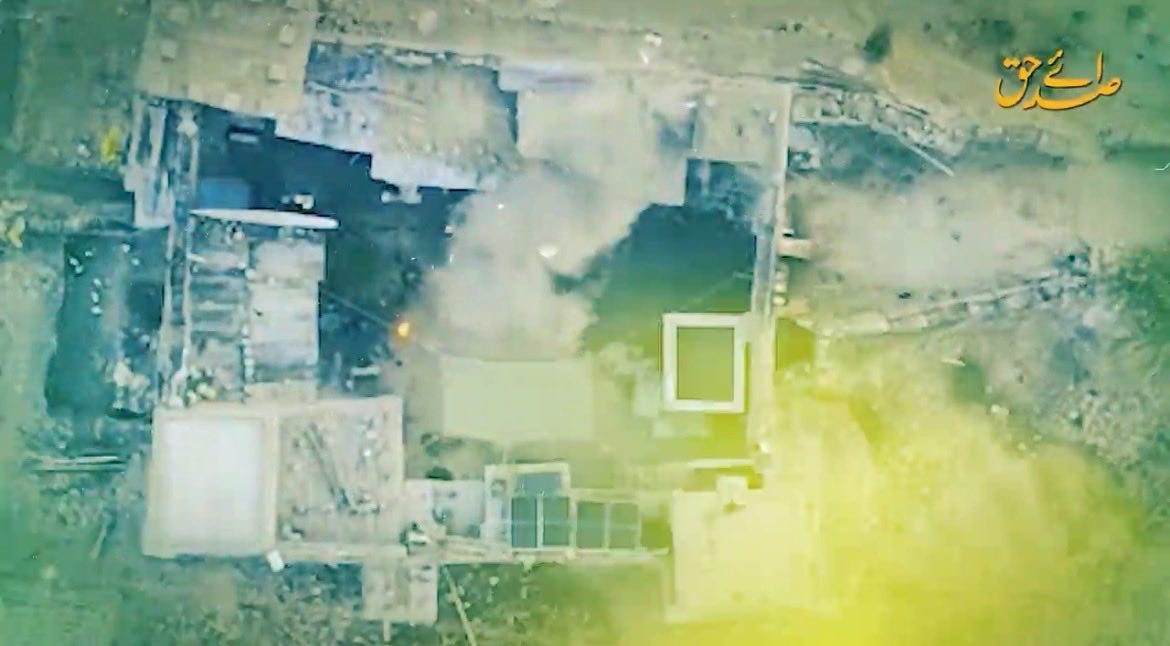
For IMP, this operating environment is particularly relevant because the group’s activity cannot be assessed only through formal claims. Since late 2025 (specifically in December 2025, January 2026, and part of February), the organisation has repeatedly reduced direct attribution, probably to limit political exposure for Taliban authorities in Afghanistan and preserve cross border logistical freedom.
