

Executive Intelligence Summary
Tehrik-i-Taliban Pakistan (TTP) continues to represent a persistent and adaptive security threat to Pakistan, particularly in Khyber Pakhtunkhwa and along the Afghan–Pakistani border areas.
During January 2026, TTP activity reflects:
sustained operational tempo against security forces;
continued reliance on asymmetric and guerrilla-style attacks;
Strategic depth and resilience are linked to cross-border dynamics and historical ties with al-Qaeda and the Afghan Taliban.
While no immediate large-scale escalation is observed, current patterns indicate a stable-to-increasing threat trajectory, with potential implications for internal security, counterterrorism operations, and regional stability over the next 3–6 months.
Threat level: High
Trend: → / ↑ (stable with escalation potential)
Primary risk areas: Khyber Pakhtunkhwa, tribal districts, border regions
Time horizon: 3–6 months
Confidence level: Medium
Scope and Methodology
Although current patterns indicate a stable-to-increasing threat trajectory, the TTP’s demonstrated adaptability and cross-border ties suggest a potential for tactical escalation or diversification beyond the present operational profile, which warrants ongoing monitoring.
This Strategic Threat Outlook is based on:
systematic monitoring of jihadist propaganda (videos, photos, statements, claims);
reporting from sources in the field;
Integration of OSINT, IMINT, SOCMINT, and Digital HUMINT.
Sources include primary material from TTP-affiliated channels, open-source reporting, official statements, and local sources. However, limitations such as potential propaganda bias, disinformation, and incomplete reporting from remote areas must be considered when evaluating intelligence reliability.
Limitations
Incomplete or delayed reporting from remote or contested areas;
exaggeration or omission in group claims;
Potential propaganda bias and disinformation.
Where attacks or claims cannot be independently corroborated, this is explicitly indicated in the assessment.
Brief overview of the TTP
The Tehrik-i-Taliban Pakistan (TTP), formed in 2007 as a coalition of Pashtun militant groups, remains the main jihadist threat to the Pakistani state today. The organisation, led since 2018 by Noor Wali Mehsud, has consolidated its internal structure by reabsorbing several splinter factions and strengthening its strategic communication. Its ideology is rooted in Deobandi jihadism with strong historical ties to the Afghan Taliban and Al-Qaeda. The TTP operates mainly in Khyber Pakhtunkhwa and Balochistan, but maintains selective capabilities in urban areas. The Afghan rear areas are strategically important, providing depth, training, and cross-border mobility. The group’s military campaign is now characterised by a combination of IEDs, ambushes, and complex attacks targeting police, paramilitary forces, and local administrative apparatus, with a more calibrated use of suicide operations than in the past. In 2024–2025, the TTP was consistently ranked among the most lethal groups globally, with increased operational sophistication and organisational resilience.
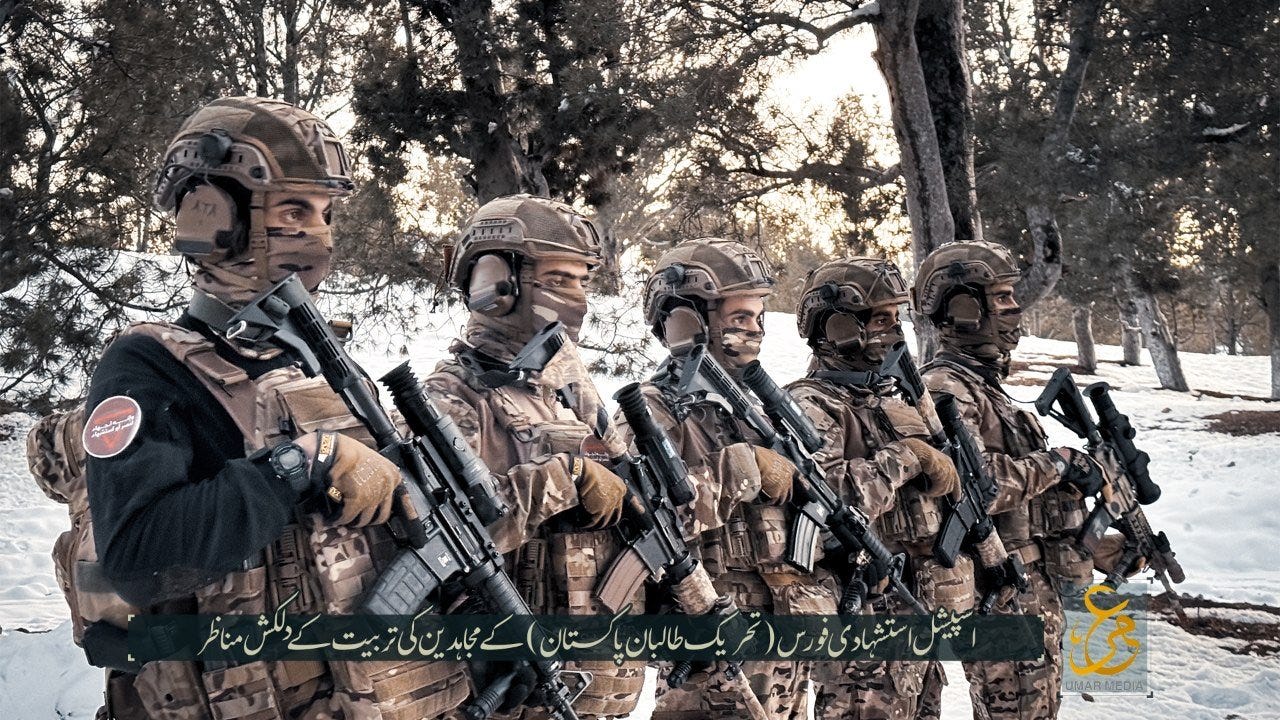
TP Activities – January 2026
In January 2026, the Tehrik-i-Taliban Pakistan maintained a high but slightly reduced operational tempo, conducting 245 operations across a wide geographic footprint. While numerically lower than the peaks observed in late 2025, the month does not indicate a degradation of capability. Instead, the pattern suggests consolidation and selective pressure, consistent with a mature insurgent actor managing sustainability, logistics, and political signaling rather than pursuing indiscriminate escalation.
The reported casualty figure of 711 killed and wounded, combined with the limited number of arrests claimed by the group, reflects a continued emphasis on kinetic engagement with state security forces rather than symbolic mass casualty attacks. The operational profile remained disciplined and security-focused, reinforcing the assessment that the TTP continues to pursue a war of attrition aimed at eroding state presence, morale, and intelligence penetration rather than seeking immediate strategic shock.
